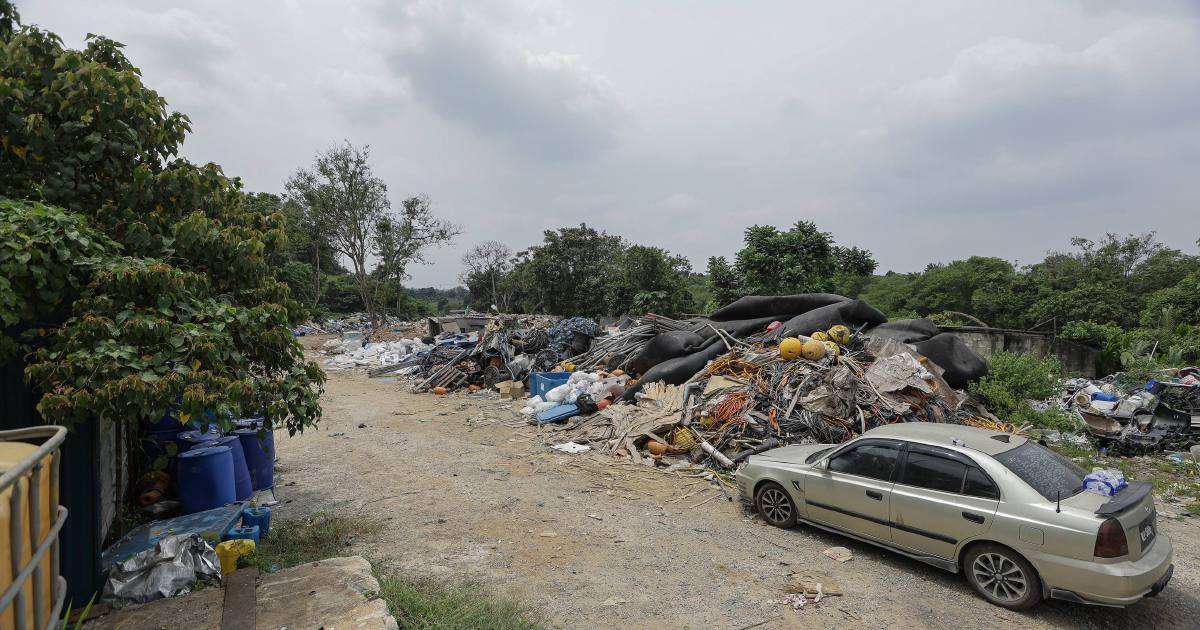
Johor authorities have moved to establish a multi-agency task force aimed at thoroughly investigating claims that construction waste originating from Singapore has been deposited at various locations throughout the Pontian district. The announcement signals the state government's commitment to addressing environmental concerns along the porous border region, where instances of cross-border waste dumping have periodically emerged as a source of tension between the two neighbours.
The formation of this task force reflects growing concern among Johor officials about the integrity of waste management practices and environmental protection measures in the state. Pontian, situated directly across the Straits of Johor from Singapore, has historically been vulnerable to such violations due to its proximity to the city-state and the relative ease with which materials can be transported across the border. The district's geographical position makes it a focal point for enforcement efforts targeting illegal dumping activities.
The multi-agency composition of the task force suggests a coordinated approach involving various stakeholders with responsibilities spanning environmental monitoring, customs enforcement, local government administration, and potentially federal environmental bodies. This structure aims to ensure that investigations are conducted with adequate technical expertise, regulatory authority, and cross-jurisdictional coordination necessary to build credible cases against those responsible for unlawful disposal.
Illegal dumping of construction waste represents a significant environmental hazard with consequences that extend beyond immediate visual pollution. Such waste can contaminate groundwater and soil, disrupt local ecosystems, and create health risks for nearby communities. The prevalence of such incidents in border areas reflects broader challenges faced by developing nations in managing waste streams and enforcing environmental legislation against transnational actors who may exploit regulatory gaps or enforcement vulnerabilities.
Singapore's status as a densely populated city-state with limited land area has long created pressure to manage construction waste volumes. Although Singapore maintains strict domestic waste management regulations, the alleged dumping incidents suggest that some operators may be circumventing proper disposal protocols by transporting waste across the border. Such practices are not unique to the Singapore-Malaysia border but reflect a pattern seen globally where developed urban centres seek cost-effective waste solutions in neighbouring jurisdictions.
From Malaysia's perspective, these investigations underscore the importance of border environmental governance and the need for vigilant monitoring of transnational waste movements. Johor, as the state closest to Singapore, bears particular responsibility for maintaining environmental standards and preventing its territory from becoming a repository for external waste. The task force initiative demonstrates that state authorities are taking such obligations seriously, particularly given the reputational and public health implications.
The investigation will likely involve examining waste documentation, tracing transportation routes, identifying dumping sites through fieldwork, and potentially establishing chains of responsibility. Such inquiries typically require cooperation from multiple parties, including waste management companies, transportation providers, and potentially contractors who may have commissioned the disposal. The involvement of multiple agencies increases the likelihood of generating comprehensive evidence that can withstand legal scrutiny.
Successful prosecution of those involved in cross-border dumping could establish important precedents for environmental enforcement in the region. As Southeast Asian nations increasingly prioritize environmental protection and circular economy principles, demonstrating the willingness to pursue such cases sends a clear message that transnational environmental violations carry consequences. This has implications for corporate behaviour and investor calculations regarding waste management costs across the region.
The timing of this task force formation also reflects broader momentum in Malaysia toward strengthening environmental enforcement. Recent years have witnessed increased commitment to combating pollution, managing electronic waste, and regulating industrial operations. Johor's proactive stance aligns with national environmental priorities and demonstrates how state-level authorities can drive concrete action on ground-level environmental challenges.
International dimensions of this investigation deserve attention, as successful resolution may require diplomatic coordination between Malaysian and Singaporean authorities. The two countries maintain regular channels for bilateral cooperation on environmental and regulatory matters. How this situation unfolds could set precedents for handling similar transnational environmental violations and may influence the development of more robust waste management cooperation frameworks between neighbouring jurisdictions.
The broader lesson for Malaysia and the Southeast Asian region concerns the need for integrated border environmental management systems. As economic integration deepens across ASEAN, the volume of cross-border material flows will increase, creating potential for regulatory arbitrage unless safeguards are strengthened. Johor's task force represents a practical step toward addressing these emerging challenges at the state level, but sustained progress requires harmonized regional approaches to waste management standards and enforcement mechanisms.

