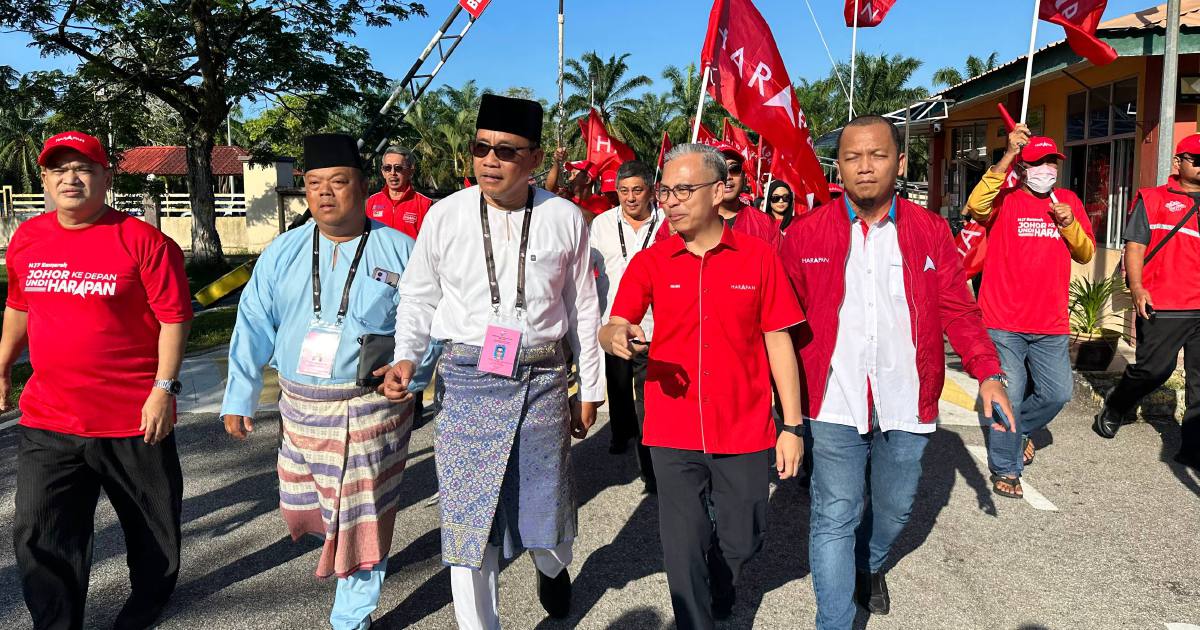
The Semerah state constituency in Johor is shaping up to deliver one of the region's most competitive electoral contests, with indications pointing toward a direct showdown between the two major political coalitions. Nomination day proceedings at Dewan Mahkota in Batu Pahat witnessed a surge of partisan energy, as supporters of opposing camps gathered to witness the formal registration of candidates vying for the seat. The atmosphere underscored the electoral significance this contest holds within Johor's political landscape, with vocal supporters demonstrating enthusiasm reminiscent of previous election cycles that have marked this constituency as a genuine battleground.
The revival of the Semerah election follows typical patterns observed across Malaysia's recent state-level contests, where established political blocs seek to consolidate or reclaim territorial advantage. Barisan Nasional, which has historically maintained dominance across much of Johor's state assembly constituencies, remains a formidable force despite national-level shifts in electoral fortunes. Pakatan Harapan's challenge to this incumbency reflects the broader realignment reshaping Malaysian politics, particularly following the 2022 general election when the coalition demonstrated renewed capacity to mobilise voters across different demographic segments. The contest therefore represents more than a localised power struggle; it signals broader questions about political momentum and voter preferences within one of Malaysia's most politically significant states.
Johor holds particular strategic importance for both coalitions. As Malaysia's second-largest state by population and a consistent contributor to parliamentary representation, electoral performance here carries outsized consequences for national political calculations. Barisan Nasional's traditional stronghold status in Johor faces continued pressure from Pakatan Harapan's expanding reach, particularly among younger voters and urban constituencies. The Semerah rematch thus becomes a proxy indicator of whether recent electoral trends favour either coalition's continued consolidation of support. Observers monitoring Johor dynamics will likely scrutinise this contest for signals about whether previous voting patterns remain durable or whether structural shifts favour the opposition.
Nomination day procedures themselves highlight the formal machinery through which Malaysian electoral contests take shape. The gathering of candidates, party machinery, and supporters creates a ceremonial moment demonstrating democratic participation while simultaneously serving as an opportunity for rival camps to demonstrate organisational capacity and grassroots enthusiasm. The presence of supporters chanting reform slogans indicates how electoral contests connect to broader narratives candidates employ to mobilise their bases. These symbolic dimensions complement the substantive policy questions and local grievances that typically influence voter decision-making in state-level elections.
The Semerah constituency encompasses distinct demographic zones within the Batu Pahat district, including urban areas, rural villages, and industrial zones that create diverse voter populations with varying priorities. Urban voters may prioritise different concerns compared to agricultural communities or industrial workers, requiring candidates from both coalitions to calibrate their messaging and policy commitments accordingly. The rematch format suggests both parties have candidates with demonstrated local credibility, whether through previous electoral performance or community engagement. This continuity may elevate the quality of substantive debate about constituency-specific issues rather than relying solely on national political narratives.
The timing of the Semerah election within Johor's broader electoral calendar also merits consideration. State-level contests provide opportunities for voters to register satisfaction or dissatisfaction with state government performance independently from federal-level verdicts. The current Johor state administration's record on economic development, social services provision, and infrastructure investment will likely feature prominently in campaign messaging from both coalitions. Challengers can highlight perceived shortcomings while incumbents emphasise achievements, creating substantive grounds for electoral competition beyond personality-driven contests.
Regional implications extend beyond Johor's boundaries, as outcomes in major state constituencies influence broader Southeast Asian political dynamics and Malaysia's place within regional governance structures. Strong coalition performance can buttress parliamentary representation and influence the formation of national government coalitions during federal-level contests. Conversely, unexpected results may signal emerging voter realignments that could reshape Malaysia's political landscape in subsequent national elections. International observers monitoring Malaysian democracy similarly track state-level contests as indicators of electoral health and competitive dynamics.
The rematch characterisation underscores voter familiarity with competing candidates, potentially reducing uncertainty associated with unknown political figures while simultaneously constraining campaigns to previous performance records and voter perceptions. Candidates must defend past actions while articulating visions for future constituency development. This dynamic can either energise supporters of both camps or potentially suppress turnout if voters perceive limited meaningful differentiation between competitors. Campaign strategies will accordingly focus on distinguishing between candidates despite potentially entrenched voter preferences.
Moving forward, the Semerah contest will command attention from political analysts assessing Johor's electoral trajectory and contributing data points toward understanding broader Malaysian political trends. Whether Barisan Nasional consolidates its traditional dominance or Pakatan Harapan advances its position within this strategically important state remains an open question that nomination day proceedings have initiated but not resolved. The substantive campaign phase now beginning will determine whether historical patterns prevail or whether electoral realignment accelerates within Johor's political system.

