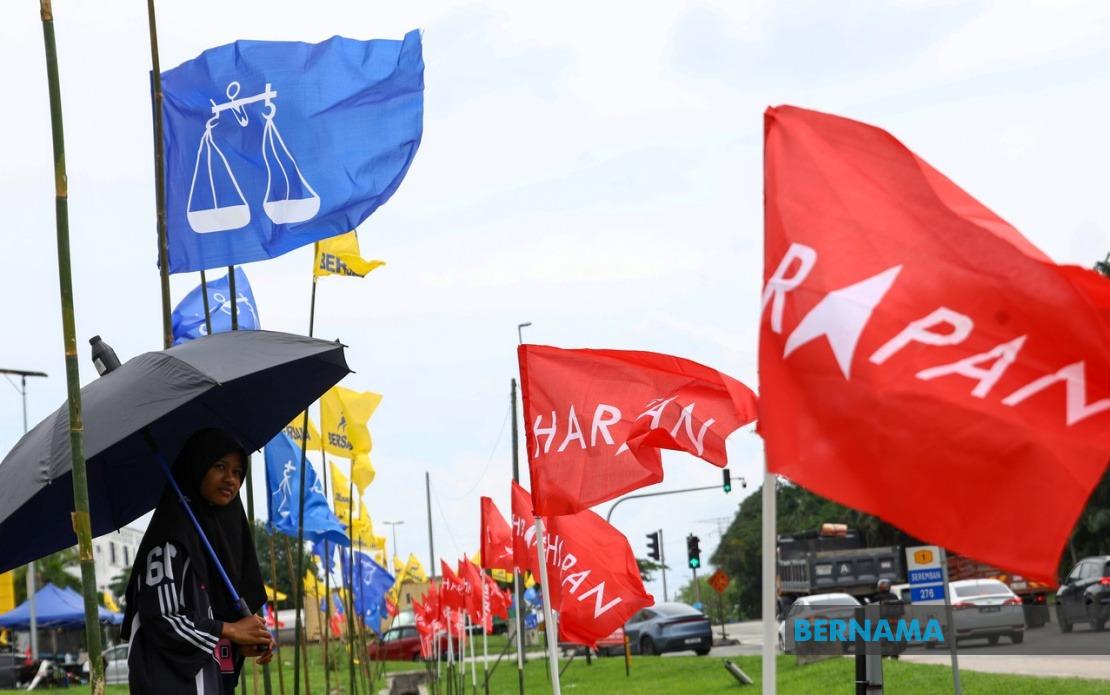
Two weeks into campaigning for Johor's 16th state election, the contest has crystallized into a clash of fundamentally different political philosophies. Pakatan Harapan and Barisan Nasional, both fielding the full slate of 56 candidates, have adopted distinct strategies that reflect their respective strengths and their assessments of what voters are demanding. The divergence offers insight into how Malaysian coalition politics is evolving and what messages resonate with an electorate that political analysts say has grown more discerning and less predictable than in previous election cycles.
The PH coalition has structured its campaign around substantive policy offerings, prioritizing tangible solutions to immediate challenges facing ordinary Johoreans. The party's manifesto, titled "Johor For All", centers on addressing cost-of-living pressures, boosting wage levels, expanding access to affordable housing, and developing human capital. This approach signals that PH believes voters are prepared to evaluate parties on their concrete plans rather than emotional appeals or organizational machinery alone. By framing Johor's development not as a question of investment inflows or headline economic statistics but as the translation of growth into improved living standards for workers and families, PH is attempting to shift the terrain of political debate toward the dinner table rather than the balance sheet.
Dr Mohammad Tawfik Yaakub of Universiti Malaya, a veteran observer of Malaysian electoral politics, characterizes PH's strategy as fundamentally about convincing voters through evidence and detailed planning. The coalition is arguing that economic development must be measured by its impact on wages, housing affordability, employment quality, and social welfare guarantees. This represents a deliberate pivot away from the traditional metrics that have dominated Malaysian political discourse—foreign direct investment figures, infrastructure megaprojects, and GDP growth rates—toward metrics that ordinary citizens experience directly in their income statements and rent or mortgage payments. Whether this approach proves effective will depend significantly on whether voters believe PH's policy proposals are credible and achievable.
Barisan Nasional's campaign strategy, by contrast, places considerable emphasis on the return of prominent figures who had stepped away from frontline politics. The most notable returnees are Datuk Seri Hishammuddin Tun Hussein, a former UMNO vice-president, and Khairy Jamaluddin, the former UMNO Youth chief, both of whom have rejoined the party through the "Rumah Bangsa" initiative. BN's calculation appears to rest on the assumption that these recognizable personalities can reanimate party support among grassroots members and traditional voters who may have drifted away or grown discouraged. The coalition is also leveraging its longstanding party network and administrative machinery, assets built over decades of governance and organizational work.
Yet political analysts caution that the effectiveness of the BN strategy may be overstated. Dr Tawfik notes that voters in contemporary Malaysia have developed more sophisticated evaluative frameworks than in the past. The mere appearance of a prominent political figure at a campaign event—the traditional ceramah—no longer guarantees swayed voters. Contemporary electorates assess not only who is delivering the message but whether the message itself is compelling, whether the party proposing policies has credible candidates to implement them, and whether those policies genuinely address the specific concerns the audience harbors. In this sense, the presence of Hishammuddin and Khairy represents a necessary but insufficient condition for BN's success.
Hishammuddin's role in the Johor campaign may nevertheless prove consequential in specific ways. According to Assoc Prof Dr Mohd Yusry Ibrahim of Ilham Centre, Hishammuddin retains substantial political capital within Johor's political establishment and can potentially rekindle enthusiasm among UMNO loyalists who had become disaffected or distanced from the party. His active presence signals to traditional supporters that the party values their concerns and is investing senior figures to contest the state. For a coalition that has experienced oscillating levels of support in recent electoral cycles, such symbolic gestures can matter in mobilizing the base, even if they do not independently determine electoral outcomes.
Khairy's inclusion in the BN campaign addresses a different demographic weakness. The younger voters who constitute an expanding share of the electorate display strikingly different political behavior than their parents' generation. They exhibit fluid voting patterns rather than inherited party loyalty, and they are drawn to public figures they recognize, perceive as authentic, and feel connected to across media platforms. Khairy has consistently polled well among younger Malaysians and maintains a social media presence that bridges the gap between traditional politics and digital engagement. His return to active campaigning provides BN with a potential bridge to voters aged thirty and below, a group that UMNO and BN have struggled to mobilize effectively in recent contests.
The structural challenge for BN, however, runs deeper than the presence or absence of particular personalities. The political analyst emphasizes that contemporary young voters are not inheriters of their parents' party loyalties. They treat political choice as a consumption decision, evaluating parties and candidates against their perceived interests and values without the ballast of long-term partisan attachment. This creates both opportunity and risk for BN: opportunity insofar as Khairy's popularity may convert into votes, but risk because these voters can be equally swift to withdraw support if they perceive the party is not delivering on promises or is pursuing policies misaligned with their priorities.
The contrast between PH and BN's strategies illuminates a broader evolution in Malaysian electoral politics. Whereas previous elections often pivoted on organizational efficiency, incumbency advantage, and symbolic leadership, the 2023 Johor contest appears to be forcing both coalitions to articulate substantive visions for governance. PH is betting that voters will respond to detailed policy proposals framed around distributional equity and living standards. BN is hedging that its traditional organizational strengths, combined with carefully deployed elite figures, can still move electoral outcomes. The actual voting patterns will provide crucial evidence about which assessment of the contemporary Malaysian voter is more accurate.
The election will see 172 candidates across 56 seats with polling day scheduled for Saturday, July 11. Early voting takes place on July 7, giving voters in certain categories the opportunity to cast ballots ahead of the main election day. The turnout and vote distribution across demographic groups will reveal how effectively each coalition's strategy has landed with different voter segments. For observers of Malaysian politics and for parties planning their approaches to future elections, the Johor contest offers a genuine test of whether policy substance or organizational and personality-driven politics will determine outcomes in the evolving Malaysian electoral landscape.

