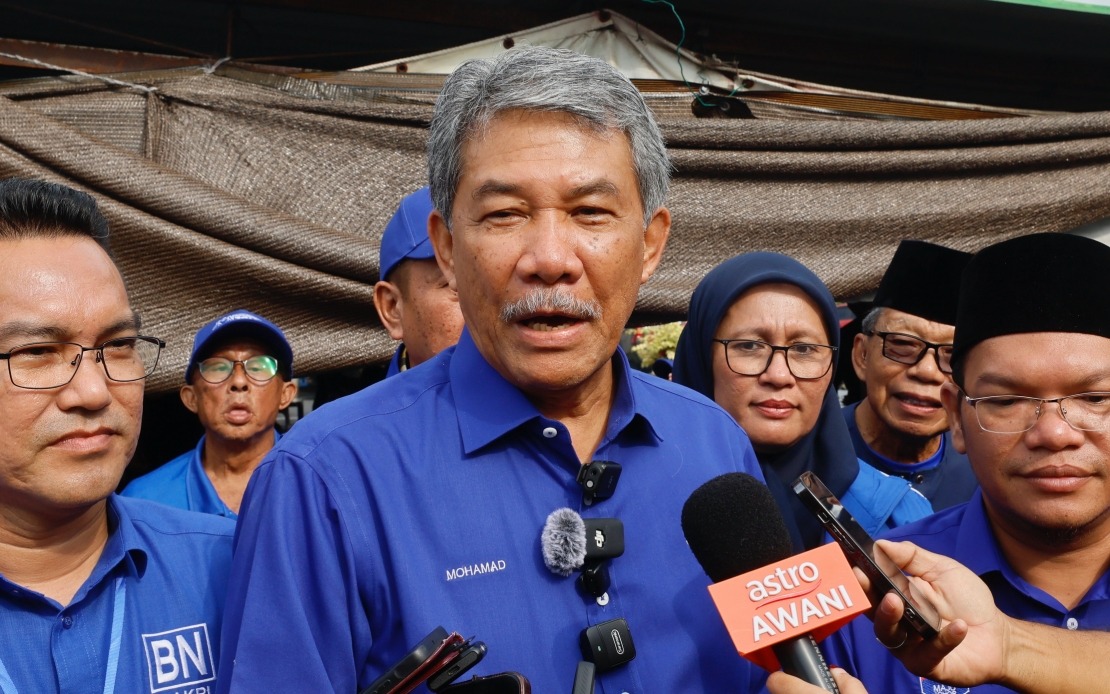
With the Johor state election scheduled for polling on July 11, UMNO deputy president Datuk Seri Mohamad Hasan has issued a measured appeal for political decorum, urging all contesting parties to prioritise substantive debate over inflammatory personal rhetoric. Speaking at a constituency gathering in Johor Bahru, Mohamad stressed that while electoral competition is natural and necessary, the campaign must be conducted with sufficient maturity to ensure Malaysia's broader political stability is not jeopardised by state-level rivalries.
The Foreign Minister's intervention reflects growing concern that intense state-level polling could strain the federal coalition arrangements that have underpinned Malaysian governance since the 2022 general election. As the custodian of the Unity Government at the federal level, which brings together UMNO, Pakatan Harapan, Gabungan Parti Sarawak, and other partners, Mohamad appears anxious that local campaign heat might crack the delicate consensus holding this broad alliance together. His remarks signal a desire to compartmentalise the Johor contest, treating it as a competition over state management rather than a proxy battle over national direction.
According to Mohamad's framework, competing parties retain full freedom to articulate their policy platforms and electoral promises to voters. The distinction he draws is subtle but significant: policy debate and institutional rivalry are entirely appropriate, even vigorous, but crossing into personal vilification or character assassination risks poisoning relationships required for continued cooperation on federal matters. This distinction reflects a sophisticated understanding of Malaysian coalition politics, where multiple parties with different ideological orientations must somehow function as a governing team despite electoral competition at state and constituency levels.
When pressed on the substance of his position, Mohamad clarified that light-hearted political banter and friendly teasing between competing figures poses no genuine concern. Indeed, such exchanges are often viewed as normal ingredients of democratic discourse. However, he identified a threshold beyond which competitive zeal becomes counterproductive, potentially creating personal animosity that poisons the cooperative relationships necessary for federal-level governance. This calibration suggests an experienced political operator aware that elected representatives must transition from campaign adversaries to coalition partners depending on electoral outcomes.
The Foreign Minister also moved to address a conspiracy theory that has circulated among certain political circles and on social media platforms, which alleges that the Johor state election has been orchestrated partly to create political conditions enabling the release of former Prime Minister Datuk Seri Najib Tun Razak. Mohamad rejected this characterisation as fundamentally illogical, arguing that a state election produces a menteri besar with authority over state affairs only, not the federal powers necessary to grant pardons or alter legal proceedings against a national figure. His argument invokes constitutional principle: the power to pardon rests exclusively with the Yang di-Pertuan Agong acting on federal ministerial advice, a prerogative that sits entirely outside any menteri besar's jurisdiction.
This clarification serves multiple purposes within Malaysia's political discourse. First, it establishes that UMNO rejects any suggestion that electoral strategy is motivated by attempts to circumvent judicial processes or undermine the rule of law. Second, it emphasises Malaysia's foundational commitment to constitutional governance and the supremacy of law, principles that Mohamad identifies as central to UMNO's political identity. Third, it attempts to elevate the Johor election above the shadowy machinations some critics suggest, positioning the contest instead as a straightforward democratic exercise in choosing state government. By invoking constitutional limitations on menteri besar authority, Mohamad implicitly warns opponents against making unsubstantiated claims about the election's hidden agenda, as such allegations fail basic constitutional scrutiny.
The timing of Mohamad's remarks, delivered just days before early voting commenced and one week before general polling, suggests careful strategic positioning. As a senior federal minister and UMNO deputy president, his intervention carries symbolic weight beyond mere rhetoric. By publicly advocating for campaign restraint, he positions UMNO as the responsible, stability-minded actor in the contest, a framing that may appeal to voters concerned about political dysfunction or federal government disruption. Simultaneously, his emphasis on protecting federal Unity Government arrangements hints at potential consequences should other parties pursue scorched-earth tactics: such recklessness might trigger federal-level recalibrations affecting their own positions in coalition arrangements.
The Johor state election itself represents a significant political moment within Malaysia's ongoing democratic cycle. With 172 candidates contesting 56 seats in the state legislative assembly, the contest encompasses diverse constituencies with varying demographic compositions and political histories. For UMNO, which remains the dominant party in Johor's political landscape despite electoral setbacks nationally, securing a strong mandate could demonstrate the party's continued relevance and organisational strength. For Pakatan Harapan components competing in the state, the election offers an opportunity to demonstrate whether their federal-level coalition partner status can translate into state-level appeal. The broader outcomes will influence perceptions about federal coalition stability and may signal whether the Unity Government model can withstand state-level competitive pressures without fragmentation.
Mohamad's intervention also reflects a particular vision of Malaysian political maturity, one where electoral competition and governing partnership coexist without one inevitably destroying the other. This vision challenges the zero-sum approach that historically dominated Malaysian politics, where state victories were thought to presage federal dominance and state defeats were treated as personal humiliations demanding escalating conflict. His plea for compartmentalisation—robust state-level competition balanced against federal-level cooperation—requires emotional discipline from political actors accustomed to treating every electoral contest as existential. Whether Johor's campaign ultimately respects this boundary will provide important insights into whether Malaysia's political culture has genuinely evolved beyond winner-take-all confrontation toward more mature coalition governance.
The Foreign Minister's emphasis on legal and constitutional propriety, articulated through specific reference to the Yang di-Pertuan Agong's pardoning prerogative, also reinforces institutional deference within the UMNO framework. By highlighting that even a state government victory cannot alter fundamental constitutional arrangements governing clemency, Mohamad subtly signals that UMNO operates within institutional constraints and respects sovereign authority. This positioning becomes particularly relevant given historical debates about the independence and integrity of Malaysia's judiciary and executive clemency processes. His argument that no menteri besar could achieve what some critics suggest serves as implicit assurance that UMNO, should it secure victory, will remain bound by constitutional norms rather than attempting to instrumentalise state power for extrajudicial purposes.
Looking ahead, the Johor election will test whether Mohamad's appeal for civil campaigning resonates with the broader political ecosystem. Early voting begins immediately following his remarks, providing limited time for other political actors to coordinate responses or articulate alternative campaign philosophies. The electorate's response—whether Johor voters reward parties that heed his plea for decorum or punish apparent restraint as weakness—will offer important data about voter preferences regarding political tone and substantive versus character-focused messaging. Simultaneously, observers monitoring federal government stability will watch closely whether the Johor contest, regardless of outcome, preserves sufficient goodwill to maintain Unity Government functionality in the challenging months ahead.

