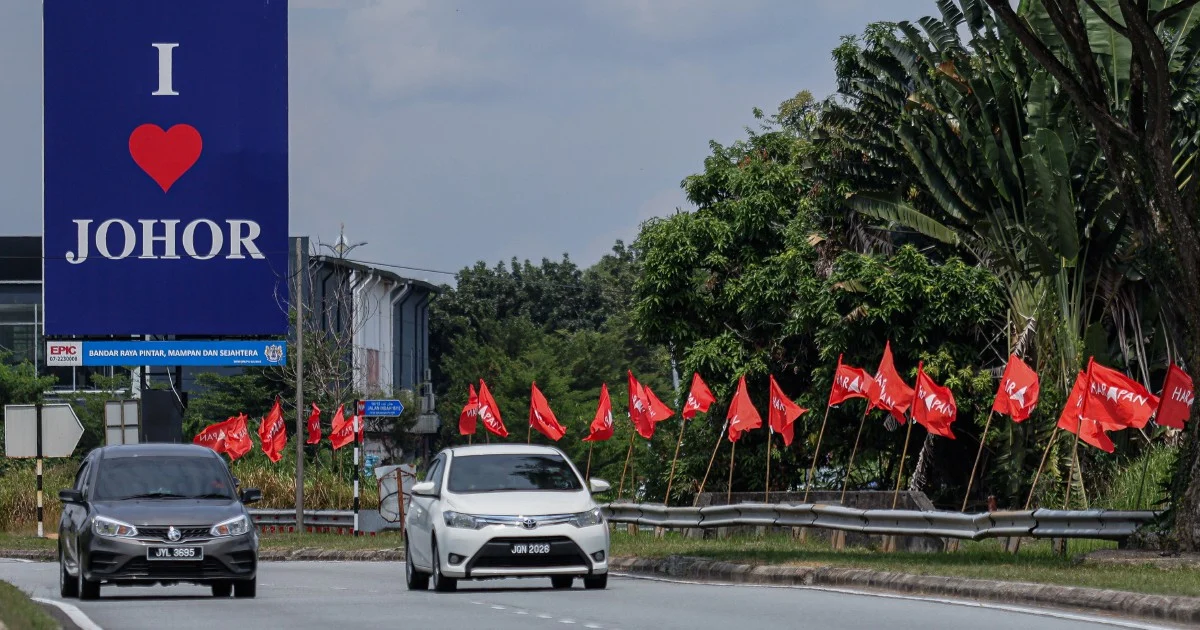
The upcoming Johor state election should be understood as a broader competition between rival coalitions rather than a personality-driven contest over the next menteri besar, according to a senior PKR youth wing representative speaking in Johor Baru. This recalibration of the political narrative reflects an attempt to shift public discourse away from individual candidates and towards evaluative criteria that favour comprehensive policy platforms and team composition.
The framing carries strategic significance for PKR and its coalition partners, as it positions the election as an assessment of institutional capacity and long-term vision. By elevating the debate above the customary focus on a single executive figure, the party argues that Johor voters should weigh the entire machinery, collective experience, and strategic roadmap that each coalition offers. This approach acknowledges the reality that while the menteri besar appointment generates public interest, successful state governance depends on coordinated effort across multiple ministries, bureaucratic departments, and policy-making bodies.
For Malaysian voters accustomed to personality-centric political campaigns, this message attempts to introduce a more structural analysis of electoral choice. The emphasis on coalition strength suggests that winning parties must present not only a credible chief minister candidate but also demonstrate depth in their bench strength—the calibre of assemblymen, administrators, and advisors who would collectively implement the development agenda. This reflects international best practice in democratic governance, where single leaders operate within institutional constraints and depend heavily on cabinet and advisory support.
The economic development focus carries particular resonance in Johor, which has historically positioned itself as Malaysia's industrial and manufacturing hub. The state economy encompasses major ports, a robust automotive sector, electronics manufacturing, petrochemicals, and growing tourism infrastructure. Any coalition seeking to govern must address how it would sustain industrial competitiveness, attract foreign direct investment, manage labour market transitions, and ensure equitable distribution of prosperity across urban and rural constituencies. These are complex questions requiring cross-functional coordination, sectoral expertise, and multi-year strategic planning that transcends what any single administrator can accomplish.
Social development represents the complementary pillar of this appeal. Johor's population diversity—spanning established urban centres, new towns, and traditional agricultural areas—generates competing development priorities. Educational access, healthcare provision, housing affordability, and safety infrastructure present ongoing governance challenges. Coalition pledges regarding these domains require credible implementation mechanisms and realistic funding timelines, not merely aspirational rhetoric. The PKR youth leader's framing implicitly challenges voters to scrutinise whether coalitions have genuinely thought through these commitments or whether they represent electoral placeholders to be deprioritised after polling day.
The timing of this rhetorical shift reflects broader dynamics within Malaysia's coalition politics. As electoral cycles recur with increasing frequency and party membership becomes more fluid, voter evaluation of systemic competence gains importance relative to charismatic leadership. Younger voters especially—a constituency that PKR youth wing targets—tend to prioritise programmatic substance over personality politics, though traditional media and social platforms often reduce coverage to individual candidates regardless of voter preferences.
Regional context matters significantly here. Johor's geographic position adjacent to Singapore creates distinct economic and security considerations. The state government engages with cross-border trade flows, manages port operations that feed into regional supply chains, and coordinates with federal authorities on matters affecting the broader Klang Valley economic corridor. These responsibilities demand administrators with international economic literacy, bilateral relationship management skills, and understanding of how state-level policy affects Malaysia's standing in regional commerce and geopolitical alignment.
The coalition framework also addresses governance challenges that arise from Malaysia's constitutional structure. State governments operate within federal parameters, meaning successful menteri besar figures must navigate resource constraints, navigate federal-state revenue sharing arrangements, and coordinate policy with federal agencies. A coalition that presents a coherent vision across state and federal representation—through parliament members, state assemblymen, and administrative figures—projects greater capacity to translate promises into outcomes than a coalition presenting siloed or contradictory positions.
Criticism of personalised politics also reflects recognition that electoral cycles have shrunk, with frequent polling potentially creating governance instability. If each election functions primarily as a referendum on the incumbent menteri besar rather than on coalition policy and institutional capacity, then electoral volatility becomes self-reinforcing. Voters might shift allegiances based on a single leader's perceived failure, even if underlying coalition infrastructure and policy frameworks remain sound. Reframing elections around team dynamics and programme content creates potential for more stable governance relationships.
For Southeast Asian observers watching Malaysian politics, Johor's election carries significance beyond state boundaries. Malaysia's regional role depends partly on internal political stability and effective state governance that maintains investor confidence and economic dynamism. When state elections occur frequently or generate uncertainty, foreign investors and regional trading partners monitor not merely who wins but whether Malaysian institutions function predictably and whether winning coalitions can deliver promised stability and growth. The PKR youth leader's emphasis on governance capacity thus speaks implicitly to broader regional concerns about political sustainability.
Implementation challenges emerge however. Political campaigns typically gravitate towards simplified narratives and individual personalities because these resonate with mass media formats and voter attention spans. Asking the electorate to engage deeply with coalition composition and policy detail requires sustained media coverage, voter education, and campaign discipline from all parties. History suggests that even well-intentioned efforts to elevate political discourse often yield to sensationalism and personality focus once campaigning intensifies. Whether this reframing achieves its intended effect depends on whether media outlets, the rival coalition, and institutional actors reinforce or undermine the emphasis on systemic governance capacity.

