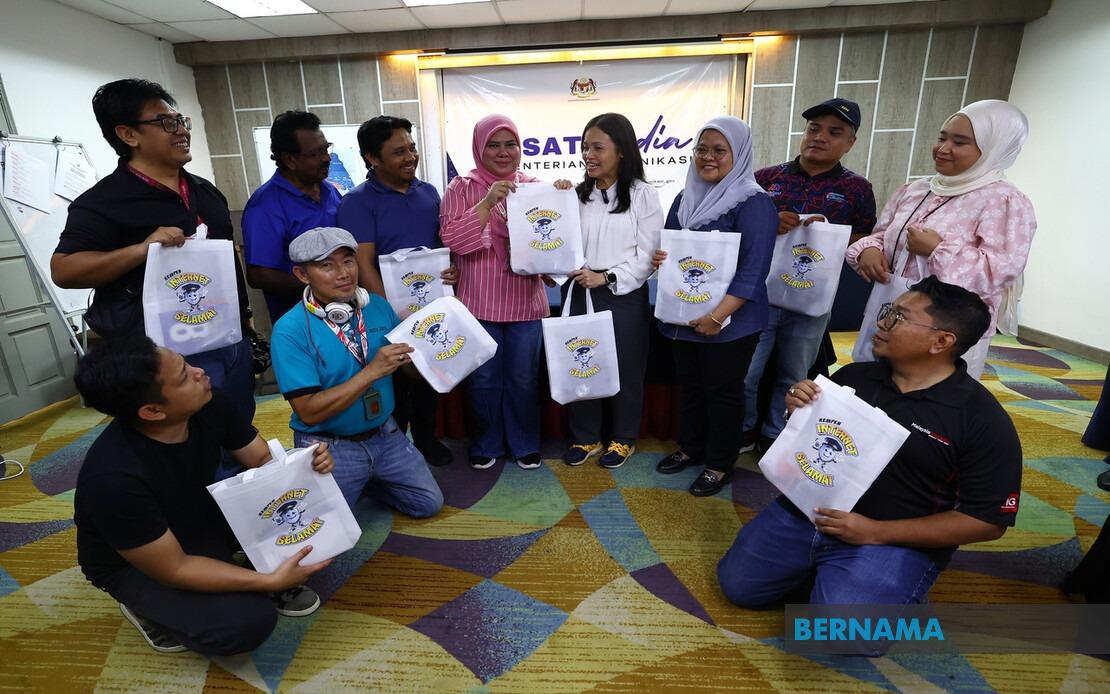
Malaysia's Communications Ministry, working through the Information Department, has rolled out an infrastructure support package for journalists covering the upcoming Johor state election, designating two flagship media centres and establishing 100 community information hubs known as NADI throughout the state. Deputy Communications Minister Teo Nie Ching announced the initiative during a visit to the main media centre at Hotel Seri Malaysia in Johor Bahru, emphasising the government's commitment to ensuring seamless media operations during the election cycle.
The two primary media facilities—one anchored at Hotel Seri Malaysia in Johor Bahru and the other at NADI Kampung Sawah Awok in Muar—will operate an extended schedule beginning June 26 and continuing through polling day on July 11, maintaining service hours from 9 am until 9 pm daily. This duration encompasses both the intensive campaign period and the early voting window scheduled for July 7, allowing media organisations to establish workflows and coordinate coverage across multiple locations throughout this critical fortnight.
Connectivity forms the cornerstone of the infrastructure strategy, with Teo providing assurances that internet bandwidth at all designated centres will maintain a minimum threshold of 100 Mbps. This specification directly addresses the practical demands of modern election coverage, where news organisations require reliable capacity to transmit video content, photograph galleries, and live streaming materials to editorial offices and online platforms without disruption or delay.
Beyond internet provision, the facilities are furnished with a standard suite of journalistic equipment designed to reduce logistical constraints for working press. Laptops, desktop computers, photocopiers, and printers are strategically positioned at both locations, allowing reporters and photographers to process materials, conduct research, and manage administrative tasks without needing to shuttle between the election sites and their news organisations' offices.
The ministry has enlisted the Malaysian Communications and Multimedia Commission to play an active supervisory role throughout the election period, tasking the regulatory body with monitoring telecommunications operators to verify that promised internet service levels remain consistent and reliable. This oversight mechanism reflects awareness that network performance can degrade under heavy concurrent usage, particularly when multiple news outlets simultaneously transmit high-bandwidth content from the same vicinity.
Enhancing this monitoring capacity, the MCMC has encouraged public participation in assessing network performance through its dedicated Nexus application, which enables citizens and journalists alike to provide real-time feedback on signal quality at specific geographic coordinates. Teo stressed that such crowdsourced data collection operates under privacy protections, with only technical parameters—location coordinates and signal strength measurements—being forwarded to service providers for quality improvement purposes, while personal identifying information remains confidential.
Beyond infrastructure, the ministry has positioned the election period as an opportunity to reinforce standards for responsible public discourse. Teo reminded political parties, candidates, and their supporters that campaign activities should maintain standards of civility and avoid introducing divisive content relating to race, religion, and royalty—sensitive domains where inflammatory rhetoric poses particular risks to social cohesion in Malaysia's multicommunal context.
The MCMC has indicated it will collaborate with law enforcement agencies to proactively identify and remove social media posts that cross into extreme provocation, demonstrating a coordinated approach to content moderation across traditional and digital platforms. This partnership signals the government's intention to prevent the election campaign from becoming a vector for incitement or inflammatory discourse that could create tension between communities.
In conjunction with these infrastructure and enforcement measures, the ministry has welcomed the Malaysian Media Council's establishment of a dedicated fact-checking platform, positioning verification of information claims as a shared responsibility between media outlets, government agencies, and the general public. Teo explicitly appealed to citizens to develop habits of verification before amplifying any political claims or allegations through their own social networks, recognising that election periods frequently generate false or misleading information that proliferates rapidly without institutional gatekeeping.
The comprehensive approach—combining technical capacity, equipment provision, connectivity oversight, civic messaging about campaign conduct, content moderation coordination, and fact-checking infrastructure—reflects a multifaceted strategy to manage the information environment during the election. Rather than relying solely on regulatory prohibition, the initiative attempts to create enabling conditions for quality journalism while simultaneously encouraging responsible behaviour among political actors and the general public.
The 16th Johor state election represents a significant electoral contest within Malaysia's political calendar, and the resources allocated to media support infrastructure underscore government recognition that transparent, well-documented election coverage contributes to public confidence in democratic processes. Early voting is scheduled for July 7, with the main polling day set for July 11, providing a defined timeline for all election-related activities.

