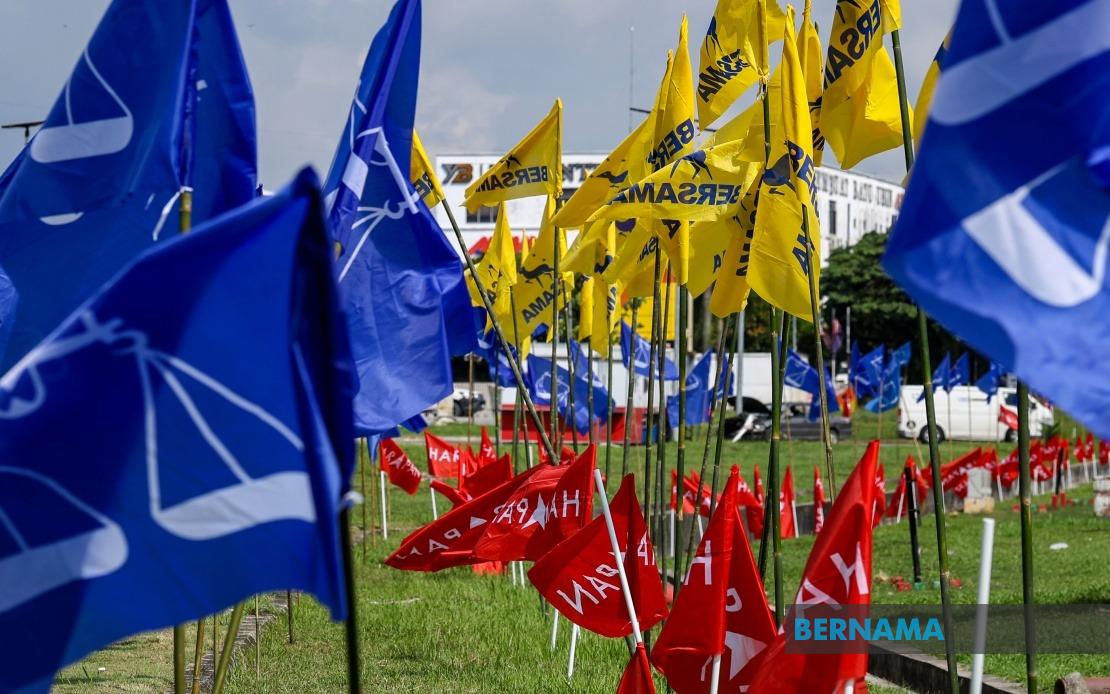
The opening week of campaigning for Johor's 16th state election has unfolded with notably restrained energy, departing markedly from the traditional high-decibel approach that has long characterised Malaysian electoral contests. Instead of the customary proliferation of stadium-sized gatherings and street processions, all competing parties have deliberately adopted a more granular, relationship-based strategy centred on direct voter interaction at the community level. This methodological shift reflects a deeper recalibration of how political organisations are deploying finite resources and messaging in an increasingly fragmented media environment.
Senior analysts attribute this strategic reorientation to the evolving demands of contemporary electoral politics. Prof Datuk Dr Sivamurugan Pandian from Universiti Sains Malaysia's Department of Political Sociology notes that the initial seven days represent a foundational phase rather than an intensity peak. Candidates are prioritising house-to-house visits, intimate group discussions, and neighbourhood-based community initiatives that allow substantive conversation with constituents regarding their specific grievances and expectations. This granular methodology simultaneously strengthens internal party machinery while enabling more efficient deployment of campaign budgets—an increasingly important consideration given rising operational costs and the fragmentation of voter attention across multiple media channels.
The strategic logic underpinning this approach extends beyond mere cost-effectiveness. Face-to-face engagement affords candidates irreplaceable intelligence-gathering opportunities, permitting them to calibrate messaging around locally salient issues and identify pockets of persuadable voters within their constituencies. Sivamurugan emphasises that this foundation-building phase positions candidates advantageously for the anticipated escalation in subsequent weeks, when senior party leadership will engage more prominently and campaign intensity will visibly heighten. The underlying calculation is that early grassroots consolidation creates durable electoral infrastructure capable of withstanding the pressure and competing narratives that characterise later-stage campaigns.
Data-driven campaigning has emerged as a defining feature of Malaysia's evolving electoral landscape, according to geostrategist Dr Azmi Hassan from the Nusantara Academy for Strategic Research. Contemporary campaigns increasingly employ sophisticated voter segmentation techniques that categorise the electorate into distinct constituencies—white voters representing committed party supporters, grey voters representing swing or undecided populations, and black voters representing opposition constituencies. This taxonomy enables parties to deploy targeted messaging and canvassing efforts calibrated precisely to each segment's political inclinations and information requirements. The proliferation of social media platforms has substantially amplified the efficiency of these hybrid strategies, permitting simultaneous mass and personalised communication at previously unattainable scales.
The dominant narrative frameworks emerging across all competing parties throughout this inaugural campaign week cluster around three interconnected themes: demonstration of past administrative accomplishment, articulation of future policy commitments, and persuasive claims regarding each party's unique capacity to deliver political stability. According to Mujibu Abd Muis, a political science lecturer at Universiti Teknologi MARA and researcher at the Ilham Centre, these thematic pillars have so far remained insufficiently crystallised to fundamentally reshape the broader campaign environment. The absence of a dominant narrative possessing sufficient resonance reflects the campaign's early stage and the parties' ongoing assessment of which message-frames will prove most persuasive with the broader electorate.
Crucially, narrative effectiveness depends fundamentally on its capacity to translate into tangible voter concerns. Mujibu underscores that abstract promises regarding administrative competence resonate only when connected to the material preoccupations dominating ordinary citizens' consciousness: cost-of-living pressures, employment availability, pace of local infrastructure development, and quality of public services. Unless campaign messages successfully articulate connections between party policies and these lived economic experiences, they remain politically inert. The campaign's second and third weeks will likely witness intensified efforts by all parties to forge these concrete linkages and establish which coalition has successfully claimed ownership of the issues voters prioritise.
Geographic campaign concentration patterns reveal telling indicators about each coalition's strategic resource allocation. During the first week, party machinery mobilisation concentrated substantially across northern Johor's competitive constituencies—specifically Muar, Tangkak, Segamat, portions of Batu Pahat, and Kluang. This geographic prioritisation reflects rational allocation of campaign resources toward constituencies regarded as genuinely contestable rather than already secured by either coalition. Northern Johor contains numerous state assembly seats anticipated to register narrow victory margins, making the region strategically decisive for overall state-level outcomes. The strategic presence of national party leaders in these constituencies signals their recognised importance as potential swing regions capable of determining the election's ultimate result.
The broader campaign landscape reflects a fundamental bipolarity centring on competition between Barisan Nasional and Pakatan Harapan, according to Associate Professor Dr Mazlan Ali from Universiti Teknologi Malaysia's Faculty of Social Sciences and Humanities. Each coalition has conducted sophisticated internal assessments regarding their relative competitive position across different geographic regions. Pakatan Harapan is understood to exercise dominant influence in southern and western Johor constituencies, whilst Barisan Nasional anticipates stronger performance in eastern coastal constituencies including Mersing and Kota Tinggi. Campaign mobilisation strategies reflect these strategic assessments, with parties concentrating resources in regions where electoral outcomes remain genuinely uncertain rather than squandering effort in zones where outcomes appear predetermined.
The 16th Johor state election encompasses 172 candidates contesting 56 state assembly seats, with polling scheduled for July 11 and early voting designated for July 7. This compressed timeline means the initial campaign week's apparent quietness will likely transform into substantially elevated activity within days. Analysts unanimously emphasise that voter participation rates will exercise disproportionate influence on ultimate electoral outcomes, with turnout variations potentially altering seat distributions between coalitions. This recognition explains the simultaneous quietude and underlying intensity of current campaign activities—parties are quietly building electoral machinery while monitoring voter engagement levels and preparing to mobilise supporters for the critical voting period.
The methodological shift toward targeted engagement rather than mass rallies carries implications extending beyond this particular state election. Malaysia's electoral politics appears to be gradually transitioning toward more sophisticated, data-informed, and geographically segmented campaign strategies that reflect broader global electoral trends. This evolution suggests future campaigns will increasingly resemble the approach visible in Johor's opening week: initially subdued and internally focused, subsequently becoming more intensive once foundational work is completed. Understanding these strategic patterns becomes essential for voters seeking to evaluate how effectively parties are engaging with constituent concerns versus pursuing narrow tactical advantages.

