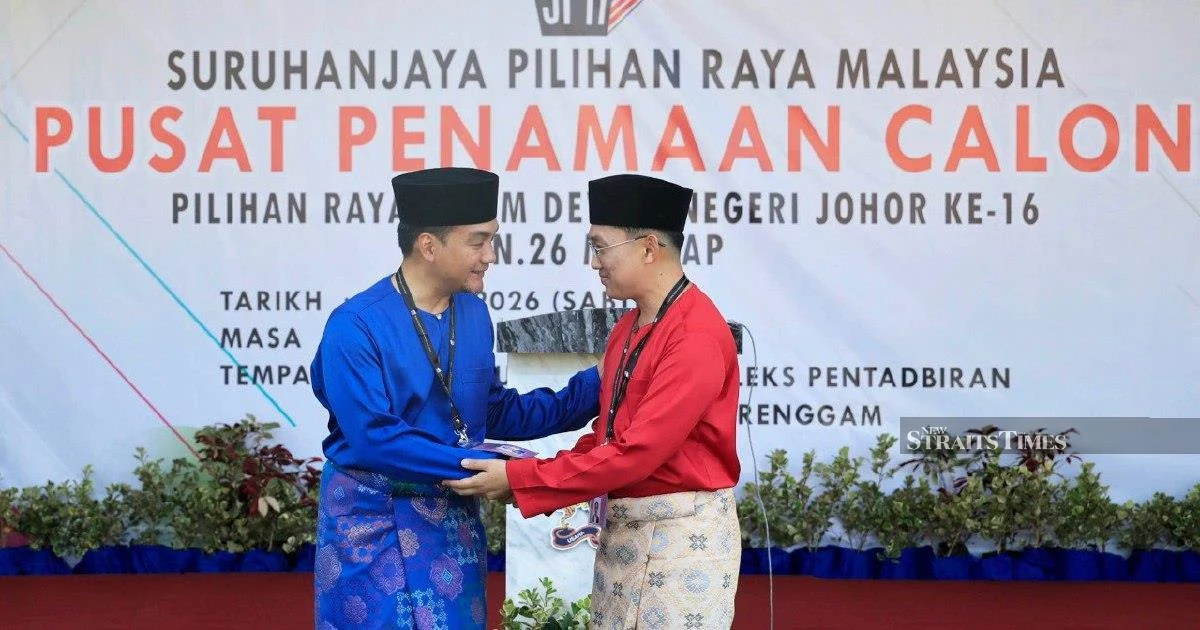
The political landscape in Johor remains fluid and uncertain, according to caretaker Menteri Besar Datuk Onn Hafiz Ghazi, who has given a candid assessment of his prospects heading into the July 11 state election. Speaking at Simpang Renggam, Onn Hafiz made clear that even as he seeks to retain his position through another electoral mandate, he recognises that no political outcome is assured in contemporary Malaysia's increasingly volatile voting environment.
Onn Hafiz's measured tone stands in contrast to the confidence sometimes displayed by incumbent officeholders approaching elections. The Machap constituency, where the caretaker Menteri Besar is contesting, has emerged as a focal point of electoral uncertainty in Johor. Rather than projecting invulnerability, Onn Hafiz has chosen to address the reality that voter sentiment can shift unexpectedly, a reflection of broader trends seen across Malaysian politics in recent years where established patterns have been disrupted.
The Johor state election represents a significant political moment for both the ruling Barisan Nasional coalition and the opposition blocs vying for control of Malaysia's second-largest state economy. The outcome will have implications not only for Johor's governance but also for the broader balance of power at the national level, as state administrations play an increasingly important role in implementing federal policies and managing regional economic development.
For Onn Hafiz specifically, securing a second term as Menteri Besar would represent validation of his stewardship over Johor's affairs since taking office. The caretaker leader has presided over the state during a period marked by economic challenges and shifting political alliances that have characterised Malaysian politics. His acknowledgement of electoral unpredictability demonstrates political maturity and an understanding that voter behaviour cannot be predicted with certainty, particularly in constituencies where demographic changes and shifting political preferences have reshaped the electorate.
The Machap constituency itself has become a symbolic battleground in Johor's electoral contest. Positioned within a region that has historically supported Barisan Nasional, the seat nonetheless represents the kind of traditionally reliable territory that opposition coalitions have increasingly targeted in recent election cycles. Onn Hafiz's caution reflects awareness that historical voting patterns no longer guarantee electoral outcomes, as voters increasingly base decisions on local performance assessments, personal economic circumstances, and evolving political narratives.
Johor's economic significance within the Malaysian federation adds weight to the state election. As a major contributor to the national economy with substantial manufacturing, port operations, and agricultural sectors, the state government's policies directly affect not only Johorians but also investors and businesses operating within its jurisdiction. The composition of the state legislature will determine the direction of economic policies, infrastructure investment, and regulatory approaches that either enhance or constrain economic dynamism.
The July 11 election will determine the composition of the 56-member Johor State Assembly, with significant consequences for resource allocation and development priorities across the state's multiple regions and constituencies. Different administrations typically pursue divergent approaches to land management, urban planning, and business-friendly policies, meaning the electoral outcome carries tangible implications for Johor's trajectory over the following five years.
Onn Hafiz's campaign strategy appears designed to avoid the pitfalls of overconfidence that have plagued some incumbent politicians in recent Malaysian elections. By publicly acknowledging that outcomes remain uncertain and unpredictable, the caretaker Menteri Besar may be encouraging his supporters to turn out and vote with greater urgency rather than assuming victory is inevitable. This approach reflects lessons learned from previous elections where presumed victories did not materialise.
The political environment in which this election occurs differs markedly from previous electoral contests in Johor. Coalition dynamics have shifted at both state and national levels, with new alliances forming and traditional partnerships facing strain. Voters in Johor have become more discerning in evaluating competing political offers, with greater emphasis placed on tangible delivery of services, infrastructure improvements, and economic opportunities than on traditional party loyalty or historical affiliation.
Regional implications also merit consideration, as Johor's election outcome will influence the political calculations of neighbouring states and the broader Southeast Asian region. Malaysia's second-largest state serves as an economic and political bellwether for the nation, with its electoral results often presaging shifts in national political sentiment. Strong performance by any coalition in Johor can strengthen that coalition's hand in subsequent federal-level political manoeuvring and policy negotiations.

