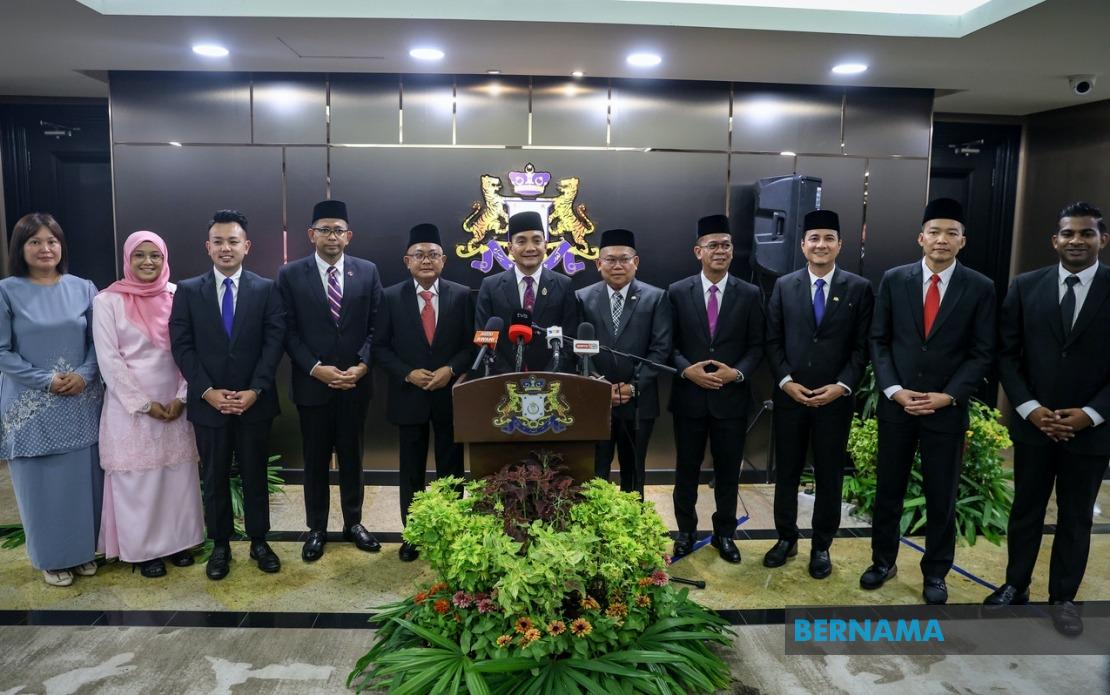
The Johor State Government has moved to strengthen its education administration by appointing a deputy chairman to the State Education and Information Committee, a structural decision aimed at improving how the state manages its educational portfolio and serves the public more effectively. V. Rugendran has taken up the newly created role alongside Chairman Dr Muhammad Naqib Md Ghazali, marking a shift toward distributed leadership in one of Johor's most critical policy areas.
Dr Muhammad Naqib outlined the rationale behind the administrative change at a ceremony held at the Johor Talent Development Council office in Kota Iskandar, emphasising that the addition of a deputy would facilitate better delegation of responsibilities across the various agencies and initiatives under the education portfolio. By introducing a hierarchical support structure, the state aims to prevent bottlenecks in decision-making and enable more responsive governance. The chairman stressed that this collaborative framework allows the committee to reach beyond traditional stakeholder groups and hear directly from the broader population about their education concerns and aspirations.
The appointment arrives as Johor Menteri Besar Datuk Onn Hafiz Ghazi continues a wider administrative overhaul involving the State Executive Council. During his opening State EXCO meeting this morning, the Menteri Besar reminded all newly appointed officials that their mandate extends beyond partisan considerations and demands service delivery rooted in universal principles of fairness and inclusivity regardless of ethnicity or faith. This emphasis on impartial governance reflects the administration's stated commitment to equitable resource distribution across Johor's diverse districts and communities.
The restructuring of the education committee forms part of a larger governmental reorganisation. Onn Hafiz announced the simultaneous appointment of ten deputy chairmen across various State Government Committees, signalling a systematic approach to decentralising authority and preventing power concentration within individual committee heads. Officials framed these appointments as essential mechanisms for accelerating problem resolution at the grassroots level and ensuring that development initiatives reach all segments of the population with equal efficiency.
Education remains central to Dr Muhammad Naqib's vision for Johor's future. He identified the sector as foundational to nurturing what he termed a resilient generation capable of confronting emerging challenges. This framing positions education not merely as a service delivery function but as a strategic investment in social and economic resilience. Within this broader philosophy, the chairman highlighted two specific initiatives commanding priority: the implementation of Sekolah Rintis Bangsa Johor and the continued expansion of the Johor Talent Development Council infrastructure.
The Sekolah Rintis Bangsa Johor represents an experimental framework for educational delivery tailored to local contexts and values. By using pilot schools to test new pedagogical approaches and curriculum structures before broader rollout, Johor positions itself as a laboratory for education innovation within Malaysia's federal system. Such initiatives may offer lessons applicable across other states grappling with similar challenges of education quality and cultural relevance.
The expansion of the JTDC signals Johor's investment in developing skilled talent pipelines aligned with the state's economic diversification agenda. As Malaysia's southern economic gateway and a region with significant manufacturing and logistics infrastructure, Johor's competitiveness depends partly on workforce capabilities. The JTDC expansion suggests the state recognises that talent development initiatives require sustained institutional capacity and professional management to deliver measurable outcomes.
Dr Muhammad Naqib expressed confidence in the capacity of existing department heads and agency directors operating within his portfolio to translate the new collaborative structure into concrete improvements. This expression of faith in institutional personnel reflects a management philosophy prioritising continuity and institutional knowledge rather than wholesale personnel replacement. The chairman's statement implicitly suggests that structural reorganisation, rather than staffing overhauls, represents the primary lever for improvement in how Johor's education sector functions.
For Malaysian readers beyond Johor, this appointment holds broader significance. State governments across the peninsula have pursued varying approaches to administrative restructuring in recent years, reflecting different philosophies about optimal governance design. Johor's decision to introduce deputy chairmen across multiple committees may influence similar deliberations in other states, particularly those with newly elected administrations seeking to establish their governance credentials. The success or failure of this model in delivering promised improvements will likely be monitored by other regional administrations.
The governance challenge underlying these appointments extends beyond structural questions. How effectively the new deputy chairman role translates into tangible improvements in education outcomes, access, and equity will determine whether this represents substantive reform or administrative reshuffling. The test lies not in appointment ceremonies but in whether Johor's students experience measurable improvements in classroom resources, teacher quality, curriculum relevance, and educational outcomes across all district communities.
Moreover, the emphasis on inclusivity and equitable implementation across all districts suggests awareness of potential regional disparities in educational attainment and infrastructure quality. Johor's more urbanised southern districts centred on Iskandar Puteri and Johor Bahru likely enjoy superior facilities compared to more rural northern areas like Kluang or Mersing. Whether the new committee structure generates sufficient political will and resource allocation to narrow these internal state disparities remains an open question requiring sustained scrutiny beyond the announcement phase.

