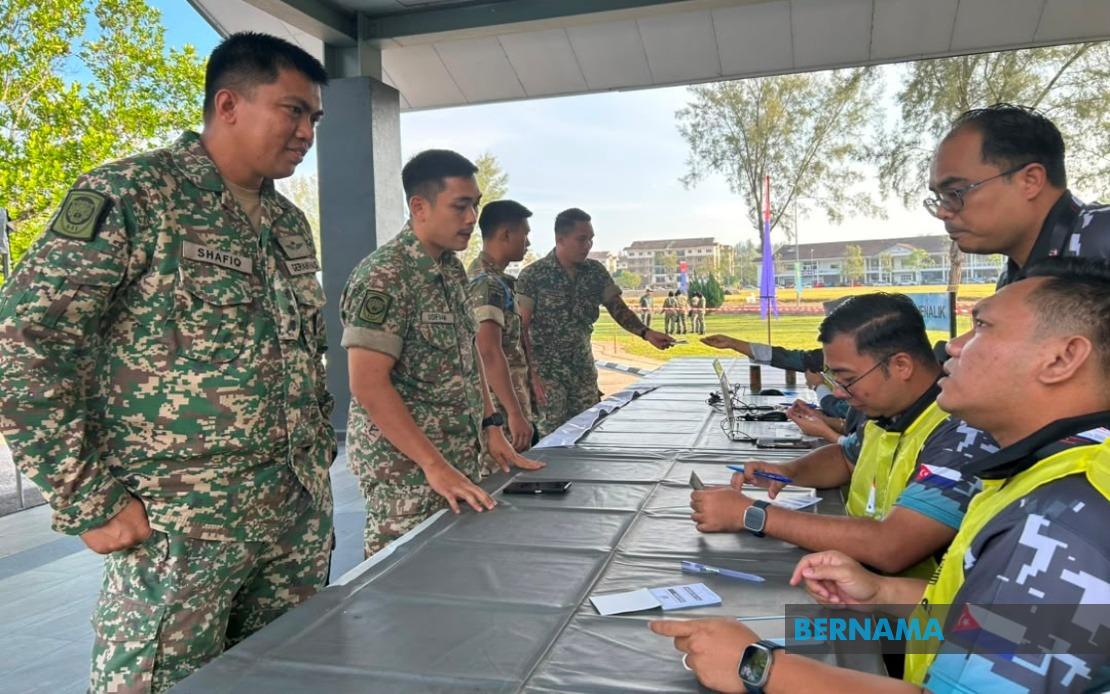
The Johor state election's preliminary voting session got underway on July 7 with ideal atmospheric conditions supporting the turnout of military and police personnel at designated polling locations throughout the state. Security staff began arriving from 7.30 am, well before the official 8 am commencement, with clear skies enabling smooth registration and voting procedures at all 64 established centres.
The timing proved fortuitous for election administrators. The Malaysian Meteorological Department had issued an alert predicting afternoon thunderstorms in various regions of Johor, which could have disrupted the process had the morning light not been so cooperative. The clement early conditions allowed the Election Commission apparatus and security contingents to complete their preparatory work without weather-related complications, setting a positive tone for the first phase of voting in what is shaping as a closely watched regional contest.
The early voting arrangement accommodated 24,751 eligible voters drawn primarily from the armed forces and law enforcement community. Of this total, 12,041 were Malaysian Armed Forces personnel alongside their spouses, while 12,710 represented members of the Royal Malaysia Police and General Operations Force together with their dependents. This separate polling opportunity reflects the operational demands on security agencies that typically prevent them from voting on the standard election day.
Across multiple polling venues inspected by election observers, proceedings unfolded without incident. Visits to facilities including the 5th Battalion GOF Camp in Simpang Renggam, the Johor Contingent Police Headquarters, and Mahkota Kluang Camp all demonstrated orderly queuing, efficient processing, and thorough ballot security protocols. The Election Commission had conducted meticulous final-stage preparations prior to opening, underscoring institutional readiness for the voting exercise.
The early voting window carried particular significance given Johor's status as a pivotal state in Malaysian politics. With 2,727,926 registered voters ultimately eligible to participate in the full election across 1,140 polling stations, the state commands substantial electoral weight. The 56 state assembly seats contested by 172 candidates represent constituencies where local governance, economic opportunity, and community concerns intersect with statewide governance dynamics.
Scheduling considerations shaped the early voting framework substantially. Across the 64 designated centres, closure times varied between noon and 6 pm according to location-specific voter rolls and logistical factors. This staggered approach prevented congestion while acknowledging the diverse geographic spread of security personnel stationed throughout Johor's various administrative districts.
The early voting phase served as a practical test of the Election Commission's operational capacity ahead of the main polling day scheduled for Saturday. Any procedural bottlenecks, technical glitches, or administrative oversights identified during this preliminary round could theoretically be addressed before the broader electorate participated. The smooth execution documented at multiple venues suggested the institutional machinery was functioning as designed.
For Malaysian observers tracking regional electoral trends, the Johor contest holds implications beyond state boundaries. As a territory with historical significance in national politics and economic importance as a manufacturing and commerce hub, outcomes here often signal broader shifts in voter sentiment and party support. The early voting segment, while representing only a small fraction of total eligible voters, provided preliminary indications of participation rates and logistical readiness.
Weather forecasting had introduced an element of uncertainty that ultimately proved manageable. The morning window offering clear conditions meant that security personnel could navigate to polling centres without delays or safety concerns. Had precipitation begun earlier than meteorologically anticipated, the process could have faced complications given the specific design of early voting accommodations for personnel whose work schedules typically prevent standard-day participation.
The Election Commission's coordination with security agencies reflected the institutional frameworks that have evolved around election administration in Malaysia. Clear communication channels, established protocols, and designated facilities ensure that voting rights extend to all eligible citizens regardless of occupational constraints. The successful preliminary voting phase demonstrated these mechanisms operating effectively under real conditions.
Looking toward the Saturday main polling day, election authorities would be monitoring weather developments carefully given the afternoon thunderstorm warnings. With over 2.7 million voters across 1,140 centres statewide, widespread precipitation could affect turnout and logistics at a much larger scale than the early voting phase had required. Contingency planning for such scenarios forms part of professional election administration in tropical climates.
The early voting results would contribute to the overall picture of voter engagement in the Johor election. Turnout rates among security personnel, the operational efficiency demonstrated, and any technical or procedural observations would inform analysis of how the subsequent main polling day unfolded across the state's diverse constituencies and voter demographics.

