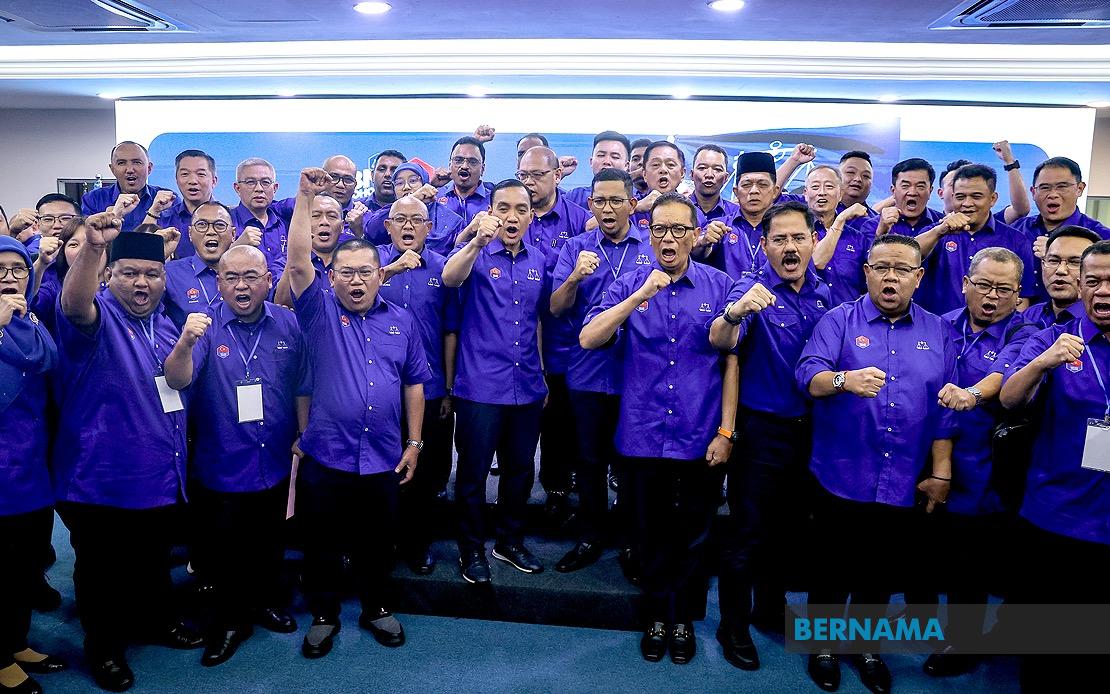
Johor Barisan Nasional unveiled its complete candidate roster for the 16th state election on Monday, deploying a combination of tested political heavyweights and newcomers across all 56 contested seats. The coalition's leadership, led by Johor BN chairman Datuk Onn Hafiz Ghazi, structured the line-up to retain most sitting assemblymen while introducing fresh candidates in selected constituencies, a strategy aimed at reinforcing BN's dominant position in Malaysia's southern stronghold.
The 56-candidate slate comprises 37 UMNO representatives, 15 from the Malaysian Chinese Association (MCA), and four from the Malaysian Indian Congress (MIC), reflecting the traditional power distribution within the broader coalition structure. The selection received formal endorsement from national BN chairman Datuk Seri Dr Ahmad Zahid Hamidi, underscoring the central party's involvement in finalising Johor's electoral strategy. This composition suggests BN intends to maintain its established community representation framework while potentially adjusting candidate distribution in response to demographic shifts or local political dynamics.
Menteri Besar Onn Hafiz will stand for re-election in Machap, the seat he captured in the 2022 state election. His nomination for defence of the constituency signals continuity in the state's executive leadership and reflects confidence within BN's upper echelons regarding his political standing among Machap voters. The decision to field him again rather than retire him from electoral competition suggests the coalition views his incumbency as an electoral asset rather than a liability heading into what could be a closely watched contest.
A headline addition to the candidate roster is former Health Minister Datuk Seri Dr Adham Baba, who returns to electoral competition in Pasir Raja after an absence spanning several years. Adham, who currently serves as Tenggara UMNO division chief, held Pasir Raja for two consecutive terms from 2008 to 2018, subsequently served as Tenggara Member of Parliament in two separate periods between 2004-2008 and 2018-2022, and represented the constituency in various capacities before stepping back from frontline politics. His re-nomination represents an attempt to harness his legislative experience and established grassroots networks in a constituency where he maintains significant name recognition and organisational support.
The coalition's approach to candidate selection reveals subtle shifts in Johor's internal political dynamics. Notably absent from the Benut nomination is former Menteri Besar Datuk Seri Hasni Mohammad, a senior UMNO figure who previously held the incumbent assemblyman position. Rather than retiring him gracefully or repositioning him elsewhere, BN has replaced him with UMNO working secretary Datuk Mohd Sumali Reduan. This substitution signals potential succession planning or a recalibration of UMNO's factional balance within Johor's leadership structure, though the coalition has not publicly articulated the reasoning behind this significant change.
Continuity has generally characterised BN's approach to retaining experience at the state assembly level. Nine of the ten former Johor executive councillors who contested in the 2022 state election have received nomination tickets to defend their positions. The single exception is Khairin-Nisa Ismail @ Md On, formerly the State Women, Family and Community Development Committee chairman, who will not be renominated for the Serom seat. This high retention rate suggests satisfaction with the performance of sitting exco members and reflects a strategy of rewarding loyalty while minimising internal party disruption.
Onn Hafiz, in his remarks during the candidate announcement ceremony, contextualised the nominations as obligations rather than honours, cautioning recipients that securing a BN ticket represents a mandate to serve rather than a personal achievement. This framing carries particular weight in Malaysian politics, where the boundary between elected office and public trust frequently becomes contested terrain. His emphasis on integrity and constituency service appears designed to establish performance expectations and potentially pre-empt criticism regarding candidate quality or allegiances to factional interests within UMNO.
The coalition chairman further instructed all nominees to conduct campaigns adhering to standards of courtesy, respect, and prudent conduct consistent with Johor's political culture and public expectations. This explicit directive suggests BN recognises reputational risks from aggressive or divisive electioneering and seeks to position itself as the responsible, establishment choice against potentially more combative opposition campaigns. For Malaysian observers, such appeals to civility often signal attempts to neutralise anticipated criticism or to establish tactical advantage through claims of moral and ethical superiority.
For regional observers monitoring Malaysian electoral trends, Johor's candidate composition offers insights into broader UMNO and BN strategic thinking. The balance between retaining experienced legislators and introducing new faces suggests party leadership aims to project both stability and renewal simultaneously, appealing to voters seeking competent governance while signalling generational transition. The nomination of returning figures like Adham Baba alongside sitting incumbents creates a layered leadership structure that could prove advantageous should electoral outcomes prove more competitive than BN historically expects.
The Johor state election context carries implications extending beyond the state's borders, given Johor's status as Malaysia's second-largest state by population and its strategic position at the nation's economic crossroads. How effectively BN's candidate roster translates into electoral performance will provide early signals regarding the coalition's broader electoral prospects ahead of potential federal election contests. The composition of this slate, balancing experience with accessibility, suggests BN anticipates a more closely contested electoral environment than complacency regarding its historical dominance might suggest.
Operational execution and campaign quality will ultimately determine whether BN's candidate selection strategy proves effective, but the initial roster demonstrates careful attention to factional balance, continuity in governance, and strategic positioning relative to opposition alternatives. Johor voters will ultimately render judgment on whether the coalition's nominee selections align with contemporary political demands and constituency-level expectations. The outcome in Johor will resonate across Malaysia's political landscape, potentially shaping how federal-level parties approach their own candidate selection processes and regional strategies.