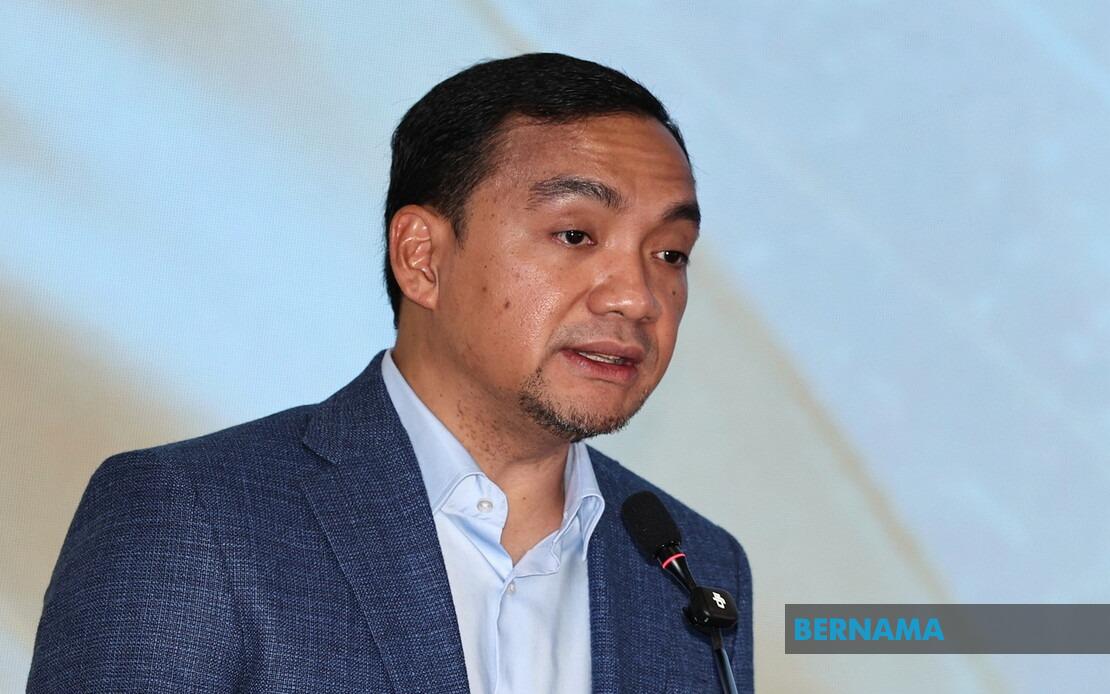
Johor Menteri Besar Datuk Onn Hafiz Ghazi has firmly rejected claims by former UMNO Supreme Council member Datuk Dr Mohd Puad Zarkashi that the Johor Regent had issued a directive to dissolve the state legislative assembly. Speaking in Johor Bahru on June 25, Onn Hafiz clarified that the dissolution process was governed entirely by constitutional law and carried out only after obtaining formal royal consent from Tunku Mahkota Ismail, the Johor Regent.
The Menteri Besar emphasised that Malaysian constitutional practice strictly prohibits a chief executive from unilaterally dissolving a state legislature without proper legal procedures. The dissolution of the Johor assembly, he explained, followed the specific provisions outlined in Article 23, Second Part of the Laws of the State of Johor. This distinction between obtaining royal assent and receiving a political directive is significant in Malaysian governance, where the respective roles of elected officials and the monarchy must remain clearly demarcated to preserve institutional integrity.
Onn Hafiz described his interaction with the palace as a formal audience during which he presented the matter to the Regent, following which he received consent to proceed with the dissolution announcement to the public. He characterised this as standard constitutional procedure rather than an instruction or political intervention. The process itself, he underlined, is entirely transparent and regulated by state law, leaving no room for arbitrary decision-making by the executive.
The Menteri Besar's statement carries particular weight given Malaysia's constitutional framework, which carefully balances executive authority with the ceremonial and custodial roles of the monarchy. In Johor specifically, the state's constitutional arrangements grant the Regent considerable significance, and any suggestion of improper palace involvement in partisan political decisions would represent a serious breach of convention. Onn Hafiz's clarification seeks to reassure the public that proper constitutional channels were observed throughout the dissolution process.
Concerning Mohd Puad's recent departure from UMNO, Onn Hafiz acknowledged the former official's right to resign and hold differing political views. However, he characterised the allegations regarding palace involvement as extraordinarily serious and potentially dangerous to public discourse. Such accusations, he argued, risk damaging the reputation and standing of the royal institution by implying that it has overstepped constitutional boundaries into partisan political interference.
Onn Hafiz highlighted that remarks touching on the three Rs—referring to the sensitive constitutional protections governing the monarchy, Islam, and Malay special rights—require particular care and responsibility from public figures. In Malaysia's delicate social and political ecosystem, careless statements about the monarchy can inflame communal sensitivities and undermine public confidence in institutions. The Menteri Besar's concern reflects broader Malaysian anxieties about maintaining the constitutional consensus that has underpinned the nation's stability since independence.
Recognising the gravity of the matter, Johor UMNO announced its intention to lodge a police report to enable formal investigation into the allegations. This step indicates that the party views Mohd Puad's claims as requiring serious scrutiny through legal channels rather than political debate alone. Such reports serve to establish an official record and allow investigative agencies to determine whether the statements warrant further action under relevant laws.
Onn Hafiz issued a broader appeal to all political actors and stakeholders to demonstrate respect for Malaysia's constitutional institutions and to refrain from exploiting the monarchy in factional disputes. This call reflects a recognition that political competition, while legitimate and essential to democracy, must operate within boundaries that protect core institutions. The repeated invocation of constitutional propriety throughout his statement underscores the importance that Malaysian political leaders place on preserving the legitimacy of formal processes.
The disagreement between Onn Hafiz and Mohd Puad represents a wider tension within UMNO as the party navigates internal divisions following the 2022 general election and subsequent political realignments. Mohd Puad's departure and his criticism of the Johor assembly dissolution indicate simmering discontent within party ranks regarding decision-making processes and the leadership's political direction. His exit adds to a series of prominent UMNO defections that have characterised Malaysian politics in recent years.
For Malaysian observers and constitutional scholars, this episode illuminates the continuing importance of clear communication about constitutional procedures in a political environment where ambiguity can breed suspicion. The distinction between royal consent as a legal requirement and royal direction as political interference is fundamental to Malaysia's system of government. Onn Hafiz's emphasis on procedural correctness serves to reinforce this distinction and to prevent erosion of constitutional safeguards.
The situation also demonstrates how state-level politics in Malaysia remain entangled with broader questions about institutional relationships and constitutional interpretation. Johor, as one of Malaysia's most politically significant states and home to substantial economic and administrative importance, commands particular attention when constitutional questions arise. Any perception of irregular behaviour by Johor's leadership carries implications beyond the state itself, potentially affecting public confidence in governance across the federation.
Moving forward, the police investigation into Mohd Puad's statements will likely clarify whether his remarks constitute actionable violations of laws protecting the monarchy or whether they should be understood as protected political speech within the bounds of debate. This outcome will have implications for how Malaysian political figures discuss sensitive constitutional matters and the limits of permissible criticism in the nation's democratic discourse.

