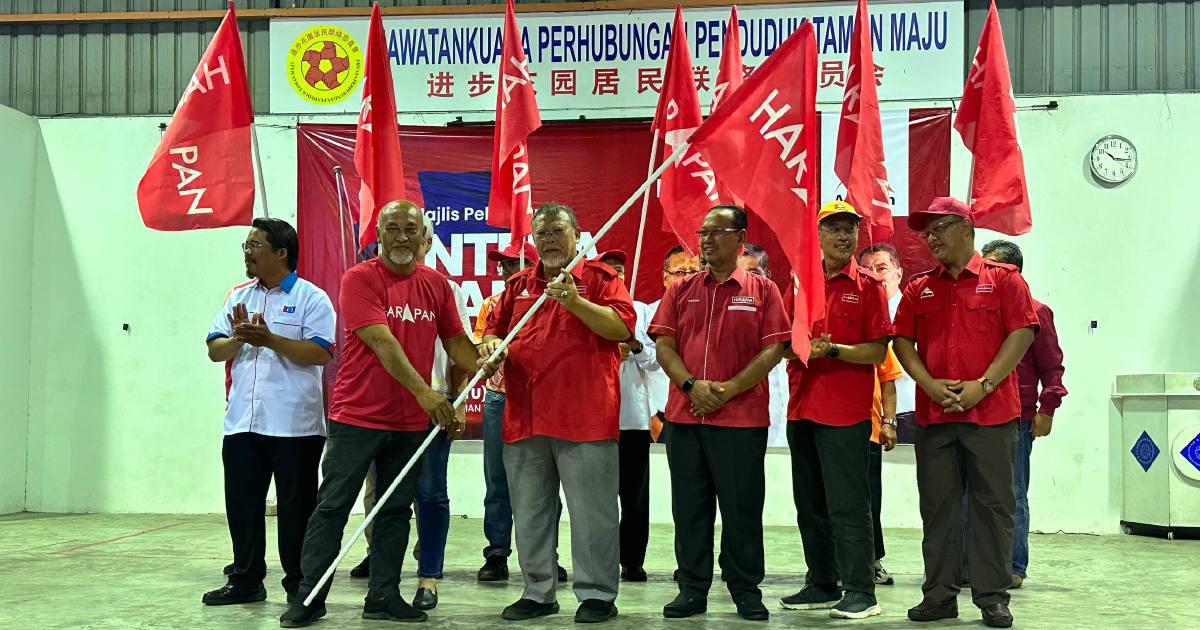
Johor Amanah has declared confidence that it will secure at least six seats from the ten state constituencies it is fielding candidates in across the northern zone ahead of the July 11 state election, according to statements from party officials in Batu Pahat.
The party's optimistic projection reflects what party strategists perceive as strengthening grassroots support in rural and semi-urban areas that comprise much of Johor's northern electoral landscape. This region has traditionally been politically competitive, with voters showing openness to different coalition alignments across successive electoral cycles.
Amanah's performance will serve as a critical test for PKA's broader viability in Malaysia's southern heartland. As one of the smaller components within PKA, Johor Amanah's ability to translate voter sentiment into legislative seats will influence the larger coalition's calculus for future state-level contests and potentially inform national political strategy.
The northern zone constituency grouping represents roughly one-third of Johor's total state seats, making performance there disproportionately significant for gauging overall electoral health. Party operatives have emphasised intensive grassroots mobilisation, particularly in communities where dissatisfaction with incumbent governance has created openings for alternative political voices.
For Malaysian observers tracking opposition coalition dynamics, Johor Amanah's electoral positioning deserves close attention. The party must balance messaging that resonates with its base—typically younger, urban-leaning voters concerned with institutional reforms and transparency—while simultaneously penetrating agricultural and traditional communities where different political narratives carry weight.
The July 11 contest arrives amid shifting political landscapes throughout Southeast Asia, where voters increasingly demonstrate volatility and reduced attachment to traditional party structures. Johor, as Malaysia's second-largest state by population and economic significance, remains a bellwether for broader electoral trends that ripple through the region.
Amanah's six-seat target represents neither an overwhelming victory nor a marginal performance; it occupies a middle-ground projection that suggests confidence without overreach. Achievement of this benchmark would position the party as a meaningful player in post-election coalition negotiations, potentially expanding its influence within PKA's internal decision-making architecture.
The campaign period will test whether Amanah's organisational capacity has matured sufficiently to translate supporter enthusiasm into disciplined electoral mobilisation. Party operatives must navigate complex local dynamics where issues of concern—infrastructure development, hawker welfare, educational access—vary significantly between urban Batu Pahat proper and surrounding rural mukim.
Regional context matters significantly here. Johor's proximate position to Singapore and historical identity as an economic powerhouse means electoral outcomes carry weight beyond state boundaries. Investors, trading partners, and regional observers monitor Johor elections partly as indicators of political stability and governance quality affecting commercial confidence throughout southern Malaysia.
Should Amanah approach its stated target, the party will likely leverage that performance to consolidate its presence in Johor politics ahead of federal parliamentary redistricting and the next national election cycle. Conversely, falling substantially short could necessitate strategic recalibration of messaging, candidate selection, or resource allocation in the state.
The broader PKA coalition will be watching closely. Individual component performance across state elections during 2023-2024 contributes to determining coalition power-sharing arrangements and ministerial portfolios, making Amanah's results relevant to national political mathematics even though state seats alone do not determine federal outcomes.
Voters in Johor's northern zone will ultimately determine whether Amanah's confidence is vindicated or whether its projection overestimated its electoral appeal. The July 11 contest remains fluid, with three weeks providing ample opportunity for campaign developments that could shift momentum in unexpected directions.


%22%2F%3E%3C%2Fpattern%3E%3C%2Fdefs%3E%3Crect%20width%3D%22100%25%22%20height%3D%22100%25%22%20fill%3D%22url(%23ph5xlpvg)%22%2F%3E%3Crect%20width%3D%22100%25%22%20height%3D%22100%25%22%20fill%3D%22url(%23ph5xlpvp)%22%2F%3E%3Ctext%20x%3D%2250%25%22%20y%3D%2250%25%22%20text-anchor%3D%22middle%22%20dominant-baseline%3D%22central%22%20fill%3D%22rgba(255%2C255%2C255%2C0.95)%22%20font-family%3D%22Georgia%2C%20'Times%20New%20Roman'%2C%20serif%22%20font-weight%3D%22700%22%20font-size%3D%22170%22%20letter-spacing%3D%22-0.02em%22%3EMalaysia%3C%2Ftext%3E%3C%2Fsvg%3E)