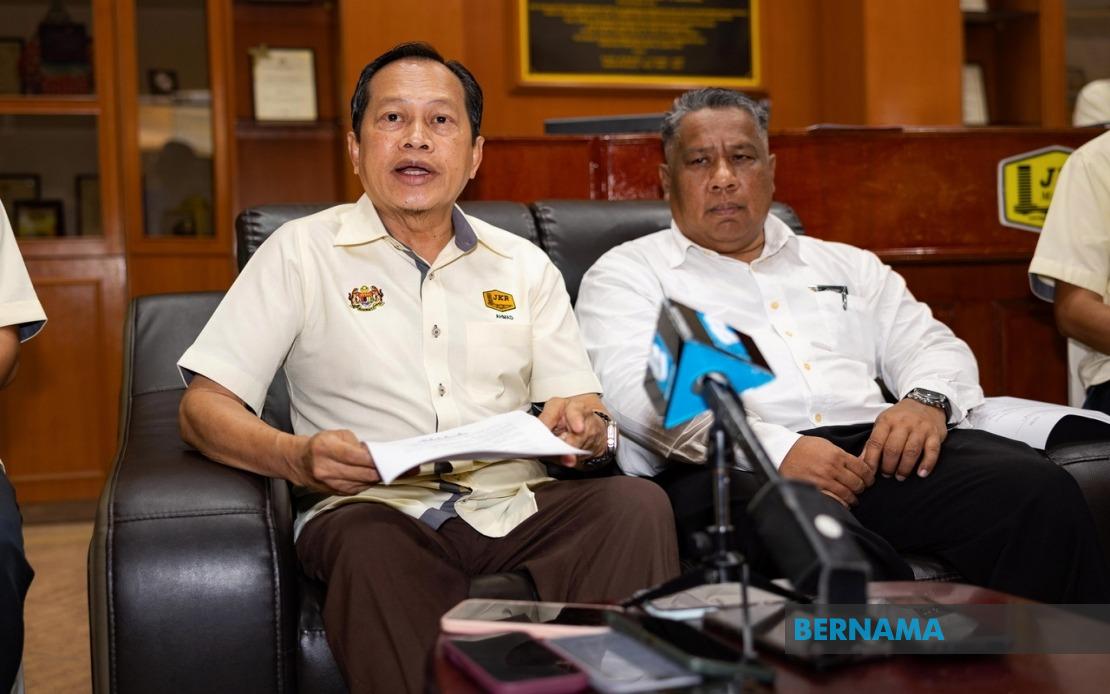
The question of who bears responsibility for maintaining trees along Malaysia's federal roads has been thrust into the spotlight following a tragic incident in Bentong where four family members were killed by a falling tree. Deputy Works Minister Datuk Seri Dr Ahmad Maslan sought to settle the matter during a visit to the Manjung District Engineer's Office, establishing that tree management along federal roads remains fundamentally a local authority function, even as the Public Works Department and private maintenance concessionaires signal their willingness to work more closely with municipalities and councils on this critical safety issue.
Ahmad Maslan grounded his clarification in existing legislation, specifically pointing to Section 101(b) of the Local Government Act 1976, which grants local authorities the power to plant, prune, and remove trees within their administrative boundaries. This authority extends to trees located on federal road reserves that fall within the jurisdiction of these local planning entities. The legal framework thus places the onus for arboricultural management squarely on the shoulders of local government bodies rather than federal agencies, a distinction that has become increasingly important as incidents involving falling trees claim lives.
The deputy minister was responding to calls from Bentong Member of Parliament Young Syefura Othman, who had urged JKR and private concession companies to strengthen their partnerships with certified arboricultural experts. These partnerships would ideally involve conducting regular technical assessments of mature trees and examining slope stability along federal roads to prevent future tragedies. The incident that prompted these calls represents the kind of preventable disaster that haunts public consciousness and prompts questions about systemic preparedness and inter-agency coordination.
Clarifying JKR's constraints, Ahmad Maslan explained that the department's mandate along roadsides encompasses road furniture and signage rather than vegetation management. He stated this distinction without attempting to absolve the Works Ministry of broader responsibility for road safety, but rather to establish the proper institutional boundaries. The concession agreements that govern private companies maintaining federal roads contain specific limitations regarding tree removal. These agreements only permit cutting down trees that have already fallen, effectively constraining proactive arboricultural intervention even when professional assessment might suggest it would be prudent.
This structural constraint embedded in concession contracts highlights a potential vulnerability in Malaysia's approach to federal road maintenance. While the agreements may have been designed to prevent unnecessary or profit-driven removal of roadside vegetation, they create a reactive rather than preventive framework. Companies wait for trees to fall rather than intervening before failure becomes imminent, a posture that may prove inadequate given the tropical climate's tendency to produce heavy growth and occasional severe weather events that stress tree structures.
The deputy minister's visit to Manjung was framed around ensuring proper monitoring and coordination across different levels of government. Ahmad Maslan stressed the necessity of continuous oversight and close collaboration between the federal Ministry of Works, the state JKR apparatus in Perak, and district-level engineers. He positioned these coordinating mechanisms as essential to maintaining infrastructure standards and ensuring that projects proceed according to specifications, timelines, and allocated budgets. This emphasis on systematic oversight reflects a broader government push toward institutional efficiency and accountability.
The tragedy in Bentong has exposed the complexity of responsibility distribution when public safety depends on multiple agencies working in concert. While legal authority may rest with local authorities, the reality of federal road networks involves JKR, concessionaires, state governments, and municipal bodies all having some stake in outcomes. The incident demonstrates that clarity about institutional responsibility, while legally necessary, may not be sufficient to prevent harm without genuine cooperative mechanisms and adequate resources flowing to those authorities tasked with tree management.
For Malaysian motorists and residents living near federal roads, the implications are significant. The framework described by Ahmad Maslan suggests that safety depends partly on how well local authorities discharge their statutory duties regarding vegetation, a function that faces perennial resource constraints in many municipalities. It also depends on whether JKR and concessionaires move beyond the minimum requirements of their formal agreements to provide technical support and expertise that might prevent disasters before they occur.
The deputy minister's commitment to strengthening monitoring and coordination suggests the federal government recognises the limitations of formal responsibility allocation. However, translating these commitments into tangible improvements requires not just administrative goodwill but also mechanisms for information sharing, resource allocation, and perhaps most importantly, the establishment of protocols that allow the expertise within JKR and private maintenance companies to inform the decision-making of local authorities tasked with vegetation management. Without such bridges, the jurisdictional clarity Ahmad Maslan articulated may protect bureaucratic interests while failing to protect lives.
Moving forward, the issue may need to transcend legal technicalities about who is formally responsible and instead focus on creating integrated systems where certified arborists can regularly assess trees in high-risk locations regardless of which agency technically holds authority. The Bentong tragedy serves as a reminder that in matters of public safety, the question of who must act may be less important than ensuring that someone, equipped with proper expertise and resources, does act before the next fatal falling tree incident occurs.

