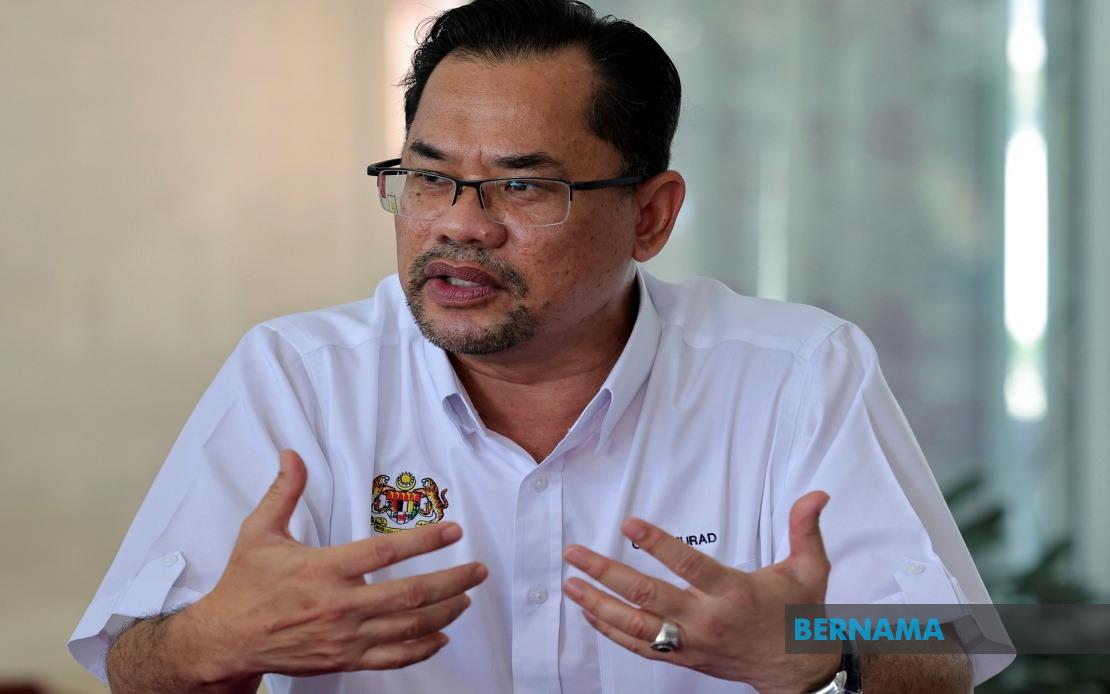
The Department of Social Welfare (JKM) is pursuing an expansive model of rural development in Penang through its MADANI Adopted Village Programme, which extends well beyond conventional infrastructure projects to encompass human capital development and income-generating skills. The initiative centres on Kampung Sungai Setar Besar in Nibong Tebal, where JKM has committed RM600,000 in combined allocations to reshape community conditions and create sustainable pathways out of poverty for residents.
The programme's two-pronged structure reflects a shift in how Malaysian authorities approach rural welfare. Of the total investment, RM500,000 goes directly to village-level interventions while RM100,000 supports the parallel MADANI Adopted School initiative at Sekolah Menengah Kebangsaan (SMK) Sungai Acheh. JKM director-general Datuk Che Murad Sayang Ramjan articulated the philosophy underpinning this approach during the programme launch, emphasising that sustainable community improvement requires more than bricks and mortar. The department recognises that Malaysian villages face compounded challenges—inadequate physical infrastructure coupled with limited human capital and employment prospects—that demand coordinated interventions across multiple fronts.
Within the village component, JKM is executing five distinct physical projects designed to enhance living conditions and community cohesion. These include comprehensive refurbishment of Masjid Al-Fatah Sungai Setar Besar, playground development in both Kampung Sungai Setar Besar and the adjacent settlement of Kampung Sungai Tok Tuntung, construction of a village landmark to reinforce community identity, and upgrading the KEMAS kindergarten facility at Tanah Kebun. This layered approach acknowledges that infrastructure development serves multiple functions simultaneously—improving daily living standards while creating focal points for community engagement and identity formation.
Education Minister Fadhlina Sidek, who officiated the launch as the Member of Parliament for Nibong Tebal, presided over an event that brought together Penang Rural Development, Agrotechnology and Food Security Committee chairman Datuk Rashidi Zinol and numerous community stakeholders. The concurrent Komuniti@Heart Programme amplified the event's reach through health screenings, welfare outreach visits, traditional games, and practical support services including free haircuts and subsidised goods. JKM's strategic deployment of the Ziarah Kasih compassionate visitation programme during this event ensured that the most vulnerable residents—including a bedridden chronic patient care recipient and an elderly assistance beneficiary—received direct engagement and assessment of their ongoing support needs.
The village education pillar extends beyond basic schooling improvements to encompass vocational and technical preparation. SMK Sungai Acheh's MADANI Adopted School status brings RM100,000 in funding for constructing an agricultural practical learning facility, establishing workshop spaces and information and communications technology equipment provision, developing a resource centre, and deploying digital classroom infrastructure. Critically, the allocation also supports character and student identity development programmes, recognising that comprehensive educational reform addresses both cognitive skills and civic values. For a largely agricultural region, integrating hands-on learning in farming technologies directly connects classroom instruction to the employment realities students will face upon graduation.
The vocational training component represents perhaps the most economically direct intervention within the MADANI framework. JKM has partnered with the PERDA Advanced Skills Institute (PERDA-TECH) to deliver technical and vocational education and training (TVET) on-job programmes worth RM100,000. This scheme will train twelve institute students alongside fifteen youths directly from Kampung Sungai Setar Besar in heavy agricultural machinery operation, with a specific focus on tractor and equipment competency. The courses are accredited and culminate in certification and diploma qualifications, creating portable credentials that enhance marketability in agricultural and related mechanical sectors. For rural youth confronting limited local employment options, such credentials represent tangible economic mobility anchors.
The demographic context underscores the programme's urgency. Kampung Sungai Setar Besar contains 519 JKM assistance recipients, representing a significant proportion of the 22,652 aid beneficiaries across Penang state. The department distributes monthly welfare payments totalling RM65.7 million across the state, with individual recipients receiving ongoing support. However, welfare assistance alone perpetuates dependency without addressing root causes of poverty. By coupling income support with skills development and educational enhancement, JKM attempts to create transition pathways whereby residents eventually reduce reliance on welfare as they gain employment prospects.
The broader strategic context reveals shifting federal and state approaches to rural development. Rather than viewing villages as static welfare recipients, the MADANI framework positions rural communities as development laboratories where integrated interventions test new models of holistic uplift. This contrasts with earlier policies that often compartmentalised infrastructure development, education, and skills training into separate bureaucratic silos. The Penang initiative demonstrates how coordinated cross-departmental effort—involving JKM, the Education Ministry, state agricultural authorities, and vocational training providers—can create synergistic effects unavailable through single-sector initiatives.
The programme's emphasis on community engagement during the launch event—featuring activities alongside infrastructure announcements—reflects recognition that development ownership matters. Residents participating in playgrounds, health screenings, and welfare outreach simultaneously experience tangible improvements while building collective efficacy around community change. The integration of cultural elements like traditional games and community feasts alongside government service delivery demonstrates sensitivity to social cohesion alongside material improvement.
For Malaysian policymakers and regional observers, the Kampung Sungai Setar Besar initiative provides a replicable model addressing persistent rural-urban disparities. Southeast Asia faces comparable challenges of agricultural sector transformation, rural youth outmigration, and uneven development. By demonstrating how targeted investment in village infrastructure, school-level technical education, and accredited vocational training can coordinate around shared community outcomes, Malaysia's MADANI approach offers pedagogical value beyond Penang's borders. The programme's success will depend on sustained implementation fidelity, adequate resource flow, and measurable tracking of employment outcomes for trained youth—metrics that will determine whether this holistic model truly bridges the socio-economic gaps it aims to narrow.

