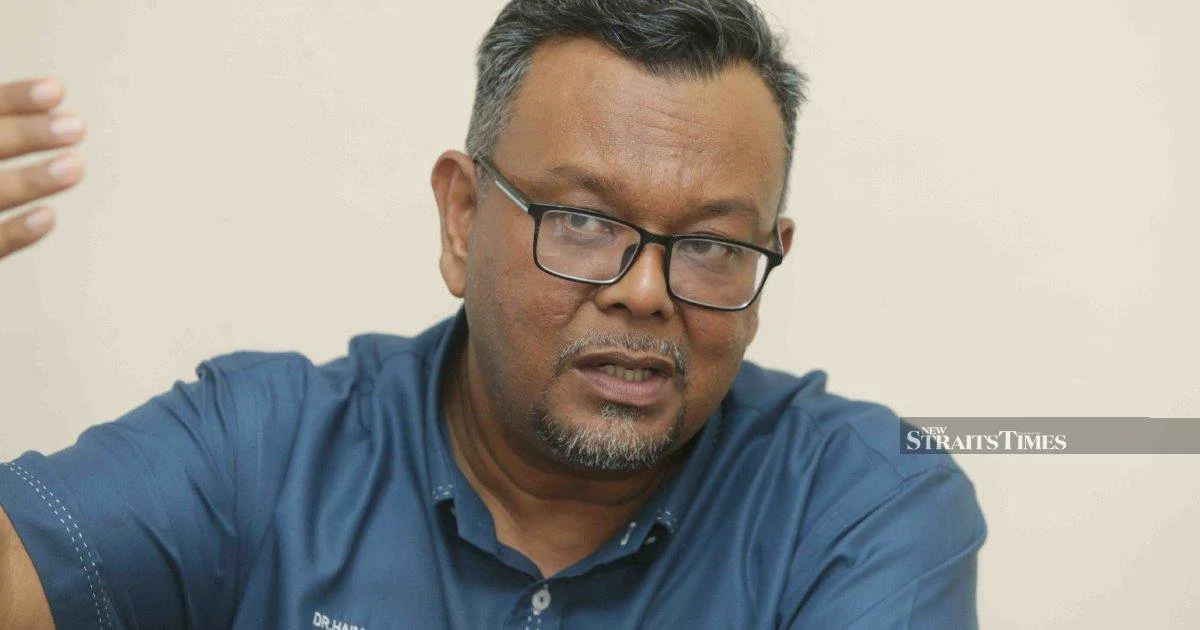
Dr Haim Hilman Abdullah, the state assemblyman representing Jitra in Kedah, is set to make a court appearance in Seremban to face charges stemming from allegations concerning remarks he had previously made about access to tertiary education in Malaysia. The scheduled hearing at the Seremban magistrate's court marks a significant development in what appears to be a protracted matter touching on claims the legislator had earlier articulated regarding pathways into higher education institutions.
The decision to proceed with charging the Jitra representative reflects authorities' determination to investigate allegations that have gathered considerable public attention given his position as a state lawmaker. The specific nature of the charges relates directly to public statements the assemblyman made regarding university admission procedures and accessibility, an area of persistent public interest across Malaysia where concerns about equitable educational access remain a recurring point of contention among students and families.
This development carries particular significance for Kedah's political landscape, as Jitra is a key constituency in the state assembly. The charges against a sitting assemblyman inevitably draw scrutiny from political observers and constituents alike, particularly regarding the implications for his continued legislative responsibilities and the broader question of accountability among elected representatives. The timing and nature of the legal action underscore ongoing tensions surrounding public statements made by politicians on matters of national concern.
University admission in Malaysia remains a contentious issue encompassing questions about merit, affirmative action policies, and transparency in selection procedures. Public figures who make claims or allegations in this arena frequently attract official attention, particularly if such statements are deemed to contain inaccuracies or deliberately misleading information. The charges against Dr Haim Hilman suggest that authorities have assessed his earlier remarks as requiring investigation through the judicial system.
For Southeast Asian observers, this case exemplifies broader patterns seen across the region where politicians' statements on education policy can trigger legal consequences. Malaysia's approach to regulating public discourse around higher education contrasts with varying standards adopted elsewhere in the region, reflecting distinct constitutional frameworks and approaches to managing political speech on sensitive policy matters.
The Seremban magistrate's court hearing will be closely watched by political analysts, educational stakeholders, and civil society observers. The outcome could establish precedent regarding what constitutes acceptable public commentary by elected officials on matters pertaining to tertiary education access. Such legal proceedings often generate broader discussions about the boundaries of permissible political discourse and the relationship between elected officials' statements and potential legal accountability.
For Dr Haim Hilman, the court appearance represents a critical juncture. As a sitting assemblyman, how he addresses the allegations will likely influence not only his legal standing but also his political viability and relationship with constituents. The matter may also affect Kedah's broader political dynamics, particularly if the case draws sustained media attention or generates public debate about the conduct of state legislators.
The allegations connected to his statements about university admission touch upon enduring policy debates in Malaysia. Questions about educational equity, merit-based selection, and transparent admissions procedures have generated passionate advocacy from various quarters, including student groups, civil society organisations, and parents concerned about fair access. When politicians intervene in these discussions through public pronouncements, they enter territory where factual accuracy and substantiation become critically important.
This legal action also occurs within Malaysia's broader context of addressing misinformation and unsubstantiated claims, areas where authorities have increasingly intervened across multiple sectors. The charging decision suggests that investigators determined the earlier statements by the Jitra assemblyman warranted formal legal scrutiny rather than being dismissed as mere political rhetoric.
The magistrate's court proceedings will likely clarify exactly which statements formed the basis of the charges and what specific allegations authorities are pursuing. This transparency will be important for understanding the precise nature of the legal case and the standards being applied to regulate public commentary on education policy by elected officials.
Observers in Malaysia and across Southeast Asia will be monitoring how the judiciary handles this matter, as it touches upon the delicate balance between protecting political speech and maintaining accountability for factual accuracy in public pronouncements. The case may ultimately influence how legislators approach future commentary on tertiary education policy and other sensitive national matters, potentially affecting the tenor of political discourse around educational access in the country.