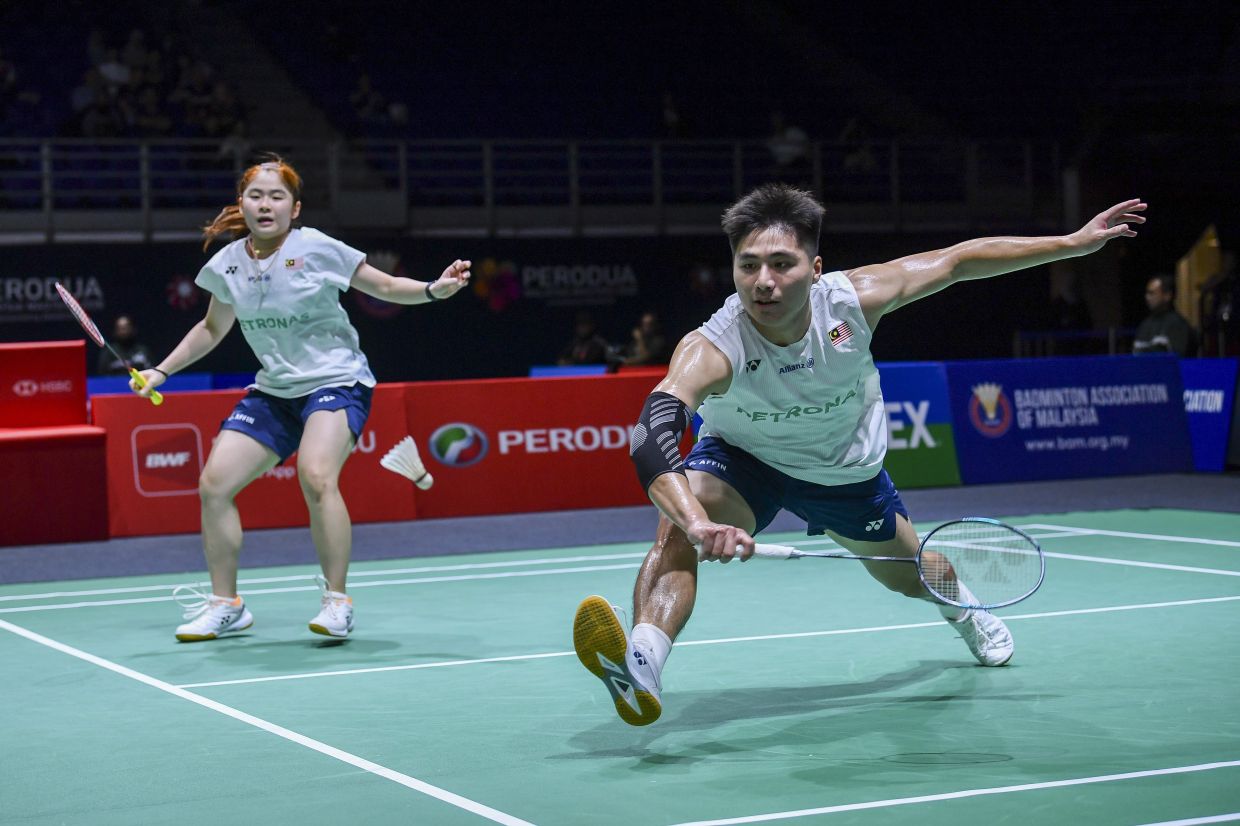
Jimmy Wong's return to the Badminton Association of Malaysia in April has reinvigorated his pursuit of Olympic glory, with the 23-year-old mixed doubles shuttle competing with genuine optimism about his prospects. Reuniting with partner Cheng Su Yin under the national framework, Wong now trains alongside Olympic silver-medallist Nova Widianto, whose pedigree and international experience have elevated the pair's preparation for their assault on the 2028 Los Angeles Olympics.
The journey back to the national set-up represents a pivotal moment for Wong, who has found himself energised by the professional infrastructure and coaching quality available within BAM's elite programme. His partnership with Su Yin has already demonstrated competitive potential despite their current world ranking of 118th, most notably when they toppled Feng Yanzhe and Huang Dongping—the world's top-ranked mixed doubles pair—in the opening round of last month's Singapore Open. That victory, though ultimately followed by second-round elimination, provided tangible evidence that the pairing possesses the technical ability and tactical acumen to compete against the sport's elite.
Wong's philosophy reflects the maturity required to navigate professional badminton's demanding landscape. Rather than imposing rigid targets that might create counterproductive psychological strain, he prioritises incremental improvement and presence during competition. This measured mindset stems partly from his acknowledgment that excessive target-setting can transform aspiration into pressure—a distinction many young athletes struggle to recognise. His focus centres instead on executing his best performance in each tournament appearance, a principle that seasoned competitors recognise as fundamental to sustained improvement and mental resilience.
The influence of coach Nova Widianto has proven transformative for Wong's development, extending far beyond technical refinement of gameplay. Widianto's credentials as a former world champion and Olympic medallist provide Wong with direct access to the experience and tactical intelligence accumulated at sport's highest level. More significantly, Widianto's mentorship addresses the psychological and interpersonal dimensions of elite competition—managing difficult in-court situations, responding to tactical adjustments by opponents, and maintaining composure during crucial moments. These intangible elements often determine outcomes in closely contested matches where technical ability is roughly equivalent among competitors.
The specific ranking milestone of 32nd position represents a strategically important waypoint in Wong and Su Yin's Olympic qualification pathway. Breaking into that threshold would unlock access to prestigious Super 750 and Super 1000 tournaments—the sport's highest-classification events outside of Olympic and World Championship competitions. These tournaments attract the world's strongest badminton nations and provide crucial ranking points, financial prize money, and invaluable competitive experience against top-tier opposition. The current gap from 118th to 32nd is substantial but not insurmountable, particularly given the relative volatility of ranking positions in mixed doubles, where a successful tournament run can yield dramatic rating improvements.
The partnership dynamics between Wong and Su Yin appear robust, characterised by effective communication and mutual understanding despite areas requiring refinement. Having completed four tournaments together, they have accumulated sufficient competitive data to identify specific technical and tactical weaknesses. This foundation of regular tournament play, combined with focused training under a world-class coach, positions them favourably for progressive improvement. The chemistry between partners in mixed doubles is particularly critical; psychological synchronisation and instantaneous communication across the net often decide close contests where marginal differences in execution separate victory from defeat.
Malaysia's mixed doubles competitive landscape has historically been challenging, with the nation producing world-class performers like Goh V Shem and Tan Wee Kiong. Wong's emergence represents part of the younger generation seeking to revitalise the country's presence in this discipline. The national programme's investment in securing coaches of Widianto's calibre suggests BAM recognises mixed doubles development as a strategic priority, potentially reflecting international competitive analysis indicating vulnerability in this category among Southeast Asian federations.
Wong's Olympic objective extends beyond personal ambition; it aligns with Malaysia's broader badminton aspirations as the country seeks to maintain international competitiveness following retirements of established stars. Success at Los Angeles 2028 would provide continuity and evidence of effective youth development pathways. The exposure to a world-class coaching environment during this critical developmental window—ages 23 to 25—represents optimal timing, as players retain physical capabilities for rapid advancement while gaining maturity to absorb sophisticated technical and tactical instruction.
Looking forward, Wong's trajectory will depend substantially on consistent tournament participation, continued ranking improvements, and maintenance of partnership stability with Su Yin. The journey from 118th to Olympic qualification status typically requires 18-24 months of sustained performance against progressively stronger opposition. With nearly four years until Los Angeles 2028, the timeline remains feasible provided the pairing experiences no major injuries or partnership disruptions. Wong's realistic outlook and emphasis on process rather than outcome-obsession suggests psychological foundations sufficient to navigate inevitable setbacks without abandonment of long-term objectives.

