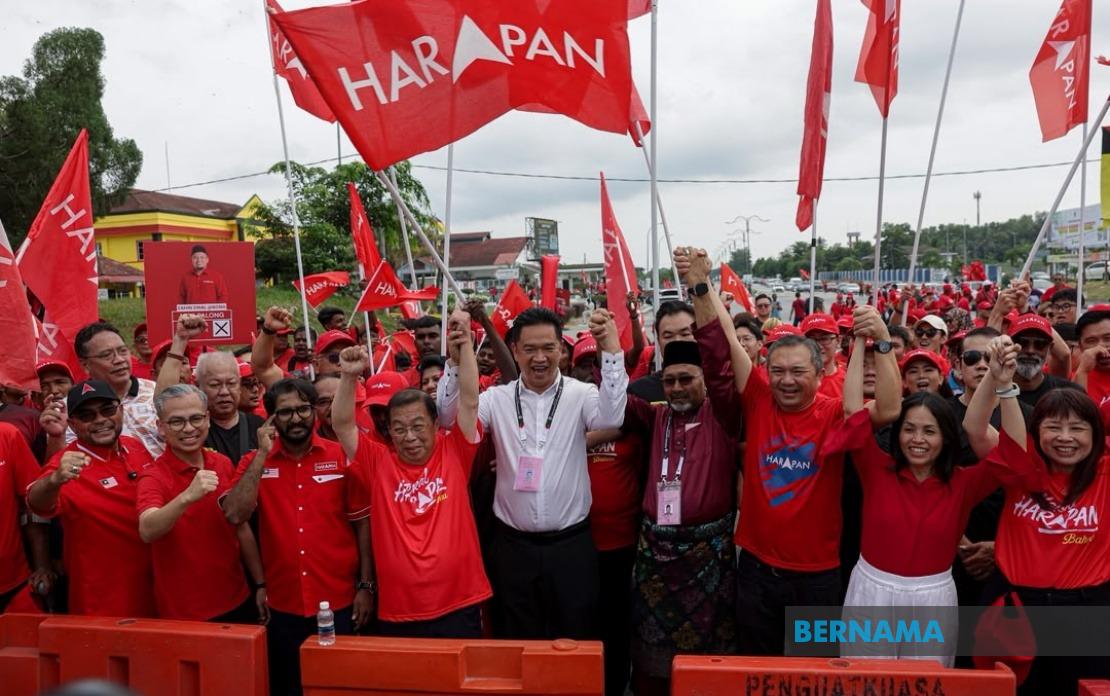
Jeram Padang stands alone as the only constituency in the Jempol district to host a four-cornered contest during the 16th Negeri Sembilan State Election, reflecting the fractured political landscape characterising the state polls. The nomination process, which concluded on July 18 at the Jempol District and Land Office Hall, confirmed the unusually congested race that will distinguish this seat from its neighbouring constituencies. Returning officer Amino Agos Suyub announced the final lineup after candidates completed their registration by 10 am, formally setting the stage for what promises to be a complex electoral battle across multiple political divides.
Four distinct contenders will vie for the Jeram Padang seat, each representing separate political forces and constituencies within Negeri Sembilan's evolving political ecosystem. G. Manivannan carries the Pakatan Harapan banner, seeking to capture the seat from the Barisan Nasional incumbent Datuk Mohd Zaidy Abdul Kadir, who has held the position and now faces the strongest challenge to his tenure. The contest becomes further fractionalised with the entry of R. Sri Sanjeevan from Parti Pribumi Bersatu Malaysia and Dayana Dal from Parti Orang Asli Malaysia, whose candidacy carries particular significance as the only Orang Asli representative competing in the Jempol district during this election cycle.
The presence of Dayana Dal as an Orang Asli candidate introduces a distinctive element to the Jeram Padang race, highlighting efforts by minority representation platforms to secure meaningful participation in state-level politics. This candidacy reflects broader attempts to amplify indigenous voices within Malaysia's electoral framework, though such efforts typically face considerable headwinds in mainstream state elections. The participation of Parti Orang Asli Malaysia signals recognition that communities beyond the traditional BN-PH axis seek direct political representation, complicating conventional two-coalition narratives that have dominated Negeri Sembilan politics for decades.
The filing of nomination papers occurred in rapid succession on the morning of July 18, with each candidate registering within an eleven-minute window. Sri Sanjeevan submitted papers at 9.09 am, followed by Dayana Dal at 9.12 am, then Manivannan at 9.17 am, and finally incumbent Mohd Zaidy at 9.20 am. The compressed timeframe underscores the mechanical efficiency of Malaysia's electoral commission, though the broader significance lies in what the sequence reflects about political positioning and momentum. Manivannan's attendance alongside PH Communications director Datuk Seri Fahmi Fadzil signalled the coalition's commitment to this marginal seat, suggesting strategic calculations about its winability within Jempol's broader political dynamics.
Beyond Jeram Padang, the Jempol district presents a more straightforward electoral picture across the remaining three constituencies. The Serting seat will feature a three-cornered contest between Yaacob Mahmood representing Pakatan Harapan, the incumbent Mohd Fairuz Mohd Isa from Perikatan Nasional, and Muhammad Noraffendy Mohd Salleh from Bersatu. This configuration mirrors the fractionalisation evident across Malaysian state politics, where defections and new alignments have splintered traditional voting blocs. The three-way contest in Palong follows a similar pattern, with incumbent Datuk Mustapha Nagoor of Barisan Nasional defending against Muhammad Zahin Zinal Abidin of Pakatan Harapan and Rebin Birham of Bersatu.
In contrast to the competitive constellation elsewhere in Jempol, the Bahau seat presents a cleaner binary choice between ideological opponents. The incumbent Teo Kok Seong from the Democratic Action Party, competing under the Pakatan Harapan banner, will face Chong Fui Ming, the Barisan Nasional candidate representing the Malaysian Chinese Association. This straight fight reverts to the conventional two-coalition framework that characterised Malaysian state elections during earlier decades, suggesting that certain constituencies remain more resilient to the fragmentation afflicting others. The presence of such diverse electoral configurations within a single district reveals how uneven political transformation has affected different communities and geographical areas across Negeri Sembilan.
The Electoral Commission has scheduled early voting for July 28, providing opportunities for advance polling ahead of the main polling day on August 1. This timing reflects electoral best practices and accommodates voters with mobility constraints or those travelling during the campaign period. The staggered voting arrangements underscore the commission's institutional maturity in managing contemporary elections, though they also extend the campaign window and increase logistical demands on all competing parties and observers.
The four-way contest in Jeram Padang presents a genuinely unpredictable outcome, distinguishing it from races where traditional BN-PH competition remains dominant. The Bersatu candidate will likely draw votes from multiple sources, complicating predictions about vote concentration and winnability. Dayana Dal's candidacy introduces an entirely novel variable into the electoral calculus, as indigenous voters may respond to direct minority representation differently than in previous cycles. The geographic configuration of Jeram Padang within Jempol district, combined with its demographic composition, will ultimately determine whether the four-way fragmentation benefits any particular contender or produces a result determined by narrow vote-splitting dynamics.
For Malaysian political analysts tracking state-level developments, the Negeri Sembilan election represents a microcosm of transformations reshaping the nation's electoral landscape. Whereas BN previously governed Negeri Sembilan with comfortable supermajorities, recent state elections have introduced genuine competition and ideological diversity. The emergence of Bersatu as a systematic contender across multiple seats signals the ongoing reconfiguration following the 2022 general election and subsequent political realignments. The presence of Parti Orang Asli Malaysia, meanwhile, suggests that civil society actors increasingly perceive electoral participation as viable pathways for advancing community interests.
The Negeri Sembilan state election consequently carries implications extending beyond the state's immediate political future. Outcomes in constituencies like Jeram Padang will inform broader assessments about voter behaviour in fragmented electoral environments and the viability of coalition-building strategies across ideologically diverse partners. The results may also indicate whether minority-focused political platforms can sustain electoral competitiveness or whether traditional two-coalition competition ultimately reasserts dominance. For Southeast Asian observers monitoring Malaysia's democratic developments, these state-level contests provide valuable indicators about institutional resilience and the shifting preferences of Malaysian voters navigating an increasingly complex political landscape.

