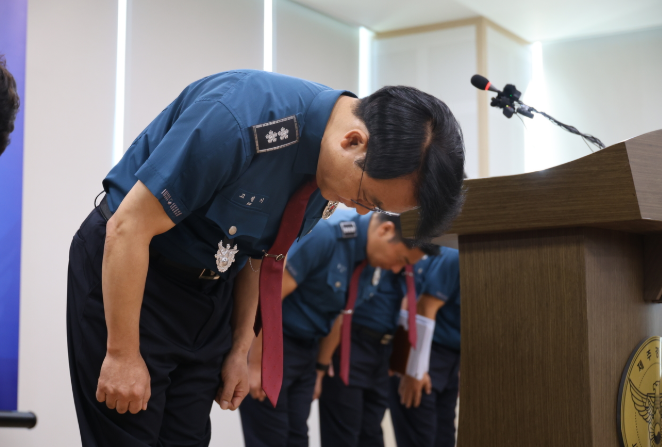
The head of Jeju Provincial Police Agency has issued a formal public apology following a serious breach of investigative protocol that saw two missing person files improperly closed, only for both individuals to be discovered deceased days later. On Thursday, August 27, Jeju Police Commissioner Ko Pyeong-gi acknowledged the gravity of the failures at a press conference, expressing profound remorse toward the victims and their families who have endured unimaginable suffering as a result of the mishandling.
The scandal centres on a Jeju police officer surnamed Bu, who stands accused of systematically falsifying investigative records to expedite case closures. In the first instance, Bu allegedly claimed to have personally contacted Jang Mi-ran, a 37-year-old woman reported missing in May, and closed her case on the basis of this alleged conversation. However, Jang Mi-ran was discovered dead on Monday, August 24, revealing that Bu's claims were fabricated and that no such contact had ever occurred. The deception meant that an active investigation was prematurely terminated, potentially hampering efforts that might have led to an earlier discovery of her remains.
The pattern of misconduct extended to a second victim, an unidentified man in his 60s. Bu employed an identical tactic in this case, fraudulently reporting contact with the missing individual to justify administrative closure of the investigation. The man's body was subsequently recovered on Saturday, further demonstrating the officer's consistent approach to circumventing proper investigative procedures. The method of falsification suggests a deliberate strategy rather than isolated administrative oversights, raising questions about the officer's understanding of his professional obligations and the consequences his actions have inflicted.
In his formal statement, Commissioner Ko acknowledged the fundamental breach of public trust, stating that police officers carry a sacred responsibility to safeguard citizens' lives and security. He emphasised that Bu's conduct—deliberately lying to close cases and thereby abandoning vulnerable individuals—directly contradicted this core duty and had left permanent emotional wounds on the bereaved families. Ko's acknowledgment of this broader institutional failure represented an attempt to address not merely the individual officer's misconduct but the systemic vulnerabilities that allowed such behaviour to proceed undetected.
The apology extended beyond the families of the deceased to include the wider Jeju community, who must contend with diminished confidence in police competence and integrity. Such cases undermine public faith in law enforcement agencies precisely when rigorous, honest investigation is most critical. The commissioner pledged that Jeju police would conduct a thorough and transparent investigation into Bu's conduct, signalling an institutional commitment to accountability, though questions inevitably remain about what safeguards should have prevented the situation from arising in the first place.
Recognising the potential that Bu's pattern of misconduct might represent a broader institutional problem rather than an isolated incident, Ko announced that Jeju police would undertake a comprehensive review of all missing person cases handled across the island. This initiative aims to identify whether similar errors, falsifications, or instances of professional negligence have occurred in other investigations. Such a review, if conducted honestly and rigorously, could reveal systemic weaknesses in case management protocols, supervision structures, or investigative training that might need substantial reform to prevent recurrence.
For Malaysian readers and Southeast Asian observers, this case illustrates vulnerabilities that potentially exist across police forces in the region, where investigative standards, transparency mechanisms, and accountability structures may vary significantly. Missing person investigations demand meticulous documentation, regular supervisory review, and clear protocols to ensure cases remain active until genuinely resolved. The Jeju scandal demonstrates how administrative pressure to close cases, insufficient oversight, or institutional cultures that do not adequately value investigative integrity can produce tragic consequences that ripple through families and communities for years.
The broader implications extend to questions about how police leadership responds when institutional failures are exposed. Commissioner Ko's public apology and announcement of comprehensive reviews suggest an approach oriented toward transparency and systemic improvement, contrasting sharply with institutional responses that attempt to minimise or compartmentalise misconduct. However, the true test will lie in whether the promised investigation produces substantive reforms, whether the officer faces appropriate consequences, and whether Jeju police implement structural changes to prevent similar incidents from recurring.
For families and communities depending on law enforcement to investigate disappearances—a particularly vulnerable population that includes migrant workers, elderly persons living alone, and others at heightened risk—such cases underscore the critical importance of police professionalism and ethical conduct. When investigation protocols are compromised, entire categories of vulnerable persons face multiplied risk. The incident also highlights how individual officer misconduct, when left undetected for extended periods, can transform minor procedural failures into human tragedies that devastate families and damage public confidence in institutions designed to protect them.

