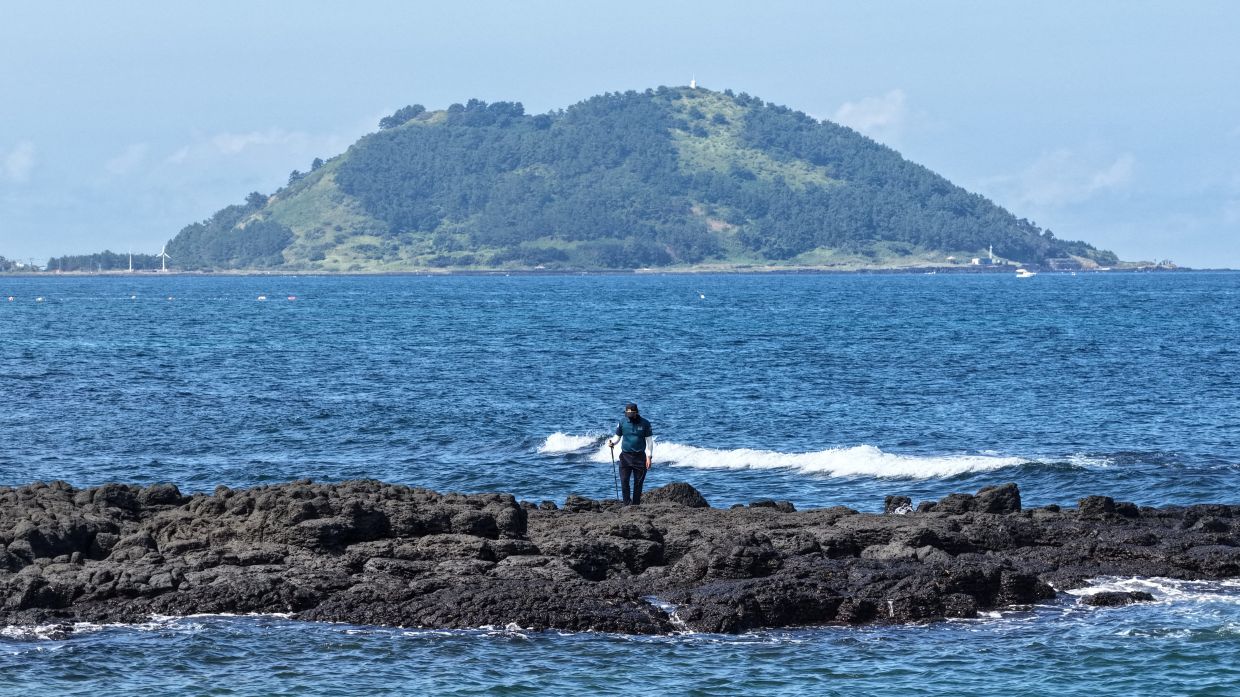
Jeju Island, synonymous with romantic honeymoons and leisurely getaways for South Koreans, faces an unprecedented reputational crisis as a serious police bungling scandal has galvanised public anxiety about security and prompted cancellations from both tourists and long-term residents. The crisis began unfolding when authorities uncovered that a police officer had falsely closed missing-person investigations, including by falsely claiming to have contacted individuals who had actually gone missing. This revelation prompted renewed search efforts that turned grimly successful: within a mere 72 hours through August 24, four individuals previously reported missing were discovered deceased across different parts of the island.
The case that crystallised public outrage involves Jang Mi-ran, a 37-year-old woman who vanished sometime between late May 12 and early May 13 after leaving her residence in Hallim-eup. For nearly three months, her family and community remained in the dark, unaware that the officer assigned to her case had already marked it as resolved by falsely claiming he had contacted her directly. Her remains were eventually discovered on August 26 beneath palm trees situated less than a ten-minute walk from her last known location—a proximity that raises disturbing questions about how thoroughly the investigation had been conducted.
The scandal deepened when investigators realised that the same officer responsible for closing Jang's case had employed identical tactics in at least one other missing-person investigation. A man in his 60s, reported missing in Gujwa-eup, was found dead on August 24 following delayed search operations that only commenced after the officer's misconduct came to light. These cases suggest a pattern of negligence rather than isolated administrative errors, undermining public trust in local law enforcement's capacity to protect vulnerable populations and investigate serious matters competently.
The grim succession of discoveries did not end there. On the same day Jang's remains were identified, another previously missing person was located deceased near a valley in Aewol-eup. The following day, a fisherman discovered a man in his seventies floating in waters off Sinheung-ri in Jocheon-eup and immediately reported the find to emergency services. While authorities have stressed they have found no evidence linking these deaths to criminal activity or suggesting a coordinated pattern, the sheer concentration of multiple discoveries emerging from searches prompted by the police scandal has created an impression of systemic failure and underlying danger.
The psychological impact on Jeju's resident community and tourism sector has proven immediate and measurable. Residents engaged in short-term rental operations report that tenants are cancelling lease arrangements, with one business operator noting on Instagram that several guests have terminated their bookings in response to recent events. Hong Hye-geol, a preventive medicine physician and television personality with seven years of residence on the island, published a stark assessment on social media, warning that cycling or walking on Jeju's numerous rural roads—even in daylight and along established paths—carries hidden risks, with many routes leading through isolated terrain where cries for help would go unheard.
The cultural and emotional significance of Jeju as South Korea's premier honeymoon destination has amplified the reputational damage. Prospective wedding photographers have cancelled shoots in the island's more remote but photogenic areas such as Gujwa, where pastoral landscapes previously attracted couples seeking authentic and picturesque backdrops. Social media discussions have escalated from expressions of personal concern to calls for economic boycotts, with online users urging fellow citizens to avoid visiting Jeju until officials have conclusively investigated the police officer's conduct and established accountability for failures in the handling of multiple missing-person cases.
Guesthouse operators catering to women, who positioned their safety-focused approach as a competitive advantage, now find that very distinction producing the opposite effect. A 52-year-old proprietor of a women-only establishment in Jocheon-eup, who has operated successfully for eight years, observed that previous guests appreciated the secure, female-centred environment. However, since the recent incidents, she has fielded numerous anxious phone calls regarding safety protocols. Though one group's cancellation occurred just two days prior to her conversation with journalists, the causal link remained ambiguous, yet the shift in guest sentiment was unmistakable. The operator emphasised that her neighbourhood maintains excellent lighting infrastructure, with streetlights positioned every 20 to 30 metres, and that staff had felt secure enough to leave gates unlocked during evening social activities. Nevertheless, she acknowledged that official intervention from police and local government has become essential to counteract the rumour-driven fears now circulating.
The timing of this crisis compounds existing economic pressures bearing down on Jeju's tourism industry. The island has already confronted declining domestic visitor numbers throughout 2024, a troubling trend for an economy heavily dependent on tourism revenue. July's domestic arrivals totalled 963,401 visitors, representing a sharp 12.4 per cent decline from the 1,100,021 recorded in July of the previous year—a milestone that marked the first occasion since the Covid-19 pandemic's onset in 2020 that monthly domestic visitation fell below the one-million threshold. This downward momentum persisted into August, with daily average domestic visitors dropping to 35,295 from August 1 through 23, approximately 300 fewer than the corresponding 2023 period.
Police statistics compound the narrative of insecurity, though they warrant contextual interpretation. Data from the Korean National Police Agency indicates that Jeju recorded South Korea's highest crime rate in 2024, calculated at 4,539.6 offences per 100,000 people. However, this statistic demands careful analysis: the denominator represents Jeju's resident population of approximately 663,000, yet the island receives millions of visitors annually, meaning the crime rate formula does not account for fluctuations in transient populations. Nonetheless, the headline figure has circulated widely in public discourse, amplifying perceptions of danger regardless of the methodological considerations underlying its calculation.
For Southeast Asian observers and Malaysian readers particularly, Jeju's predicament offers instructive parallels regarding the fragility of tourism-dependent regional economies when institutional failures intersect with information ecosystems that rapidly amplify concern into collective panic. Malaysia's own tourism sector, encompassing destinations as varied as Langkawi and the Perhentian Islands, depends substantially on perceptions of safety and reliable governance. The Jeju case underscores how single institutional failures—in this instance, police negligence—can cascade into comprehensive reputational damage that statistical analysis and official reassurances struggle to reverse once public confidence has fractured. The economic consequences extend beyond immediate booking cancellations to broader patterns of destination avoidance that can persist for years.
The resolution of Jeju's crisis will likely require multifaceted intervention encompassing accountability for the errant officer, transparent communication regarding investigation outcomes, enhanced training and oversight protocols within the police department, and concerted efforts by local government and tourism authorities to rebuild confidence through demonstrated action rather than mere statements. The island's restoration as a safe, welcoming destination will hinge on whether officials can convince both domestic and international visitors that the systemic vulnerabilities exposed by recent events have been genuinely addressed. For a destination whose brand has historically rested on romance and relaxation, the transition to preoccupation with personal security represents a formidable challenge to overcome.

