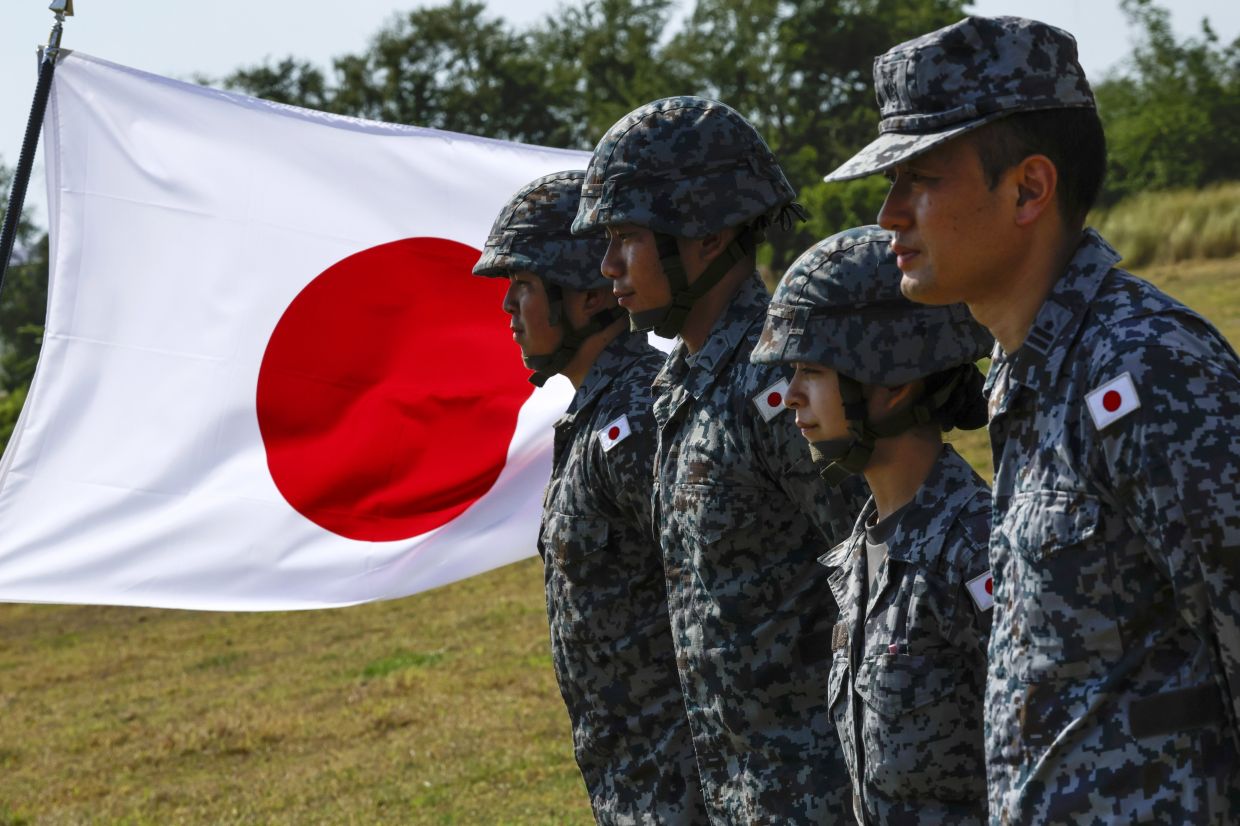
Japan's Defence Minister Koizumi demonstrated Tokyo's escalating commitment to regional security leadership during May's Singapore security forum, where his high-profile meeting with US Defence Secretary Pete Hegseth underscored both Japan's strategic ambitions and underlying anxieties about Washington's reliability in the Indo-Pacific. The visible coordination between Tokyo and Washington was carefully orchestrated to project unity, yet the very necessity of such public reassurance revealed Japan's concern about emerging gaps in American security commitments across the region. This diplomatic choreography occurred against the backdrop of a cancelled session that would have allowed China to present its own vision for Asia-Pacific security partnerships, a move that inadvertently highlighted the intensifying competition for influence shaping the region's strategic architecture.
Beyond ceremonial displays of alliance solidarity, Japan has initiated a genuine recalibration of its defence posture that represents a historic departure from its post-war security framework. Tokyo's recent consideration of nuclear-powered attack submarines marks a tentative shift in how Japan views its defence responsibilities, signalling willingness to challenge long-standing taboos if regional circumstances demand it. This conceptual evolution reflects deeper anxieties about China's expanding military capabilities and the perception that Washington's commitment to Asia may be waning under shifting US administrations. The submarine proposal, though still under consideration, demonstrates how profoundly Japanese security planners now view the regional balance of power as unsustainable without significant Tokyo-led initiatives.
Japan's response extends beyond military hardware into a comprehensive strategic framework that weaves together security assistance, infrastructure financing, and economic partnerships into what analysts describe as a multilayered alternative to bipolar great-power competition. Prime Minister Sanae Takaichi's announcement of an updated Free and Open Indo-Pacific strategy in May represents a significant pivot from former Prime Minister Shinzo Abe's 2016 emphasis on principles like rule of law towards pragmatic economic and security tools. This recalibration acknowledges that many Southeast Asian and Pacific Island nations prioritise development and economic resilience over traditional military concerns, requiring Tokyo to address security challenges through infrastructure projects, undersea cable networks, energy supply chain security, and maritime domain awareness systems rather than explicit military alliances.
Central to this strategy is Japan's newly expanded Official Security Assistance programme, which circumvents traditional constraints on military aid by channelling support directly to partner nations' military entities. The OSA framework has grown remarkably since its inception, expanding from four countries receiving 2 billion yen to twelve nations accessing 18.1 billion yen within three years. This acceleration demonstrates Tokyo's determination to fill regional security gaps before Beijing consolidates influence through its own military partnerships and infrastructure investments. The programme delivers advanced radar systems, drone technology, and maritime security capabilities to countries lacking capital to acquire defence equipment through conventional commercial channels. By providing this assistance, Japan positions itself as offering an alternative pathway to security capability-building that differs markedly from China's approach.
Japan's strategic flexibility in how it delivers security support reveals sophisticated understanding of recipient nation politics. Funding ports and airports ostensibly for civilian purposes carries greater domestic political acceptability than direct military aid transfers, yet these same infrastructure projects simultaneously enhance coastal defence logistics and maritime security capabilities. This dual-use approach allows partner nations to pursue security objectives while maintaining public narratives focused on development and economic connectivity. The infrastructure emphasis also acknowledges that many Southeast Asian nations genuinely require port and transportation improvements for legitimate economic reasons, creating natural alignment between Japan's security objectives and its partners' development needs. This synergy distinguishes Japan's approach from purely militarised security assistance that carries greater political baggage.
Japan's defence industrial base stands to benefit substantially from this regional expansion, as defence sales transform theoretical military partnerships into concrete commercial relationships. Following Tokyo's April decision to lift its ban on lethal weapons exports, Japanese defence companies can now market equipment to seventeen countries, including six Association of Southeast Asian Nations members: the Philippines, Malaysia, Indonesia, Vietnam, Thailand and Singapore. These new export rights create economic incentives for deepening defence relationships while simultaneously generating revenue streams that support Japan's domestic military production. In June, Japan and Indonesia initiated talks regarding potential sale of Asagiri-class destroyers, representing a significant escalation in the type of military equipment Japan can now offer regional partners. This industrial dimension adds economic substance to security partnerships that might otherwise remain primarily political.
Washington's perceived unreliability as a security partner has intensified Japanese concerns and provided strategic justification for Tokyo's independent initiatives. Former President Trump's demands that allies including Japan substantially increase defence spending, combined with the imposition of high tariffs on strategic partners such as India, created uncertainty about American commitment to regional stability. Current assessments within Japanese policy circles suggest that US attention and resources devoted to Indo-Pacific security may be diminishing relative to other global priorities, leaving regional nations to develop greater self-reliance. This American unpredictability has effectively granted Japan permission to pursue more assertive leadership roles without appearing to challenge Washington's preferred regional order. Japan's strategy represents not defection from the US alliance but rather a form of hedging that acknowledges potential future gaps in American commitment.
Yet Japan faces fundamental constraints in competing quantitatively with China's vastly superior financial resources and industrial capacity. Analysts increasingly argue that Tokyo cannot single-handedly counter Beijing's military expansion or economic influence, requiring instead coordinated action among multiple regional partners. This realisation has driven Japan's emphasis on minilateral and flexible diplomatic engagements that build issue-specific coalitions rather than attempting comprehensive great-power competition. Cooperation with New Zealand on frigate deployments, enhanced security partnerships with Southeast Asian nations, and coordinated infrastructure initiatives with like-minded democracies represent Tokyo's pragmatic acknowledgement that collective action provides the only viable counterweight to Chinese regional dominance. These minilateral arrangements offer participating nations the flexibility to cooperate with Japan on selected security issues without requiring wholesale alignment against Beijing.
Japan's broader development strategy under the revitalised Free and Open Indo-Pacific framework explicitly integrates security and economic resilience as complementary rather than separate objectives. The Power Asia initiative, launched in April with US$10 billion allocation, targets emergency energy supply security and long-term resilience building amid Strait of Hormuz vulnerabilities. This energy-focused approach recognises that Southeast Asian nations' economic security depends fundamentally on reliable petroleum supplies, creating natural alignment between Japanese and regional interests. By positioning energy security as central to the Indo-Pacific's stability, Japan transforms what might otherwise appear as military burden-sharing into genuine mutual interest in regional prosperity. The initiative demonstrates how Tokyo increasingly frames security challenges in terms that resonate with partner nation development priorities.
Expert analysis suggests that Japan's strategic pivot will succeed or fail based on its ability to present regional alternatives without explicitly positioning itself as anti-China. Southeast Asian nations' geographic and economic proximity to Beijing creates powerful incentives to avoid openly choosing Washington and Tokyo against China, regardless of security benefits offered. Japan's emphasis on development tools, infrastructure investment, and economic resilience rather than explicit military balancing addresses this political reality directly. The strategy implicitly acknowledges that Southeast Asian nations will maintain diverse relationships including with China, and that Japanese initiatives should enhance options rather than force binary choices. This sophisticated understanding of regional political constraints distinguishes Japan's approach from more heavy-handed great-power competition strategies.
Implementing this comprehensive strategy demands unprecedented coordination among Japanese government agencies spanning defence, development assistance, foreign affairs, and industrial policy. The integration of security assistance with development aid, the alignment of defence exports with broader economic initiatives, and the coordination of bilateral partnerships with minilateral arrangements all require coherent strategic messaging and consistent execution. Previous Japanese governments struggled to maintain such comprehensive policy coordination, and institutional barriers within Japan's bureaucracy frequently undermined regional initiatives. The updated FOIP framework and expanded security assistance programme represent institutional innovations designed to overcome these traditional obstacles, yet their success remains uncertain given Japan's historical difficulties in sustaining complex multi-agency initiatives over extended periods.
The ultimate measure of Japan's regional strategy will be whether Southeast Asian and Pacific Island nations perceive Tokyo as offering genuine alternatives to great-power competition rather than simply representing another expression of US interests. Japan's advantages over China—democratic governance, technological expertise, development experience, and smaller military footprint that appears less threatening—provide inherent appeal to nations seeking security partners that respect sovereignty and avoid coercive diplomacy. However, these advantages will prove insufficient if Japan cannot demonstrate sustained commitment through adequate resource allocation and consistent policy execution. The next three to five years will determine whether Japan's current diplomatic and strategic initiatives translate into durable partnerships or dissolve as regional nations reassess costs and benefits of closer alignment with Beijing.

