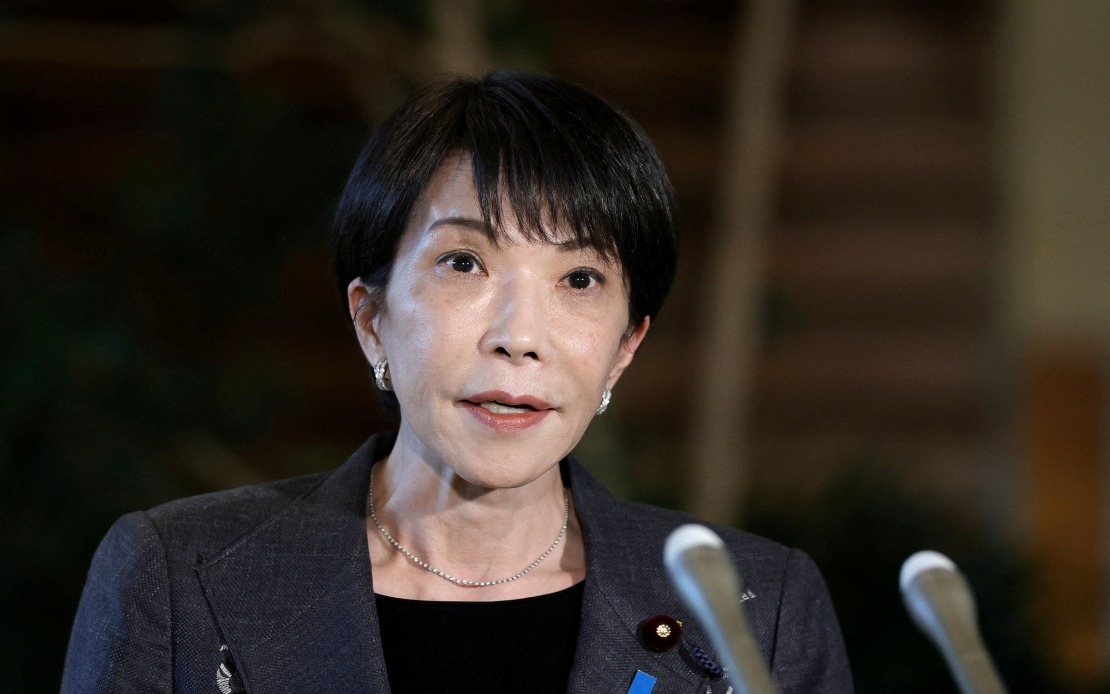
Japanese Prime Minister Sanae Takaichi marked the 81st anniversary of World War II's conclusion by dispatching a ritual offering to the Yasukuni shrine in Tokyo on Saturday, while Defence Minister Shinjiro Koizumi became the first serving defence chief in a decade to physically visit the controversial memorial site on the war anniversary date. The moves underscore persistent tensions surrounding Japan's relationship with its wartime past and the sensitivities that persist across East Asia regarding how the nation's military history is commemorated and interpreted.
Takaichi, who leads the ruling Liberal Democratic Party as its president, funded the offering through personal means rather than using government resources, according to senior party officials. The decision reflects a calculated political position: the prime minister has notably refrained from making an in-person visit to Yasukuni since assuming office last October, despite having regularly attended the shrine during seasonal festivals and on the August 15 war anniversary before her elevation to the premiership. This restraint suggests a deliberate attempt to balance her party's conservative base with the diplomatic sensitivities that arise from such visits.
Yasukuni shrine occupies an extraordinarily contested place in contemporary Japanese politics and international relations. The facility became the focal point of regional tensions when it enshrined 14 wartime leaders as deities during 1978, a decision that fundamentally altered its symbolic meaning. Among those honoured are individuals convicted as Class-A war criminals, including General Hideki Tojo, who served as wartime prime minister before his execution in 1948 for crimes against peace. The shrine's elevation of these figures to divine status transformed it from a simple military memorial into a flashpoint for competing narratives about Japan's imperial past.
Koizumi's personal visit on August 15 marked a significant development in recent Japanese politics. He became the first confirmed sitting defence minister to visit Yasukuni on the war anniversary since Minoru Kihara's visit in 2024. The fact that Kihara now serves as chief Cabinet secretary in Takaichi's administration indicates that elements within the government maintain connections to shrine activism, even as the prime minister herself maintains distance from the location. Additional Cabinet members also participated: Hitoshi Kikawada, who oversees issues related to the Northern Territories—the disputed islands off Hokkaido that Japan claims were illegally seized by the former Soviet Union after the war—also visited the shrine.
The broader government representation at Yasukuni extended beyond the executive branch. Senior figures from the Liberal Democratic Party, including Secretary General Shunichi Suzuki, General Council head Haruko Arimura, and Election Strategy Committee chair Yasutoshi Nishimura, all visited the shrine. These visits demonstrate that shrine activism remains embedded within conservative political circles, even as Japan's national leadership exercises caution regarding direct participation. The distinction between personal visits by officials and formal state visits by the prime minister represents an important diplomatic boundary that Tokyo has learned to navigate carefully over decades.
For regional observers, particularly in China and South Korea, such visits carry profound symbolic weight. Both nations experienced extensive Japanese military occupation and colonisation during the war period—China suffered widespread invasion and occupation, while the Korean Peninsula remained under Japanese colonial rule from 1910 until 1945. Visits by Japanese political leaders to Yasukuni have historically provoked sharp diplomatic protests from both governments, who interpret such actions as potential rehabilitation of wartime aggression or insufficient acknowledgement of historical harm. The shrine's enshrinement of Class-A war criminals particularly troubles these nations, as it appears to sanctify rather than condemn those responsible for wartime conduct that caused millions of casualties.
Japan's post-war trajectory presents an interesting paradox that informs contemporary political dynamics. The nation has spent more than seven decades formally committed to peace through its war-renouncing Constitution, a legal framework that has fundamentally shaped its national identity in the post-war era. Yet in recent years, particularly in response to what Japanese officials describe as an increasingly severe regional security environment, the country has substantially expanded its defence capabilities and military spending. This expansion creates ongoing tension with Japan's pacifist constitutional commitments and adds complexity to how the nation's wartime history is framed and remembered.
For Southeast Asian readers and policymakers, these developments merit careful attention. Regional stability depends significantly on how major powers in East Asia manage historical grievances and maintain diplomatic relationships despite competing narratives about the past. Japan's approach to handling shrine visits and wartime commemoration influences broader perceptions of its commitment to regional peace and reconciliation. The distinction Takaichi maintains between personal shrine visits and official state participation signals diplomatic sophistication, yet it may prove insufficient to address fundamental concerns held by neighbouring nations about how Japan processes and commemorates its wartime conduct.
The complexity of these issues reflects deeper questions about historical memory, national identity, and international relations that extend well beyond Japan itself. How nations choose to commemorate their past, which figures they honour, and how leaders navigate these commemorations carry consequences for regional trust and stability. Takaichi's strategy of maintaining personal distance from Yasukuni while permitting cabinet members and party officials to visit represents a form of political compromise that satisfies neither those who view shrine visits as legitimate expressions of patriotic remembrance nor those who see them as inadequately distanced from wartime aggression. As Japan continues recalibrating its military posture in response to regional security concerns, managing these historical sensitivities will remain central to its diplomatic relationships with China, South Korea, and other regional partners.

