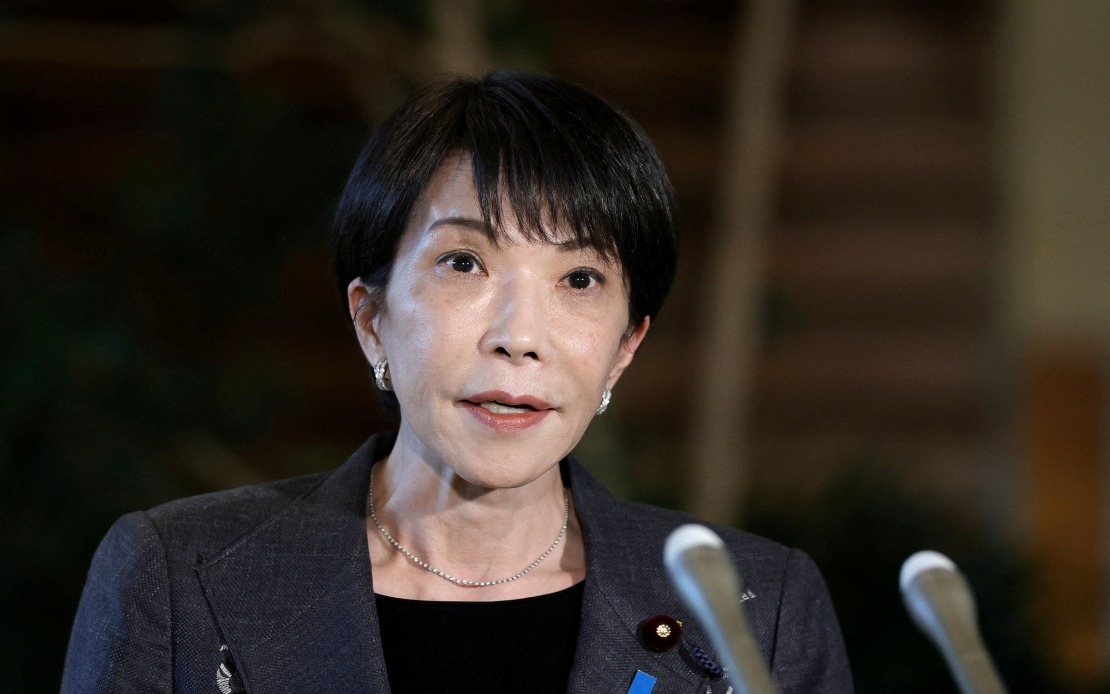
Japan's new Prime Minister Sanae Takaichi has made an explicit commitment to reverse a planned reduction in consumption tax on food, pledging to restore the levy to its full 8 per cent rate once a two-year trial period concludes. The assurance came during parliamentary questioning on Monday and represents an attempt to balance electoral commitments with mounting fiscal pressures facing the world's third-largest economy.
The commitment reflects a careful political calculation. During the February lower house election campaign, the ruling Liberal Democratic Party promised a complete elimination of consumption tax on food and beverages, a pledge designed to provide relief to households struggling with persistent inflation. However, when the LDP developed concrete implementation plans through its cross-party taxation council, the proposal evolved into a 1 per cent rate rather than total elimination, a compromise that allows retailers more time to modify their systems while still delivering tangible consumer relief.
Takaichi's explicit statement that the tax would return to 8 per cent after two years represents a significant political gesture toward fiscal responsibility. Lawmakers from the opposition Democratic Party for the People raised concerns that reducing the tax without a clear exit strategy would create permanent expectations among voters, making future restoration politically untenable. The Prime Minister's direct assurance during the House of Representatives committee session appears designed to pre-empt this criticism, providing parliamentary record of governmental intent.
Japan's fiscal position adds urgency to these discussions. The nation carries debt levels equivalent to more than 260 per cent of gross domestic product, the highest ratio among Group of Seven members, and recent market turbulence has seen Japanese government bond yields reach their highest levels in decades. Simultaneously, the yen has weakened significantly, raising the cost of imports and complicating inflation management. In this context, a permanent elimination of consumption tax revenue would deepen structural deficits at a time when demographic ageing demands increased social spending.
The practical mechanics of the proposal reveal pragmatic governance alongside political realities. Rather than implementing a complete tax elimination, the LDP determined that reducing the rate to 1 per cent would allow sufficient time for retailers to adapt their point-of-sale systems and cash registers without major disruption. Simultaneously, to effectively deliver zero taxation as promised during the election campaign, the government proposes annual cash handouts totalling 600 billion yen, approximately US$3.7 billion, precisely offsetting the tax revenue that would be lost from the 1 per cent rate.
This approach creates a fiscal mechanism that appears to honor the electoral pledge while preserving tax revenue on government books, though economists debate whether the economic impact differs meaningfully from direct tax elimination. The cash distribution provides stimulus during a two-year window while maintaining the tax structure necessary for revenue collection. This distinction carries significance for long-term budget planning and demonstrates how governments can reconcile competing policy objectives through creative implementation.
The two-year timeline itself reflects calculations about electoral cycles and public memory. By 2029, roughly midway through the next electoral cycle, the tax restoration would occur, potentially allowing political attention to shift toward other priorities before the subsequent campaign. The scheduled end date also provides a clear policy boundary, preventing indefinite extension of the measure through political pressure. This construction suggests sophisticated political management rather than casual policymaking.
For Malaysia and Southeast Asian observers, Japan's experience illustrates the challenges facing modern developed economies managing fiscal pressures while responding to inflation concerns. Many regional governments face similar dynamics of aging populations, declining revenues, and competing demands for social spending. Japan's approach of combining temporary targeted relief with explicit fiscal guardrails may offer instructive lessons for policymakers across Asia confronting comparable constraints.
The proposal's evolution also underscores how political promises encounter practical reality during implementation. The original zero-tax pledge served electoral purposes but proved problematic when technical requirements and fiscal implications became concrete. The 1 per cent compromise represents the type of adjustment common in democratic governance, where initial campaign positions must accommodate implementation realities, stakeholder concerns, and macroeconomic constraints.
Broader implications for Japanese society extend beyond fiscal management. If implemented as planned beginning April 2027, the reduction would provide meaningful relief to households dependent on food purchases, particularly lower-income families for whom food constitutes a significant budget proportion. Over two years, the combination of reduced tax and cash handouts could measurably improve living standards during a period of economic transition, potentially supporting consumer confidence.
The fiscal impact remains debated among Japanese economists and policymakers. While the 600 billion yen in annual handouts would nominally offset tax revenue losses, critics question whether this approach effectively addresses underlying inflationary pressures or whether the economic stimulus would sufficiently benefit vulnerable populations. Supporters counter that targeted relief provides more direct assistance than generalized monetary policy adjustments.
Looking ahead, the sustainability of Japan's fiscal position will likely dominate political discourse beyond the tax question. Bond markets have signaled concerns about government debt levels, and the weak yen creates additional pressures on import-dependent consumption. Takaichi's commitment to tax restoration represents one element of a broader fiscal strategy, but demographic and structural factors suggest that more comprehensive approaches to revenue adequacy will become necessary in coming years.