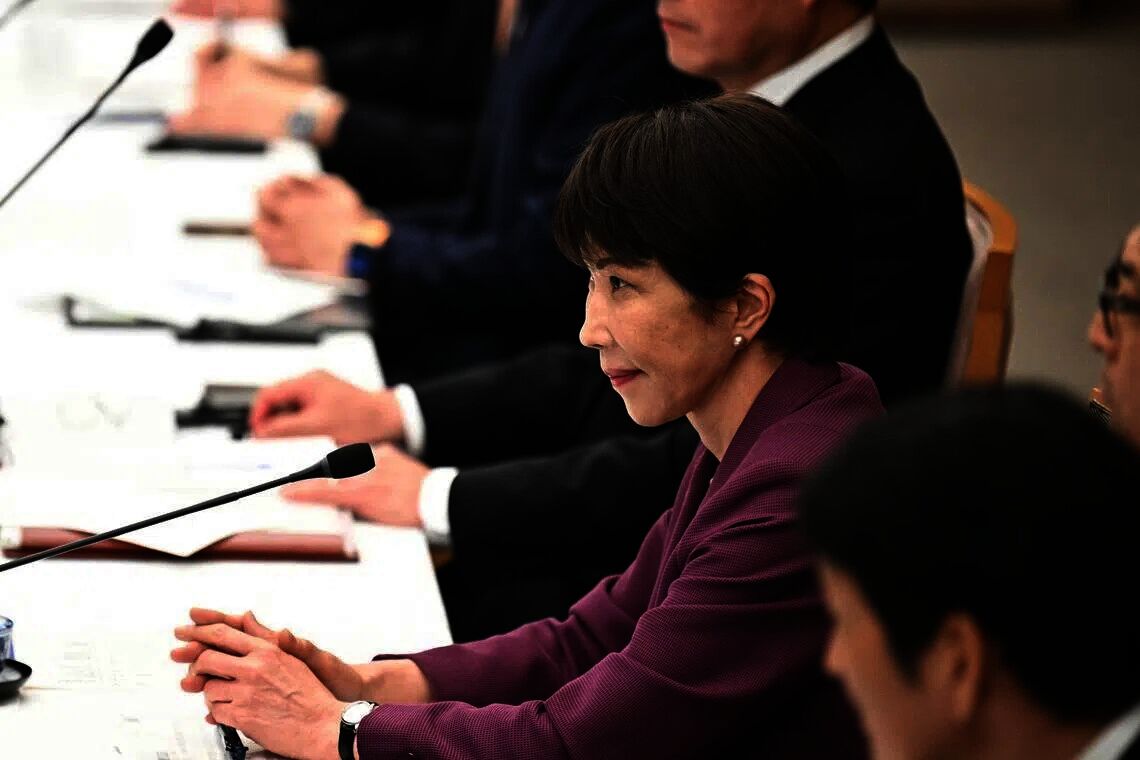
Japanese Prime Minister Sanae Takaichi is facing intense domestic backlash after a video clip from a 2002 political debate resurfaced on social media, reigniting controversy over her historical interpretations of Japan's conduct during World War II. The archival footage, originally broadcast on TV Asahi's live debate programme, shows Takaichi, then serving as a lawmaker, characterizing Japan's military campaign against China as an act of "self-defence" and asserting that "the imperial expansion in China in the 1930s was the international norm." The resurfacing of these remarks has triggered significant criticism across Japanese society, raising fundamental questions about how those holding the highest political office understand and represent their nation's wartime history.
During the televised debate, veteran political journalist and moderator Soichiro Tahara directly challenged Takaichi's historical framing, labelling her interpretations as "completely incorrect" and "ignorant." Tahara went further in his criticism, expressing dismay that someone holding such views had ascended to parliamentary rank. His contemporaneous pushback against Takaichi's arguments underscores how her position on these historical matters has long been contested by informed commentators, yet appears to have gained rather than diminished in influence as she rose through Japan's political hierarchy.
The video has generated substantial engagement across social media platforms, with YouTube comments reflecting widespread disapproval from Japanese citizens. Typical responses characterize Takaichi as possessing a fundamentally flawed grasp of history, with some commenters explicitly questioning how someone with such views came to lead the nation. The viral nature of the clip suggests that ordinary Japanese citizens, particularly younger generations, maintain greater scepticism toward revisionist interpretations than might be assumed from recent political developments in Tokyo.
Yusuke Yamashita, an associate professor of Corporate Social Responsibility at Sakushin Gakuin University, identified a particularly troubling aspect of Takaichi's historical arguments. Writing on social media, Yamashita noted that Takaichi appears unable to articulate any coherent logical or theoretical foundation for her "self-defence war" thesis, suggesting instead that her position rests upon emotional conviction rather than substantive reasoning. This observation is significant because it implies that the Prime Minister's historical views, however influential within certain political circles, lack the intellectual rigour expected of someone formulating national policy.
Prominent Japanese politician Ichiro Ozawa, who served in the House of Representatives for decades until 2026, issued a stark warning about the implications of Takaichi's leadership. On social media, Ozawa characterized widespread ignorance about historical matters, particularly when concentrated in positions of supreme authority, as genuinely alarming. He articulated a direct causal concern that without her resignation, the nation risks unspecified but potentially severe catastrophes, suggesting that her worldview could translate into consequential policy decisions affecting Japan and its citizens.
Takaichi's current political posture represents a continuation of patterns established throughout her career. Since entering parliament in 1993, she has consistently aligned herself with the Liberal Democratic Party's conservative-nationalist faction, consistently advocating for constitutional amendments to expand Japan's military scope and capabilities. Her proposed renaming of the Self-Defence Forces reflects a broader ideological commitment to reframing Japan's security apparatus and, implicitly, Japan's historical relationship to military power.
The Prime Minister's rhetoric aligns with a broader current within Japan's right-wing political movement that interprets or minimizes wartime atrocities committed against China and other Asian nations. These revisionist narratives effectively attempt to rehabilitate militarist historical perspectives, a trajectory that concerns both domestic critics and neighbouring countries with direct experience of Japanese wartime aggression. Such interpretations fundamentally dispute mainstream historical scholarship and international consensus regarding the nature and consequences of Japanese imperial expansion in Asia during the 1930s and 1940s.
Takaichi's historical revisionism has attracted criticism not merely from academic circles but from substantial segments of the Japanese public and influential political figures. The convergence of domestic and international concern reflects recognition that her interpretations carry practical implications beyond historical debate, potentially influencing foreign policy, defence posture, and Japan's relations with regional neighbours, particularly China and Korea.
Beyond the historical controversy, Takaichi's administration confronts additional political pressures related to governance priorities. Critics contend that her focus on constitutionally sensitive and ideologically contentious issues has diverted attention from pressing public concerns regarding economic conditions and living standards. This perceived misalignment between governmental priorities and citizen welfare has contributed to declining approval ratings. Opinion polling released in July demonstrated weakening public support for her government, with disapproval margins expanding substantially and, in certain surveys, surpassing approval for the first time.
The intersection of Takaichi's revisionist historical positions with her government's apparent difficulty addressing economic anxieties creates a compound legitimacy challenge. Japanese voters, while potentially divided on historical interpretation, demonstrate clearer consensus regarding the importance of economic policymaking. The Prime Minister's political vulnerability stems not solely from the resurface historical controversy but from the accumulation of concerns regarding her government's overall direction and responsiveness to voter priorities.

