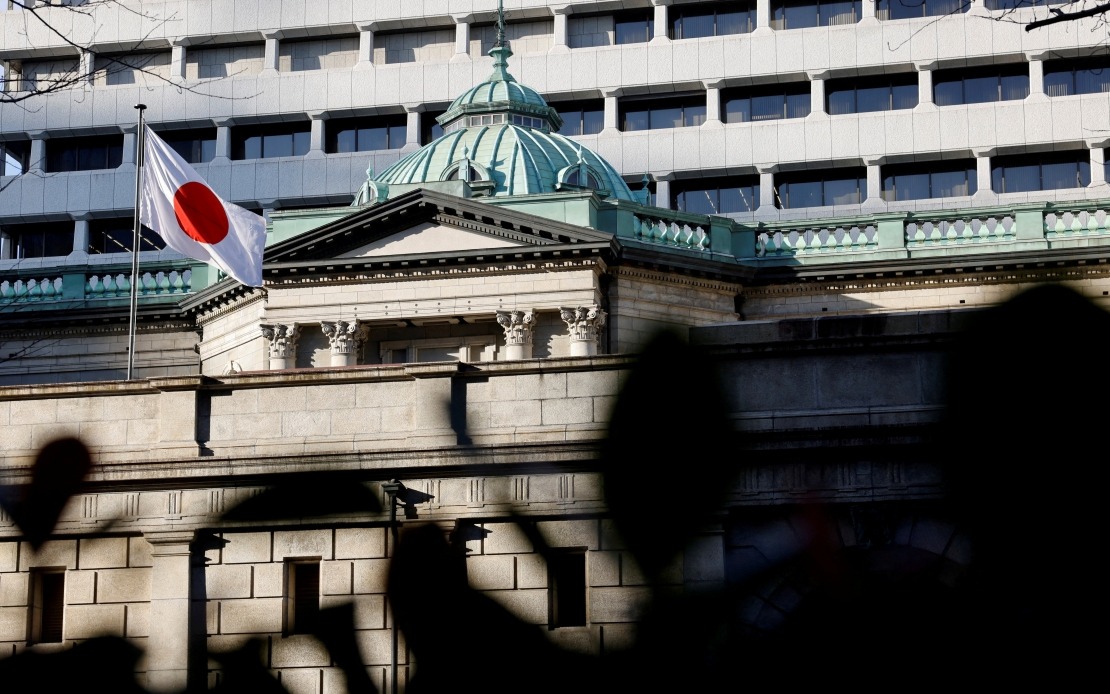
Japan's government has moved to criminalize the deliberate damage or desrespect of the national flag through new legislation, a decision that has prompted renewed scrutiny of how democracies worldwide navigate the competing interests of national pride and individual liberties. The law's passage in Tokyo marks a significant policy shift and has drawn criticism from civil society observers who worry it may embolden nationalist movements and restrict legitimate forms of political dissent. Prime Minister Sanae Takaichi has faced accusations from social media users and commentators who contend the legislation appears designed to cultivate an environment hospitable to Japanese supremacist and nationalist ideologies, concerns that reflect broader anxieties about creeping authoritarianism in the region.
The Japanese development occurs against a complex international backdrop where countries have adopted strikingly different regulatory frameworks for protecting their flags and national symbols. Germany, for instance, maintains some of Europe's most stringent protections, making it an offense not merely to damage the flag but also to insult the national anthem or other state emblems through words or conduct. German law prescribes imprisonment of up to three years or financial penalties for standard violations, with sentences potentially doubling to five years when courts determine that the perpetrator intended to undermine the nation's constitutional order. This framework emerged from Germany's particular historical experience, as the national flag saw cautious use following the country's postwar division, especially in West Germany, where authorities and society remained deeply conscious of how symbols could be weaponized for political extremism.
The German flag's symbolic resonance has shifted substantially in recent decades. Following Germany's hosting of the 2006 World Cup, public displays of the national flag became far more frequent and mainstream. However, contemporary German media outlets and observers have noted with concern that the flag has increasingly become associated with right-wing anti-immigration political movements, which employ it in ways that many perceive as exclusionary and hostile to Germany's pluralistic values. This tension illustrates a fundamental challenge facing democracies: how to foster national cohesion and pride without inadvertently creating conditions where nationalist symbols become tools of divisive movements.
France approaches flag protection through a different constitutional philosophy centered on its republican ideals. The French tricolor, representing blue, white, and red, functions as a powerful emblem of national unity and the foundational values of liberty, equality, and fraternity that France claims to embody. French law explicitly criminalizes the destruction of the flag in public spaces or any treatment of it deemed degrading or contemptuous, reflecting a view that the flag transcends mere cloth to become a repository of national identity and democratic aspirations. This legal stance reflects France's understanding of the flag as inseparable from the nation's republican compact.
Iran presents a more complex case, particularly regarding religious dimensions of flag protection. While Iranian law contains no specific statute explicitly penalizing flag desecration, authorities have pursued efforts to strengthen sanctions in this area following waves of anti-government unrest late in the previous year. The Iranian flag itself bears the word "Allah," transforming damage to the flag into an act potentially construed as blasphemy against Islam itself, thereby introducing religious sensibilities into nationalist symbolism. Notably, despite current geopolitical tensions and its ongoing confrontation with the United States, Iran's leadership has generally exercised restraint in implementing severe punishments for flag-related offenses, apparently prioritizing the maintenance of national unity during a period of international strain over aggressive enforcement of nationalist taboos.
China's approach combines explicit legal penalties with systematic state promotion of patriotic sentiment. Chinese law establishes imprisonment terms of up to three years for offenses involving damage to the national flag. Beyond mere legal prohibition, the Chinese state actively cultivates patriotic education and maintains a visible daily ritual at Beijing's Tiananmen Square, where the Five-star Red Flag undergoes a ceremonial raising each dawn. The enforcement record demonstrates the law's practical application: in 2017, a man who slashed 66 flags at a residential complex in Tianjin received a two-year prison sentence, while in Qinghai Province, another individual faced administrative detention simply for using the national flag as a curtain. These cases illustrate how flag protection laws in authoritarian contexts serve not only symbolic purposes but function as mechanisms for enforcing conformity and discouraging behavior deemed disrespectful to state authority.
The United States represents a markedly different constitutional tradition rooted in protection of expressive freedoms. As an immigrant nation with profound internal diversity, America has viewed the stars and stripes flag as instrumental to national integration and cohesion across its heterogeneous population. Historically, flag burning became a prominent form of political protest during the Vietnam War era, when activists deployed the act to express opposition to government policy. In 1989, the United States Supreme Court issued a landmark ruling in Texas v. Johnson, determining that flag desecration constitutes protected speech under the First Amendment to the Constitution, thereby prioritizing freedom of expression over symbolic patriotism. This decision reflects a constitutional philosophy that views the ability to criticize and challenge national symbols as fundamental to democratic participation.
The American consensus on this issue has come under pressure in recent years. Former President Donald Trump signed an executive order in August directing the Department of Justice to prosecute flag burning and similar acts of desecration, a directive that attempted to reverse the judicial consensus established by the Supreme Court. Trump's action illustrates ongoing contestation within American society regarding where boundaries between protected expression and sanctionable conduct should be drawn, and demonstrates that even mature democracies continue wrestling with these questions.
South Korea has pursued a middle path through efforts to establish a formal "flag day" while maintaining criminal penalties for intentional disrespect toward the flag when committed with the explicit purpose of insulting the state. Under South Korean law, such conduct attracts imprisonment of up to five years. Civil liberties advocates in South Korea have criticized these provisions as overreaching restrictions on freedom of expression, arguing that the state's interest in protecting symbolic patriotism should not supersede citizens' rights to engage in political protest and dissent. The South Korean case reflects tensions particularly acute in younger democracies navigating between nationalist consolidation and liberal pluralism.
For Malaysia and Southeast Asia, Japan's legislative move carries particular significance given the region's own complex relationship with national symbols, historical narratives, and the balance between stability and freedom. Many Southeast Asian nations grapple with questions of national unity amid ethnic and religious diversity, making flag protection laws appear attractive to authorities seeking to enforce social cohesion. However, the international experience suggests that overly restrictive approaches to symbolic patriotism can backfire, potentially marginalizing communities and fueling perceptions of state overreach. Malaysia's own legal framework, including provisions protecting the Rukun Negara and national institutions, occupies space between permissive liberal democracies like the United States and more restrictive regimes, requiring careful navigation to preserve both national symbols and democratic freedoms.
The divergence in global approaches reflects fundamental philosophical differences about the relationship between state, citizen, and expression. Democracies must grapple with whether patriotic symbols derive their power from legal prohibition or from genuine consensus about shared national values. Japan's new law, like similar measures elsewhere, operates on the assumption that legal enforcement strengthens patriotic sentiment. However, evidence from other jurisdictions suggests that the opposite may occur—that legal restrictions on expression targeting national symbols can paradoxically invite the very challenges to authority they aim to prevent. The international pattern demonstrates that successful patriotism rests on voluntary identification rather than coerced deference, a lesson particularly relevant for societies navigating rapid social change and evolving understandings of national identity.

