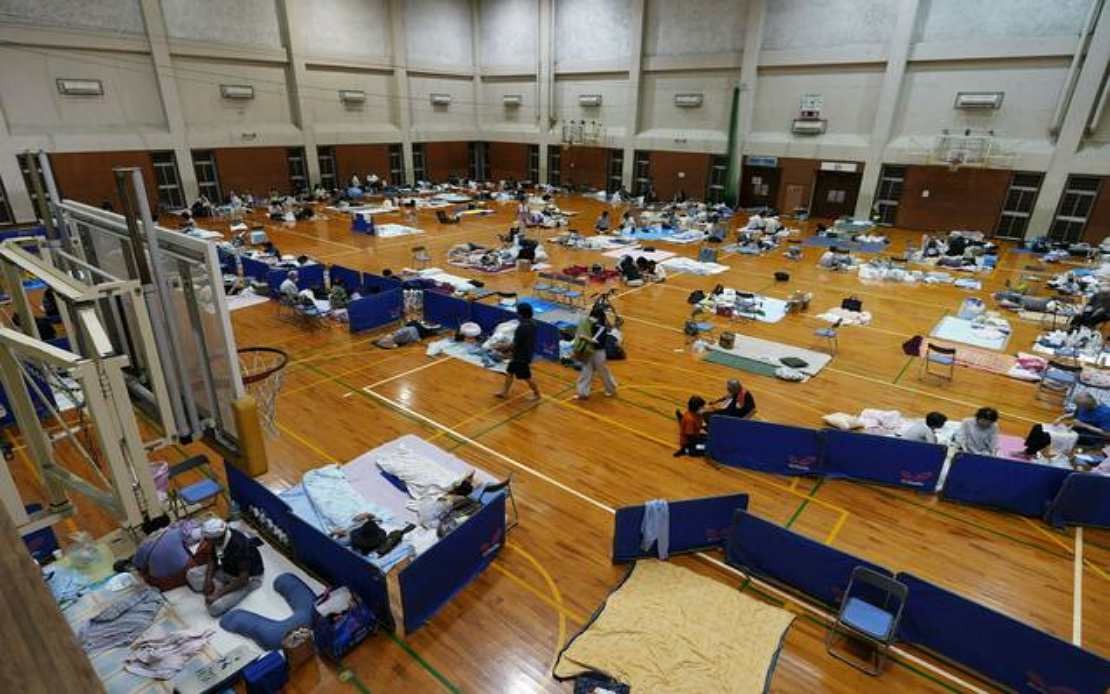
A week after southwestern Japan was struck by a powerful magnitude 7.1 earthquake, the prefecture of Kumamoto continues to grapple with a humanitarian crisis as more than 8,000 displaced residents remain sheltered across 150 emergency facilities. The situation has become increasingly urgent as survivors face compounding challenges: widespread water outages, dangerous heat conditions, and the slow pace of reconstruction efforts. The earthquake, which struck around 4:27 p.m. on July 28, has claimed 38 lives and caused extensive damage to approximately 12,000 buildings, leaving authorities racing against time to prevent further casualties.
The intersection of natural disasters has created a perfect storm of hardship for Kumamoto residents. While earthquakes typically pose the immediate threat, the prolonged aftermath is now being complicated by an oppressive heat wave that is proving equally dangerous. On Monday, multiple areas across the prefecture recorded temperatures of 35 degrees Celsius or higher, with some locations experiencing 40-degree highs for the first time in recorded history. This combination has proven deadly: at least one confirmed disaster-related death from heatstroke has already occurred among individuals forced to sleep in their vehicles due to a shortage of shelter space.
The scale of the disaster's human toll extends beyond initial casualty figures. Among the 38 confirmed deaths are seven people who perished in an explosion at an Aeon shopping mall in Kashima and nine workers at a Nippon Paper Industries facility in Yatsushiro, where a chimney structure collapsed during the initial tremor. However, authorities acknowledge that the true count of those sleeping in vehicles remains incompletely documented and likely exceeds current estimates. This gap in data underscores the challenge facing government agencies attempting to coordinate assistance across affected areas and identify those most vulnerable to heat-related illness.
Water accessibility has emerged as a critical bottleneck hampering recovery efforts. Approximately 45,000 households across five municipalities continue to experience water outages, severely constraining sanitation, hygiene, and drinking water availability. In response, water delivery trucks sourced from across Japan have been mobilised to serve affected communities. Simultaneously, governments at both national and prefectoral levels have implemented emergency measures including expanded portable toilet facilities, increased distribution of bottled water, and deployment of spot cooling equipment throughout evacuation centres. These coordinated efforts represent an attempt to create livable conditions within shelters while permanent infrastructure is restored.
Government support mechanisms are being activated to accelerate recovery. Prime Minister Sanae Takaichi visited an evacuation shelter on Monday and announced that the government will formally designate the earthquake as a "disaster of extreme severity." This classification is significant for Kumamoto's municipalities, as it triggers enhanced financial support from central government, enabling local authorities to access higher reconstruction subsidies than standard disaster protocols would provide. The designation also authorises special assistance programmes for affected victims, acknowledging the scale of displacement and economic disruption.
Temporary housing solutions are beginning to emerge across the hardest-hit areas. Municipalities including Uki and Hikawa have commenced construction of temporary housing units to transition evacuees from emergency shelters into more stable accommodation. Additionally, applications for secondary evacuation placements in hotels have opened, offering another pathway for residents to escape crowded shelters. These transitions are critical not only for immediate comfort but also for reducing disease transmission risk and improving mental health outcomes among displaced populations.
International solidarity has provided tangible support during this crisis. The southern Taiwanese city of Kaohsiung responded to appeals from Yatsushiro by dispatching essential care supplies to Miyabien, a nursing home in the affected area. Midori Tagata, the facility's director, publicly acknowledged the donation's importance, noting that persistent water shortages throughout the city have severely compromised the home's ability to maintain adequate hygiene standards for elderly residents. This cross-border assistance highlights the value of regional cooperation during humanitarian emergencies and demonstrates how international networks can supplement local capacity during disasters of this magnitude.
Transportation infrastructure has sustained significant damage, further complicating relief logistics and economic recovery. The Kyushu Shinkansen Line bullet train service between Kumamoto and Kagoshima-chuo stations remains suspended indefinitely pending structural assessments and repairs. Similarly, the Kyushu Expressway has been closed to general traffic between the Matsubase and Ebino exits. These closures constrain the movement of relief supplies, humanitarian personnel, and residents seeking to relocate temporarily or permanently, while simultaneously disrupting regional commerce and business activity across a wider geographic area.
The circumstances confronting Kumamoto carry important lessons for Malaysia and Southeast Asia's seismic preparedness. As a region with significant earthquake risk, particularly in western Sumatra, eastern Indonesia, and the Philippines, Malaysia's proximity to active fault zones necessitates examining how cascading secondary disasters—particularly extreme heat in tropical climates—can compound earthquake impacts. The Kumamoto experience demonstrates that post-disaster planning must account not only for immediate structural damage but also for environmental factors that can render evacuation shelters inadequate or dangerous. Malaysian disaster management authorities should incorporate heat-mitigation strategies into emergency shelter designs and protocols, particularly given this country's tropical climate and the vulnerability of outdoor evacuation sites to intense sun exposure.
The medium-term implications for Kumamoto's recovery will depend on how swiftly temporary housing transitions occur and how effectively water infrastructure is restored. The psychological toll on residents facing prolonged displacement, combined with heat stress and resource scarcity, can slow community recovery. Japan's developed infrastructure and financial capacity provide advantages compared to lower-income nations facing similar disasters, yet the current situation illustrates that even advanced economies face operational bottlenecks during large-scale catastrophes. For regional observers, this underscores the importance of pre-positioned emergency supplies, pre-arranged mutual aid agreements between municipalities, and advance training for disaster response personnel in managing compound environmental stressors.

