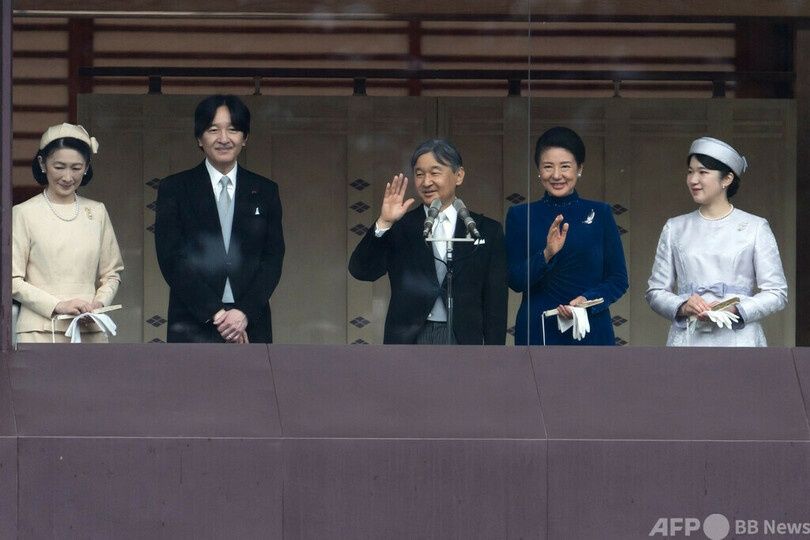
Japan's government cabinet has approved legislation to amend the Imperial House Law, triggering a significant political firestorm that threatens to derail what was intended as a technical reform addressing the shrinking Imperial family. The Tuesday approval has been met with sharp criticism from opposition parties, who contend the bill ventures into constitutionally sensitive territory regarding succession rights without adequate parliamentary consensus or transparent debate. The controversy reflects deeper fissures between Japan's ruling coalition and opposition forces, with the latter currently boycotting Diet proceedings due to broader disagreements with government policy.
At the heart of the dispute lies a specific provision that explicitly permits male descendants adopted into the Imperial family to retain succession rights to the Chrysanthemum Throne. This clause emerged from a proposed system allowing male-line descendants of historically significant but dormant Imperial branches to be readmitted into the Imperial family through adoption. Constitutional Democratic Party of Japan Secretary General Masayo Tanabu expressed particular frustration at this development during a press conference, arguing that the inclusion of succession language represents a fundamental departure from legislative intent. She emphasised that lawmakers had deliberately cordoned off succession discussions during prior cross-party negotiations to concentrate narrowly on stabilising the number of Imperial family members available for state functions.
The political tension underscores a crucial procedural question about how Japan's parliament should approach matters of constitutional significance. During months of preliminary deliberations between ruling and opposition camp representatives, negotiators explicitly avoided detailed discussions of succession mechanics, treating such questions as too divisive for consensus-building at that stage. Opposition figures now characterise the government's insertion of succession provisions into the final bill as a "sneak attack" that violates the spirit of legislative collaboration. This characterisation carries particular weight because it strikes at the heart of parliamentary legitimacy—the notion that major constitutional or near-constitutional matters should emerge through genuine cross-party dialogue rather than executive imposition.
Chief Cabinet Secretary Minoru Kihara responded to these accusations by offering a legalistic defence. He contended that because the preliminary proposals from parliamentary leadership contained no mention of adopted members' children, the government had simply applied existing Imperial House Law provisions to fill the gap. According to Kihara, failing to address this question would have left the adoption system incomplete and potentially unworkable. A government official involved in drafting elaborated this position, suggesting that without explicit clarification of succession rights for adopted members' descendants, the entire adoption framework would lack coherence. The government thus frames its approach not as overreach but as necessary technical clarification required to operationalise a system that all major parties nominally supported.
Yet this technical argument masks deeper ideological tensions within Japanese politics regarding the Imperial succession question itself. The Liberal Democratic Party has long advocated preserving male-line, male-only succession as a fundamental principle of Imperial continuity, a position rooted in both traditionalist constitutional interpretation and Shinto religious thought. By explicitly codifying succession rights for adopted male descendants, the government essentially embedded the LDP's preferred succession framework into legislation, potentially constraining future policy options if demographic pressures or evolving social attitudes later demand more flexible approaches. Opposition parties, particularly the Constitutional Democratic Party, have previously indicated sympathy for expanding Imperial status to include husbands and children of female Imperial family members—an approach that would preserve family unity following their marriages but fundamentally alter succession eligibility.
Komeito, the junior coalition partner to the LDP, has adopted a cautiously supportive but anxious position. The party backs the adoption system itself, viewing it as a practical solution to the declining number of eligible Imperial family members. However, Masaaki Taniai, leader of Komeito's House of Councillors caucus, warned that the party cannot advance deliberations without clear establishment of legislative will. This position reflects Komeito's traditional emphasis on consensus and procedural regularity, values that sit uneasily with the perception of executive unilateralism surrounding the bill's passage. The Centrist Reform Alliance similarly objected to revisiting succession issues that had been explicitly deferred during plenary discussions, with panel head Hirofumi Ryu emphasising that such deferral represented a negotiated compromise.
A second controversial element involves the government's handling of questions regarding the legal status of husbands and children of female Imperial family members after marriage. The approved bill clarifies that such relatives would remain commoners rather than gaining Imperial status, effectively preserving the existing restrictive framework. The Constitutional Democratic Party had advocated for granting Imperial status to maintain family cohesion, while the Centrist Reform Alliance had sought a more open-ended approach that would permit future flexible responses. By settling this question definitively in the negative, the government again locked in a particular succession philosophy without apparent consensus. This aspect of the revision particularly resonates across East Asia, where several nations including South Korea have recently confronted questions of female succession and family status within royal and imperial institutions.
The bill's drafting was shepherded by Shigetaka Yamazaki, Special Advisor to the Cabinet Secretariat and a former official in the Internal Affairs and Communications Ministry with deep expertise in Japan's Imperial system. Yamazaki previously contributed to drafting the 2017 special law permitting Emperor Akihito's abdication, an initiative that achieved remarkable cross-party support. That 2017 legislation passed with backing from all parliamentary parties except the then-Liberal Party, demonstrating that consensus-based approaches to Imperial reform remain achievable when conducted transparently. In striking contrast, only seven of thirteen political parties and parliamentary groups currently holding Diet seats endorsed the contents of proposals compiled by parliamentary leadership before the Cabinet inserted additional provisions. This dramatic narrowing of support reflects the bill's transformation from a narrowly technical measure into a vehicle for embedding succession preferences.
Senior Liberal Democratic Party officials have acknowledged that detailed institutional design decisions were ultimately left to the government rather than resolved through legislative dialogue. One LDP insider candidly noted that "the LDP's perspective became heavily reflected" in the final product—a statement that effectively concedes that executive preferences shaped outcomes rather than legislative consensus. This candour inadvertently validates opposition complaints about procedural irregularity. The bill thus exemplifies a broader pattern in contemporary Japanese governance where technical or seemingly apolitical matters become vectors for advancing particular substantive policy preferences through bureaucratic expertise and executive authority rather than democratic deliberation.
Yuji Otabe, professor emeritus at Shizuoka University of Welfare and an established Imperial system scholar, articulated a fundamental concern that resonates beyond partisan politics. He argued that the government's approach proves unduly narrow, prematurely excluding possibilities that should remain open for comprehensive democratic debate. Since imperial succession questions touch the constitutional definition of the Emperor's role as symbol of the state—arguably the most fundamental constitutional issue—Otabe contends such matters warrant unusually careful, inclusive deliberation rather than executive expedience. His critique implicitly challenges the assumption that technical expertise can or should substitute for popular sovereign decision-making on questions of constitutional architecture.
The parliamentary path forward remains deeply uncertain as opposition parties maintain their Diet boycott and withhold support for advancing the bill. The government faces a strategic choice between pressing ahead with only coalition support—potentially establishing a dangerous precedent for handling sensitive constitutional matters without broader consensus—or withdrawing the bill and reopening negotiations. For regional observers, the episode offers sobering lessons about how even nominally technical reforms addressing obvious institutional problems can become vectors for constitutional reinterpretation when existing political trust erodes. The unfolding debate will test whether Japan's institutions can still manage sensitive constitutional questions through dialogue and consensus-building, or whether adversarial polarisation increasingly dominates even matters traditionally treated as above partisan contestation.

