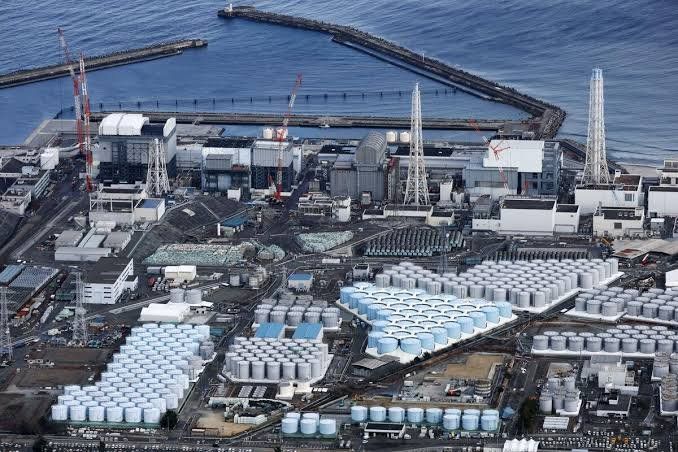
Tokyo Electric Power Company Holdings Inc. marked the completion of three years discharging treated radioactive water from the crippled Fukushima nuclear facility into the Pacific Ocean on Monday, having released a cumulative 172,700 tonnes across 22 separate operations since August 2023. The decommissioning effort represents one of the most contentious environmental projects in post-nuclear-crisis Japan, balancing the technical necessity of freeing storage space against diplomatic tensions and trade ramifications across East Asia. The operator's milestone underscores both progress in managing the facility's legacy and the ongoing friction this cleanup generates among Japan's trading partners and domestic fishing communities.
The volume of contaminated water requiring treatment continues to be generated daily at the plant, a consequence of the cooling systems that must perpetually circulate through the damaged reactor cores to prevent further deterioration. Following the catastrophic 2011 earthquake and tsunami that triggered Japan's worst nuclear emergency, approximately 60 tonnes of radioactive wastewater accumulate each day at the site. This persistent production underlines the permanent nature of the decommissioning challenge facing TEPCO and Japanese authorities, as the plant remains in a state requiring constant intervention for decades to come. The daily generation of contaminated coolant water established the imperative to process and ultimately discharge the material rather than allow storage tanks to multiply indefinitely.
TEPCO's decision to commence the discharge programme responded directly to the logistical constraints imposed by the accumulation of treated water in storage tanks, which by 2021 had become a bottleneck limiting further decommissioning work. The Japanese government approved the discharge strategy in April 2021 as a prerequisite for establishing a facility to extract melted fuel debris from within the reactor vessels—arguably the most hazardous phase of the cleanup operation. Storage tank capacity had become the limiting factor preventing advancement toward complete facility decommissioning, making release unavoidable if any progress was to continue. The operator aims to conclude the entire discharge programme by 2051, roughly four decades after the original disaster, though this timeline remains subject to unforeseen technical or diplomatic complications.
The treatment methodology employed by TEPCO subjects the radioactive water to advanced liquid processing systems designed to remove most isotopes before the purified water undergoes further dilution with seawater to concentrations below one-fortieth of Japanese safety limits. This layered approach to safety reflects both technological sophistication and institutional caution, though critics contend that any release of nuclear-contaminated material carries unacceptable risk regardless of treatment intensity. The diluted water is then discharged from a point one kilometre offshore, dispersing into the wider Pacific rather than concentrated at a coastal outlet. International oversight from the International Atomic Energy Agency, working alongside Japanese regulators and TEPCO itself, has detected no abnormal tritium levels in nearby waters or seafood, according to official monitoring reports—a finding that has done little to satisfy regional governments sceptical of Japan's safety assurances.
The operational tempo of releases has intensified progressively, reflecting TEPCO's shift toward continuous transfer operations rather than periodic batch processing. During fiscal 2023, the company completed four discharge operations, then increased to seven releases in each of fiscal 2024 and 2025. The current fiscal year 2026 schedule projects eight releases, of which four had already occurred by late August, demonstrating the acceleration toward higher discharge volumes. Each batch comprises roughly 7,800 tonnes of treated water, translating to the completion of approximately 22 major operations across the three-year period. This acceleration will shorten the overall decommissioning timeline but simultaneously intensifies the political and economic fallout in neighbouring regions dependent on Japanese seafood exports.
China's response has proven the most economically damaging, with Beijing imposing a blanket import prohibition on Japanese seafood products immediately upon TEPCO's first discharge in August 2023. Though the Chinese government indicated in June 2024 a willingness to partially lift restrictions on prefectures outside the immediate Fukushima region, it has maintained de facto import paralysis across most Japanese seafood categories. The ongoing trade barrier reflects not merely environmental caution but also deteriorating diplomatic relations between Tokyo and Beijing, exacerbated by Prime Minister Sanae Takaichi's November remarks suggesting Japan might intervene militarily should a Taiwan crisis emerge. The linkage between nuclear safety concerns and geopolitical tensions demonstrates how environmental issues in East Asia become entangled with regional security anxieties, complicating any technical resolution of the discharge question. Russia and several other countries have similarly maintained import restrictions, though these have attracted less international attention than China's sweeping ban.
The economic consequences for Japanese fisheries have been substantial and concentrated, with fishing cooperatives and seafood exporters bearing the direct cost of market foreclosure. TEPCO has distributed compensation totalling approximately 92.8 billion yen (US$585 million) across roughly 1,100 separate claims as of early August, predominantly addressing losses from inability to export high-value seafood products such as scallops and sea cucumbers to China and Hong Kong. This compensation, while substantial in nominal terms, represents only a portion of the long-term revenue losses that Japanese fisheries will experience if trade restrictions remain in place through the decade-long discharge programme. Many fishing communities view the compensation as inadequate redress for the destruction of export markets, particularly given uncertainty about whether those markets will fully reopen once the discharge programme concludes.
For Southeast Asian nations, Japan's nuclear discharge presents both direct and indirect concerns warranting careful monitoring. The oceanographic circulation patterns of the Pacific mean that radioactive particles could theoretically reach regional waters over extended periods, though scientific consensus suggests dilution and decay reduce actual exposure risk substantially. More significantly for the region, the trade friction between Japan and China reverberates throughout ASEAN supply chains, as disruptions to Japanese seafood exports and Chinese imports create market instability affecting competing suppliers throughout Southeast Asia. Regional governments must also consider their own potential exposure should similar nuclear incidents occur domestically, making careful observation of TEPCO's management practices and international regulatory oversight relevant to their own nuclear safety preparedness.
TEPCO's chief decommissioning officer Akira Ono stated at a press conference in July that the company remained committed to conducting releases safely while improving communication and ensuring appropriate compensation for affected businesses. This messaging attempts to balance technical confidence in the discharge programme's safety with acknowledgment of legitimate economic grievances from fishing communities. The operator's framing emphasises procedural compliance and compensation distribution rather than addressing the fundamental opposition from stakeholders who reject any discharge programme regardless of mitigation measures. The divergence between official assurances of safety and persistent scepticism from affected communities reflects deeper tensions about nuclear risk governance and the distribution of environmental costs across society.
The storage tank reduction represents tangible progress toward site remediation, with 17 of approximately 1,000 tanks dismantled after emptying, and the total stored volume decreasing by 7.6 per cent to around 1.24 million tonnes. These numbers illustrate both the scale of the challenge and the modest pace of reduction, suggesting that decades of sustained effort lie ahead before storage tanks cease to dominate the landscape at Fukushima. The physical infrastructure of the discharge programme—the thousands of storage tanks, processing facilities, and monitoring stations—has become a permanent fixture of the post-2011 Japanese nuclear landscape, visible manifestation of the accident's enduring consequences. As TEPCO progresses toward the 2051 completion target, the facility will continue generating international controversy and regional economic impacts that extend far beyond the technical questions of water treatment and isotope removal.

