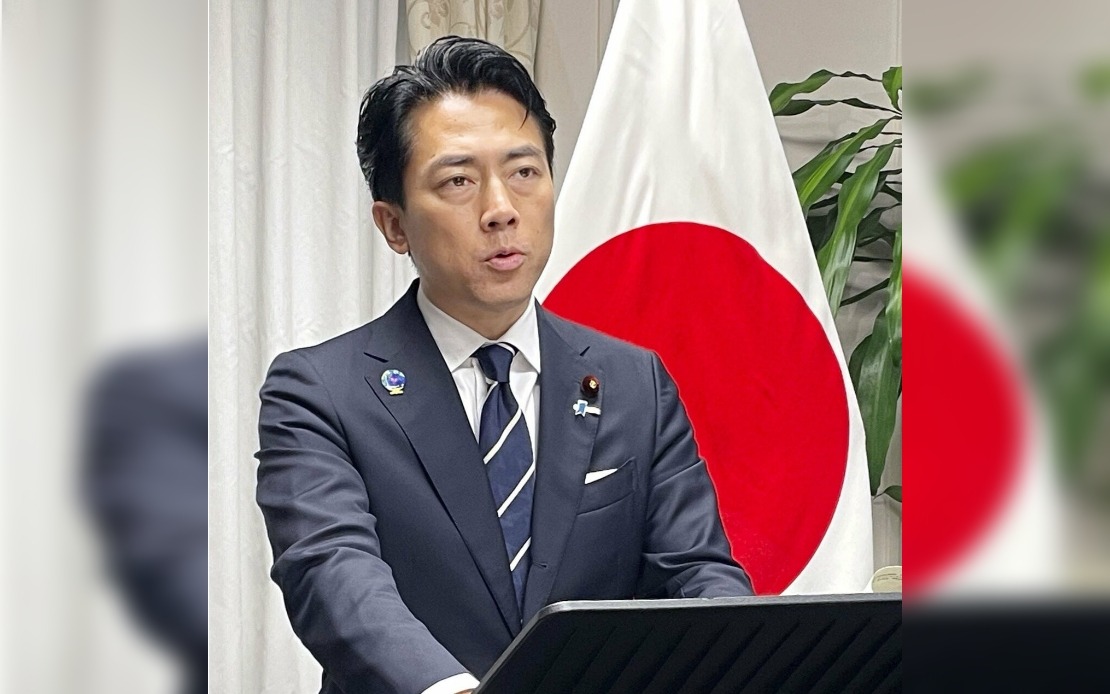
Defence Minister Shinjiro Koizumi has sparked fresh discussion about Japan's long-standing nuclear principles by arguing that the country must consider debating its relationship with nuclear weapons. Speaking during an online programme on Friday, Koizumi positioned the discussion within the context of Japan's planned overhaul of three critical national security documents scheduled for completion by year's end, signalling that this is not merely academic discussion but potentially consequential policy review at the highest levels of government.
Japan's current defence establishment faces mounting pressure to reconsider positions previously viewed as immutable. Koizumi pointed specifically to changing attitudes among America's European allies, particularly France and Finland, as evidence that Japan cannot indefinitely sidestep the nuclear question. Finland's parliament approved legislation in June that would permit nuclear weapons deployment on its soil, while French President Emmanuel Macron announced in March that France intends to expand its nuclear arsenal. These developments suggest that trusted partners are escalating their nuclear commitments rather than maintaining the restraint that characterised the Cold War's conclusion.
The tension underlying Koizumi's intervention becomes apparent when examining Japan's existing framework. As the sole nation to endure atomic bombardment during wartime, Japan has historically maintained three foundational principles: refusing to produce nuclear weapons, declining to possess them, and prohibiting their introduction into Japanese territory. This policy framework has enjoyed bipartisan consensus and resonates deeply within Japanese society, yet Koizumi's comments reveal emerging doubt about whether these principles remain adequate for contemporary security challenges.
The Defence Minister's framing is notably strategic. Rather than advocating for nuclear acquisition, he emphasises Japan's need to participate in rational dialogue without taboos constraining discussion. This distinction matters because it allows policymakers to explore scenarios and implications without formally abandoning existing commitments. Koizumi argues that Japan's security environment has deteriorated sufficiently to warrant removing self-imposed intellectual restrictions on policy deliberation.
For regional observers, particularly in Southeast Asia, this Japanese recalibration carries significant implications. Japan's security posture influences balance-of-power calculations throughout the Indo-Pacific. Any movement toward nuclear weapons development would fundamentally alter the strategic environment in ways that could destabilise the region. Malaysia and neighbouring nations have long benefited from Japan's restraint and its reliance upon American security guarantees to manage regional tensions.
Precedent exists for political controversy around nuclear discussions in Japan. In December of the previous year, an unnamed government official involved in security planning under Prime Minister Sanae Takaichi's administration proposed that Japan should acquire nuclear weapons, provoking fierce opposition from parliamentary opposition parties and diplomatic protests from several nations. The incident revealed fissures within the consensus and suggested that restraint is eroding among some policymakers.
Former Defence Minister Itsunori Onodera reinforced this trajectory by arguing late last year that Japan must reconsider its non-nuclear principles. His remarks, combined with Koizumi's recent comments, indicate that this is not the isolated position of individual officials but rather a coordinated campaign to normalise discussion of options previously considered outside the bounds of respectable policy debate.
Understanding the origins of this shift requires acknowledging China's expanding military capabilities and North Korea's advancing nuclear and missile programmes. Japan observes these developments with considerable concern, while simultaneously watching American commitment to extended deterrence appear less certain than during earlier decades. These twin anxieties—regarding hostile capabilities and regarding American reliability—have prompted Japanese security specialists to examine previously unthinkable alternatives.
The government's planned revision of national security documents provides institutional machinery for translating renewed debate into actual policy evolution. Such documents typically reflect core strategic assumptions and commitments. Their revision in 2024 and 2025 will reveal whether Japan intends to maintain its non-nuclear posture or initiate a gradual shift toward nuclear capability development. The timing coincides with broader American strategic recalibration in Asia and suggests Japan is positioning itself for a potentially multipolar security environment.
Malaysia and other regional states should monitor these developments carefully. Japanese nuclear acquisition would represent the most significant shift in East Asian security architecture since China's initial nuclear tests. It would likely trigger compensatory responses from other powers and potentially undermine the non-proliferation regime that has constrained weapons spread across Asia. Additionally, Japan's historical role as a pacifist nation within the American-led security order adds symbolic weight to any nuclear reversal.
The debate Koizumi advocates for remains preliminary, and formal policy adoption remains distant. Nevertheless, his public advocacy signals that Japanese political and military leadership no longer considers non-nuclear status permanent or beyond contestation. This represents a meaningful departure from decades of consensus, even if the practical policy consequences remain uncertain. Regional governments should engage constructively with Japan during this review period, understanding both the security pressures Japan faces and the potential consequences of responding to those pressures through nuclear acquisition rather than through alternative means of deterrence and assurance.

