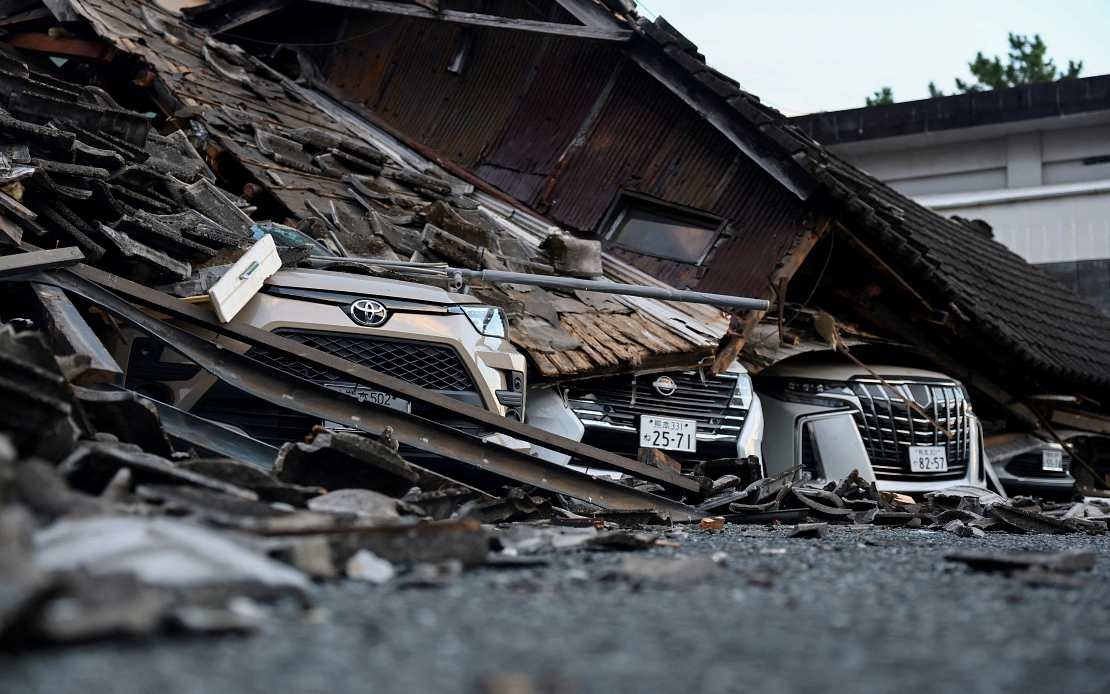
A Japanese retailer has publicly acknowledged that it instructed two of its employees to return inside an Aeon Mall in Kumamoto Prefecture following a powerful earthquake, a decision that preceded their deaths in a subsequent explosion that claimed seven lives in total. The admission, made by Habita sales manager Koji Yuse, 64, represents a sobering moment for corporate accountability in Japan's retail sector and raises difficult questions about workplace safety priorities during natural disasters.
The tragic sequence of events unfolded after a magnitude 7.1 earthquake struck southwestern Japan on Tuesday, registering the highest intensity level on Japan's seismic scale. The powerful tremor triggered a massive explosion at the Aeon Mall Kumamoto in Kashima Town, which resulted in widespread destruction and loss of life. Among the seven people killed were two women, including a 22-year-old, who worked at Habita's variety store outlet within the shopping complex.
According to the chain of events disclosed on Monday, the two employees had initially followed proper emergency procedure by evacuating from the mall immediately after the earthquake struck. However, their safety was short-lived. Yuse instructed the store manager to order the two women back into the building specifically to transfer the day's sales revenue from their store location on the second floor to a safe positioned on the first floor. This decision to prioritise financial security over employee safety during an active earthquake emergency sequence proved catastrophic.
Yuse's public statement acknowledged the gravity of his actions, telling reporters that he believed his order was inappropriate and that he deeply regretted it. This candid admission stands in contrast to the defensive postures sometimes adopted by Japanese corporations facing public scrutiny. Habita has since formally apologised to the bereaved family members of the deceased employees and provided them with a detailed written account of the circumstances surrounding the incident.
The broader context of this disaster reveals the devastating impact of the initial earthquake itself. The Kumamoto prefectural government reported that as of Tuesday morning, at least 36 people had been confirmed dead as a direct result of earthquake-related incidents, with two additional deaths still under investigation at the time of reporting. The explosion at the shopping mall represented one of the most catastrophic secondary effects of the seismic event.
This incident carries significant implications for corporate policy across Southeast Asia, where similar retail chains operate in earthquake-prone regions. Malaysia, despite not facing the same frequency of seismic activity as Japan, lies within a region susceptible to occasional tremors, and retailers must consider whether their own emergency protocols adequately protect employee welfare. The case demonstrates how financial considerations can inadvertently override fundamental safety instincts during crisis moments.
Japan's stringent building codes and disaster preparedness systems are internationally recognised, yet this tragedy underscores that structural resilience alone cannot prevent loss of life when human decision-making prioritises assets over people. The explosion's severity and the timing suggest that employees should never have been directed back into a building immediately following a major earthquake, regardless of financial implications.
The incident also highlights tensions inherent in retail operations during natural disasters. Store managers and operators face competing pressures to protect company assets while ensuring staff safety. In this case, the pressure to secure cash reserves clearly overrode appropriate emergency protocols. Financial losses, while significant to any business, are ultimately recoverable, whereas human lives are not.
Habita's acknowledgment and apology, though necessary, cannot undo the tragedy. However, it may serve as a cautionary reference point for other retail operators in the region reviewing their emergency procedures. Malaysian retailers with operations in earthquake zones, particularly those in areas near fault lines or in buildings with shared occupancy, should critically examine whether their current protocols would withstand similar pressure to compromise safety.
The disaster raises broader questions about corporate culture in Japan and Asia more widely regarding the hierarchy of priorities during emergencies. Best practice protocols universally recommend complete evacuation and sheltering in place until authorities declare an area safe, yet real-world decisions made under pressure sometimes diverge significantly from these standards.
Moving forward, this incident will likely influence insurance requirements, regulatory oversight, and best-practice guidelines for retail operations across the region. Companies may face increased scrutiny from both regulators and employees regarding emergency response procedures. For Malaysian retailers and other Southeast Asian operations, the Kumamoto explosion serves as a stark reminder that no financial asset justifies exposing workers to the risks inherent in natural disaster aftermaths.

