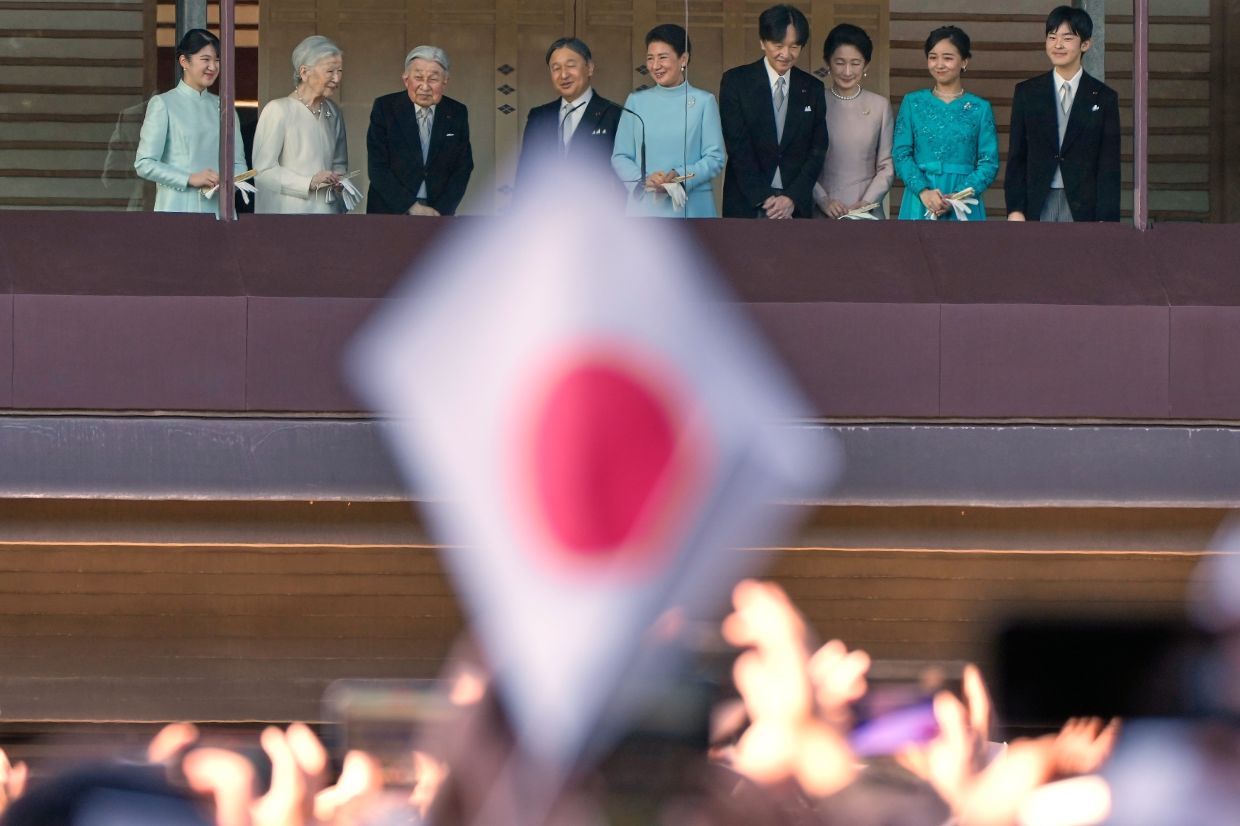
Japan's parliament has taken a limited step toward modernising its imperial succession framework, yet stopped short of the more radical reform that opinion polls suggest most citizens favour. The upper house of the Diet passed amendments to imperial law on Friday following weeks of heated debate, but the decision leaves the nation's ancient throne effectively dependent on a single teenager whose family prospects remain uncertain. The outcome reflects the continuing influence of traditional conservative forces within Japan's political establishment, even as demographic realities and shifting public attitudes challenge the logic of rules written nearly eight decades ago.
At the heart of this succession crisis stands Prince Hisahito, a 19-year-old currently absorbed in university studies of biology and entomology. The prince represents the sole male heir in the direct imperial line beneath his uncle, Emperor Naruhito, who is 66 years old. Should Hisahito fail to produce a son—a possibility that cannot be dismissed given he remains unmarried and has given no public indication of imminent nuptials—Japan would face an unprecedented constitutional question: whether the Chrysanthemum Throne could pass to a female sovereign, or whether the imperial institution itself would require fundamental restructuring.
The legislative package passed on Friday offers a partial solution to this looming predicament by permitting the adoption of male descendants from imperial branch families that were severed from the main line following World War II. These prospective adoptees must be at least 15 years old and unmarried—conditions designed to preserve their status as imperial family members whilst introducing a degree of flexibility to the rigid male-only succession system. The legislation also grants women in the imperial family the right to retain their status after marrying non-royals, a concession to modern realities that acknowledges the impracticality of enforcing historical isolation standards.
Yet these modifications merely tinker at the edges of a succession framework rooted in the 1947 Imperial Household Law, a statute that has remained fundamentally unchanged despite Japan's transformation into a modern democracy. The law explicitly reserves the throne for male heirs descending through the male line, a principle that excludes millions of potential candidates—including the immensely popular Princess Aiko, Emperor Naruhito's 24-year-old daughter, and Prince Hisahito's two older sisters. That these women, born into the imperial family and trained for lives of public service, cannot inherit the throne they have known their entire lives underscores the rigidity of current arrangements.
The political calculus behind this conservative outcome becomes clearer when examining the forces that shaped the debate. Prime Minister Sanae Takaichi, who made history as Japan's first female premier, has personally opposed female succession—a stance that many observers found ironic given her own historic achievement. Within the ruling Liberal Democratic Party, which has dominated Japanese politics for most of the post-war period, traditional views on imperial matters retain considerable sway among senior figures. The party's long dominance has allowed it to act as custodian of imperial protocol, and many senior members view challenges to succession customs as threats to national continuity.
Not all voices within the conservative establishment remained silent on these tensions. Seiichiro Murakami, a veteran LDP member, publicly declared the exclusion of Princess Aiko from the succession as fundamentally unjust after the lower house approved the bill on July 10. Even the Yomiuri Shimbun, Japan's highest-circulation newspaper and typically a vocal supporter of the ruling party, departed from its usual editorial stance to criticise the government's handling of this issue. These cracks in the consensus suggest that the current compromise may prove temporary rather than definitive.
The practical difficulties of the adopted-relative solution have received particular scrutiny from those with intimate knowledge of imperial life. Asahiro Kuni, an 81-year-old former member of one of the 11 imperial branch families removed from the imperial register after 1945, has cautioned that the government's proposal operates on unrealistic assumptions. Speaking to the Asahi Shimbun, Kuni observed that by age 15, candidates would have spent their entire conscious lives outside the imperial cocoon, having absorbed entirely different social norms and expectations about personal freedom. The hardships of imperial existence—constant surveillance, restricted privacy, strict protocol—would likely prove deeply alienating to candidates accustomed to ordinary civilian life.
Kuni's warnings carry particular weight because he represents the precise demographic the government hopes to recruit. His suggestion that few people, if accurately informed about the genuine constraints of imperial life, would willingly subject themselves to such conditions raises uncomfortable questions about whether the succession problem has truly been solved or merely deferred. The mathematics of the imperial family reinforce these concerns: only 16 members currently comprise the household, with just five males—including the 92-year-old retired Emperor Akihito and his 90-year-old brother—available in the broader eligibility pool.
Public sentiment stands in sharp contrast to the conservative political consensus. An Asahi Shimbun poll conducted in May revealed that 72 percent of respondents supported amending imperial succession rules to permit female emperors. This figure represents a substantial majority and suggests that the Japanese public has moved beyond the historical rationales for male-only succession. The gap between what voters support and what their elected representatives have delivered points to a fundamental disconnect between democratic preferences and the guardianship of imperial tradition that the political establishment continues to exercise.
The passage of this compromise legislation may temporarily ease succession anxieties, but it does not resolve the underlying constitutional question that Japan must eventually confront. If Prince Hisahito produces no sons, or if his descendants similarly fail to have male heirs, the restrictive framework will eventually collide with biological reality. At that point, Japan will face a choice between maintaining an empty throne in deference to historical precedent or accepting that the 21st century demands different answers to questions of imperial continuity. The debate that has begun may prove to be merely the opening chapter in a longer story of constitutional reform.

