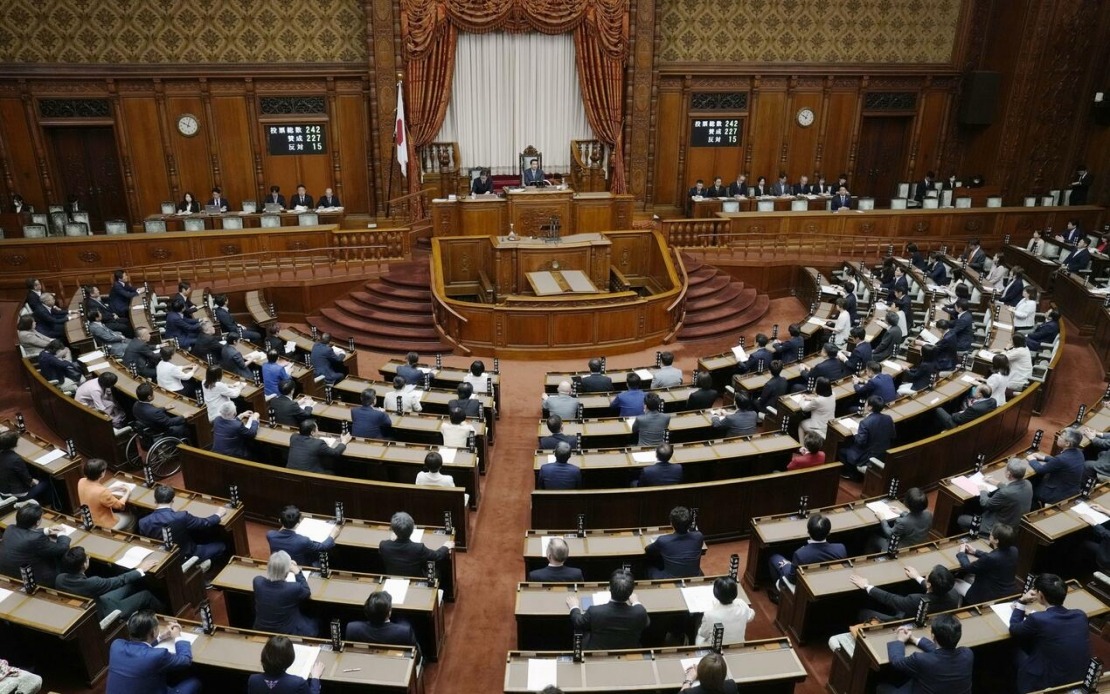
Japan's parliament has formally approved sweeping legislation to restructure the nation's Air Self-Defence Force, incorporating space operations into its core organisational structure. The decision, enacted by the House of Councillors on Friday, represents a significant strategic pivot reflecting Tokyo's assessment of shifting regional security dynamics and the growing centrality of space-based systems to modern defence architecture. The restructured force will be formally launched during the fiscal year ending March 2027, establishing Japan as a nation actively professionalising its space military capabilities at a time when competitors are rapidly advancing their own programmes.
Central to the reorganisation is the creation of a dedicated space operations group that will operate under the command of a lieutenant general. This command structure elevates space operations to the same leadership tier as traditional air defence functions, signalling the seriousness with which Tokyo now regards space domain awareness and control. The group will focus on enhancing Japan's satellite surveillance capabilities and improving its ability to monitor and respond to activities across the orbital environment—a domain increasingly contested by regional powers with substantial space programmes. For Japan, maintaining technological edge and real-time awareness in this domain has become integral to deterrence and rapid crisis response.
Defence Minister Shinjiro Koizumi emphasised during a news conference that space-based infrastructure extends far beyond military applications. The minister highlighted how ordinary Japanese citizens depend daily on satellite navigation systems, smartphone mapping applications, and weather forecasting services—all vulnerable to disruption if space superiority is ceded to potential adversaries. This framing demonstrates how Japanese policymakers are articulating space defence not merely as a military matter but as essential infrastructure protection directly affecting civilian economic and social functioning. This broader conception aligns with strategic thinking evident across allied nations and reflects growing international concern about space militarisation.
Beyond space operations, the legislation addresses several other defence challenges simultaneously. The government secured parliamentary approval to establish a second senior vice defence minister position, a structural change designed to distribute workload more effectively during national contingencies and large-scale natural disasters. Japan, geographically vulnerable to earthquakes and typhoons, has learned through painful experience that simultaneous security and emergency responses strain senior defence leadership. This appointment is expected to materialise as early as summer and signals intent to enhance the defence ministry's crisis management capacity. The position will also facilitate expanded high-level defence exchanges with the United States and other security partners, institutionalising deeper integration with allied defence establishments.
Recognising that modern military effectiveness depends upon personnel retention, the legislation simultaneously tackles recruitment and retention challenges facing the Self-Defence Forces. The measure authorises increases in post-retirement benefits for SDF members, addressing a long-standing grievance among career military personnel whose mandatory retirement ages—varying by rank—typically come earlier than comparable civil service positions. By improving financial security in retirement, Japan aims to make SDF careers more attractive and retain experienced personnel, a critical concern as demographic headwinds reduce the overall working-age population and military-age cohorts contract significantly.
A particularly significant element of the defence legislation concerns southwestern island security. The Ground Self-Defence Force's 15th Brigade, stationed in Naha, Okinawa Prefecture, will be upgraded to full divisional status. This expansion directly reflects Japanese and allied concerns about Chinese maritime assertiveness in the East China Sea and broader regional waters. The Okinawan islands occupy critical strategic geography, and upgrading the brigade to divisional status increases command capabilities, force structure flexibility, and the permanence of Japan's military presence across its southwestern maritime domain. For regional observers, this move signals Tokyo's determination to maintain defensive capacity in areas where it perceives Chinese pressure mounting.
The legislative package demonstrates how Japan is recalibrating its defence posture across multiple dimensions simultaneously. Rather than focusing narrowly on naval or air capabilities, the restructuring addresses space operations, personnel readiness, command efficiency, and regional military balance in an integrated fashion. This approach reflects sophisticated strategic thinking about modern defence complexity, where technological edge, organisational effectiveness, and personnel quality all interweave to determine operational capability.
For Southeast Asian nations, Japan's space defence investments carry important implications. As regional tensions rise and maritime competition intensifies, the strategic choices made by major powers like Japan reverberate throughout the region. Japanese advances in space surveillance and monitoring contribute to broader allied awareness of activities affecting shared waters and interests. Simultaneously, Japan's willingness to invest substantially in military modernisation may influence how other regional states calibrate their own defence spending and strategic priorities.
The timing of these defence reforms also reflects Japan's broader security reassessment following years of relative complacency. The geopolitical environment has shifted markedly, with regional powers expanding military capabilities, tensions rising over territorial disputes, and the strategic importance of space becoming undeniable. Japan, as a technologically advanced nation with sophisticated civilian space industries, possesses genuine capacity to develop credible space defence capabilities. By formalising this through parliamentary legislation, the government commits sustained resources and attention to space operations rather than treating them as secondary priority.
Looking forward, the implementation period stretching to March 2027 allows Japan to build the institutional knowledge, training pipelines, and technological infrastructure necessary for effective space operations. The appointment of experienced personnel to lead the new space operations group will be crucial, as will the development of doctrine, tactics, and procedures appropriate to this emerging domain. Japan's success in establishing credible space defence capabilities could influence how regional partners approach their own space security challenges.

