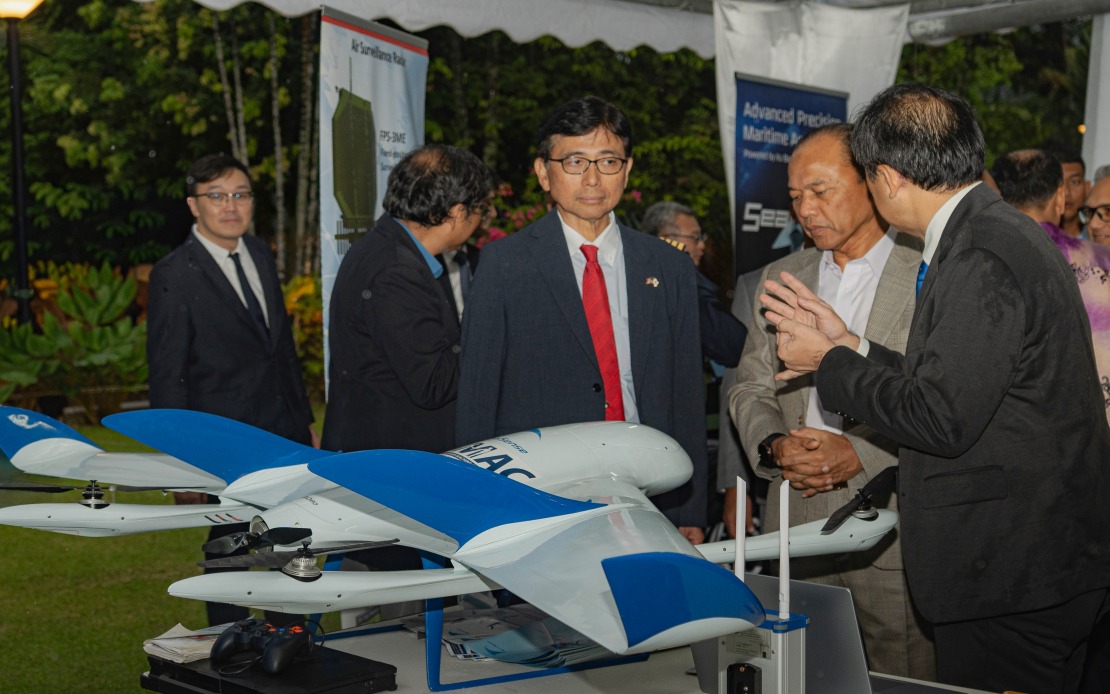
Japan is signalling its willingness to deepen security and defence partnerships with Malaysia as both nations navigate an increasingly unstable regional environment. Speaking at the 72nd Japan Self-Defence Forces Day Reception in Kuala Lumpur on Wednesday, Japan Ambassador Noriyuki Shikata outlined Tokyo's strategic vision for the relationship, which now extends well beyond traditional diplomatic channels into substantive military coordination and technology transfer.
Shikata's remarks reflect momentum generated during Prime Minister Datuk Seri Anwar Ibrahim's recent visit to Japan earlier this month, where he met with Prime Minister Sanae Takaichi. The two leaders reaffirmed their commitment to advancing strategic cooperation centred squarely on defence and security matters. This convergence of strategic interests comes at a moment when regional powers grapple with maritime tensions, supply chain vulnerabilities, and the need to maintain open sea lanes critical to Southeast Asian economies. For Malaysia, Japan's overtures represent an opportunity to diversify its security partnerships and access advanced Japanese technology without compromising its traditionally non-aligned foreign policy.
The elevation of Japan-Malaysia ties to Comprehensive Strategic Partnership status in 2023 provides the institutional framework for this expanding cooperation. With diplomatic relations set to reach their 70th anniversary next year, both nations appear intent on demonstrating tangible progress in defence collaboration rather than allowing the partnership to rest on historical goodwill alone. Shikata explicitly committed to advancing cooperation across all sectors, with particular emphasis on defence and security, signalling that Tokyo views Malaysia not merely as a regional ally but as a linchpin in its broader Indo-Pacific strategy.
Central to Japan's approach is alignment between Tokyo's Free and Open Indo-Pacific vision and ASEAN's own Outlook on the Indo-Pacific. Rather than imposing its strategic preferences, Japan is attempting to harmonise its interests with the regional consensus-building mechanisms that guide ASEAN diplomacy. This diplomatic finesse matters considerably in Malaysia, where policymakers remain sensitive to perceptions of great-power interference. By framing enhanced security cooperation as mutually beneficial support for regional stability and prosperity, Japan avoids triggering the nationalist backlash that could undermine public support for closer ties.
Practical military exercises form the backbone of this cooperation. The bilateral MALPAN exercise, conducted regularly by Japan's Maritime Self-Defence Force and the Royal Malaysian Navy in the South China Sea and Strait of Malacca, has expanded significantly. The inclusion of the Royal Malaysian Air Force in April's iteration demonstrates broadening interoperability across multiple military domains. These exercises serve multiple purposes: they build institutional trust between armed forces, improve tactical coordination, enhance Malaysia's capability to monitor and respond to maritime incidents, and signal to other regional actors Japan's commitment to maintaining freedom of navigation in strategically vital waterways. For Malaysia, such engagement strengthens its capacity to assert sovereign authority over disputed maritime zones without directly confronting larger powers.
Japan's Official Security Assistance programme, launched in 2023, represents a newer dimension of the security relationship. Positioning Malaysia among its first recipients underscores Japan's prioritisation of the bilateral partnership within its broader regional engagement strategy. Previous deliveries of unmanned aerial vehicles and rescue boats addressed immediate operational needs. The 2025 iteration, which includes equipment for ceasefire monitoring destined for the ASEAN Observer Team and a diving support vessel for the Royal Malaysian Navy, reflects evolving security challenges. Ceasefire monitoring capabilities suggest Japanese support for ASEAN's peacekeeping and conflict-resolution mechanisms, while naval support equipment enhances Malaysia's ability to project presence and respond to incidents across its extensive maritime domain.
Defence industry cooperation adds a commercial dimension to the security relationship. The participation of 10 Japanese companies in Defence Services Asia 2026, Malaysia's flagship defence expo, demonstrates Tokyo's confidence in the bilateral market and its desire to showcase advanced military technology to Malaysian decision-makers. The signing of Terms of Reference to launch a bilateral defence industry dialogue during the event signals formal commitment to sustained engagement between Japanese defence contractors and Malaysian military procurement officials. This mechanism could eventually lead to joint development projects, licensing arrangements, or direct equipment sales that would further intertwine the two nations' military-industrial bases.
From Malaysia's perspective, closer security ties with Japan offer several strategic advantages. Japan's advanced maritime surveillance capabilities and sophisticated defence technology could enhance Malaysia's ability to monitor its extensive exclusive economic zone and respond to transnational threats including piracy, smuggling, and illegal fishing. Japanese support for capacity-building initiatives respects Malaysian sovereignty while tangibly improving operational effectiveness. Additionally, deepening ties with Japan provide Malaysia with strategic hedging options in an era of great-power competition, allowing Kuala Lumpur to maintain relationships with multiple security partners without becoming dependent on any single power.
The presence of Armed Forces Chief General Tan Sri Malek Razak Sulaiman at the reception underscores the military establishment's endorsement of these initiatives. Malaysian defence leadership appears convinced that closer cooperation with Japan serves institutional interests while advancing national security objectives. This consensus among civilian and military leadership suggests that enhanced Japan-Malaysia security ties will likely expand across multiple dimensions regardless of shifts in broader regional geopolitics.
Shikata's emphasis on keeping sea lanes open and secure resonates particularly with Malaysia, a nation whose prosperity depends fundamentally on unimpeded maritime commerce. Japan's willingness to contribute concrete resources—equipment, technology, training, and joint exercises—addresses Malaysia's genuine security concerns while advancing Tokyo's strategic vision for the region. As regional tensions persist and power competition intensifies, Malaysia's calculated deepening of security ties with Japan reflects rational calculation about maximising national interests through careful coalition-building among like-minded democracies.

