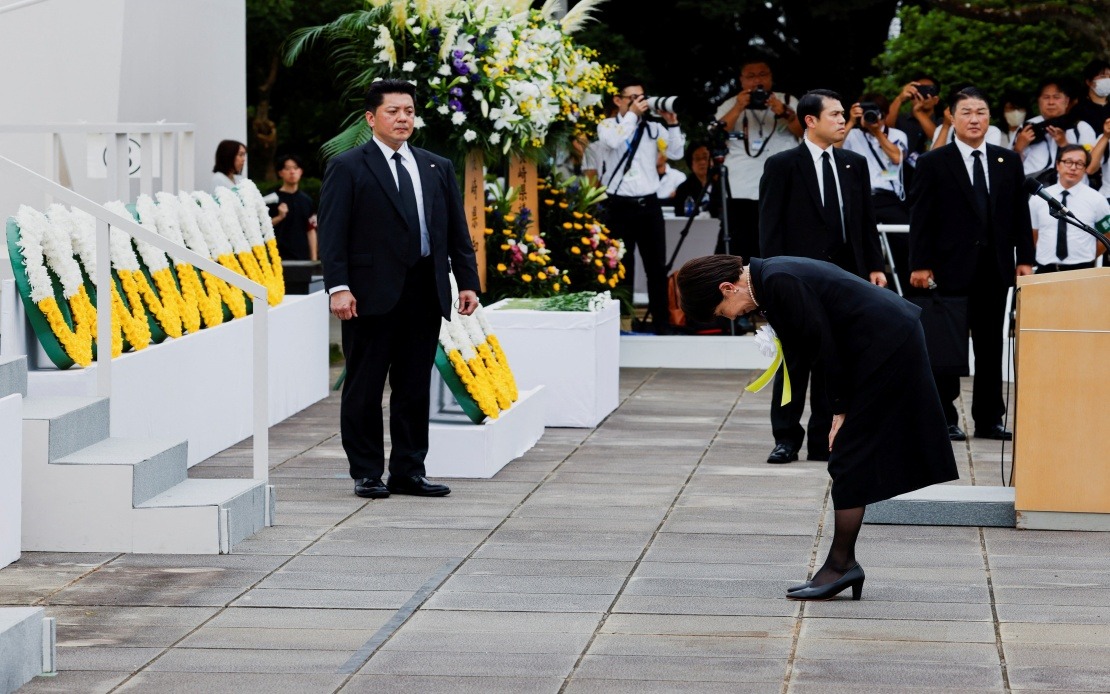
Nagasaki observed the 81st anniversary of the atomic bombing on August 9, marking a solemn moment in Japan's postwar history even as contemporary geopolitical tensions have reignited international debate over nuclear deterrence and weapons proliferation. The southwestern Japanese city will hold a formal ceremony honouring the estimated 74,000 people killed by the initial blast and its aftermath by the end of 1945, with many others enduring lifelong health consequences from radiation exposure. The commemoration arrives at a critical juncture when policymakers worldwide are reassessing nuclear strategy, forcing Japan to reaffirm its decades-old commitment to rejecting atomic weapons despite regional security pressures.
The centrepiece of Sunday's remembrance will be a moment of silence at 11.02 a.m., marking the precise moment when the "Fat Man" plutonium device detonated above the city. That timestamp carries profound symbolic weight for Japan, as Nagasaki remains the last population centre to experience nuclear warfare. The device's destructive power fundamentally altered human understanding of warfare's potential scale, a reality that continues to shape Japanese security policy and public consciousness eight decades later. Mayor Shiro Suzuki is anticipated to deliver remarks urging world leaders toward nuclear disarmament, emphasising that peaceful coexistence becomes impossible in a world armed with atomic weapons.
Prime Minister Sanae Takaichi will participate in the ceremony, lending governmental authority to messages about nuclear abolition. Her presence carries particular significance given recent domestic debates questioning Japan's longstanding three non-nuclear principles, which prohibit Japan from producing, possessing, or allowing nuclear weapons on its territory. Following similar ceremonies in Hiroshima just three days earlier, Takaichi has publicly restated the government's commitment to this policy framework, attempting to ease concerns among hibakusha—atomic bomb survivors—and their supporters who have become increasingly vocal about Japan's nuclear future. The UN Secretary-General Antonio Guterres will contribute a statement to be read aloud, demonstrating international recognition of the bombing's historical and ongoing significance.
The timing of this anniversary proves particularly fraught given deteriorating global security dynamics. The international community's inability to reach consensus at May's Nuclear Non-Proliferation Treaty review conference—the third consecutive failure to produce agreement at this five-yearly gathering—signals deepening divisions among nuclear and non-nuclear powers over disarmament obligations. That conference, held in New York after an entire month of negotiations, highlighted how geopolitical competition now overshadows traditional non-proliferation frameworks. For Southeast Asian nations including Malaysia, Japan's position as a U.S. ally committed to nuclear restraint provides strategic reassurance in a region witnessing increased great-power competition.
Japan's post-1945 trajectory demonstrates how nations devastated by nuclear warfare can establish strong institutional commitments against weapons development. The three non-nuclear principles, formally adopted by successive governments, became fundamental to Japan's national identity and security doctrine, even as the country maintained U.S. nuclear umbrella protection through its alliance. This paradox—seeking security through nuclear deterrence without acquiring weapons—reflects the complex compromise many non-nuclear powers have negotiated. For Malaysia and other ASEAN members operating in a multipolar security environment, Japan's example offers lessons in how regional powers can maintain strategic autonomy while adhering to non-proliferation commitments.
The hibakusha community, whose average age now exceeds 86 years, has undertaken an urgent mission to preserve firsthand testimony about atomic warfare's human costs. These survivors and their supporters recognise that direct witness accounts carry irreplaceable moral authority in disarmament debates. As this generation ages, efforts to document their experiences and transmit their messages to younger generations have intensified. Educational initiatives, museum exhibits, and survivor testimony programmes attempt to ensure that institutional memory of nuclear warfare's humanitarian catastrophe survives the passage of time. The generational transition poses challenges for maintaining public commitment to nuclear abolition as those with personal experience gradually pass away.
The August 9, 1945 bombing followed the Hiroshima attack by merely three days, reflecting American strategic decisions to employ newly available atomic weapons in rapid succession against Japanese urban centres. This compressed timeline compressed decisions that would ultimately alter human history, yet Japan surrendered only six days later on August 15, raising historical questions about the bombing's actual strategic necessity. For contemporary Southeast Asian audiences, understanding this historical context matters because it shapes ongoing debates about deterrence, proportionality, and civilian protection in military doctrine. The unresolved ethical questions surrounding the bombings continue informing international humanitarian law discussions and nuclear weapons ethics.
Japan's position within evolving regional security architecture makes its nuclear commitment particularly significant. Neighbouring countries including Russia, China, and North Korea all possess nuclear weapons or advanced programmes, while the United States maintains deterrent forces positioned throughout the western Pacific. Despite these threatening circumstances, Japan has maintained its non-nuclear status, suggesting that security can be achieved through conventional military strength, alliance relationships, and diplomatic influence rather than atomic weapons. This approach has proven durable across seven decades and multiple Japanese governments, demonstrating sustained institutional commitment despite intermittent domestic debates about rearmament.
Recent geopolitical tensions, particularly surrounding Taiwan, Russian actions in Ukraine, and North Korean missile development, have prompted renewed questioning within Japan about whether existing security arrangements remain adequate. Some political figures and security analysts argue that possessing independent nuclear capability would enhance deterrence and reduce strategic vulnerability. However, countervailing constituencies including hibakusha organisations, pacifist movements, and opinion leaders emphasise that Japan's non-nuclear status constitutes both moral leadership and practical security strategy. The government's repeated reaffirmations of its three principles, even as debate intensifies, suggest that mainstream Japanese opinion continues valuing nuclear restraint as fundamental to national identity.
For Malaysia and other Southeast Asian nations observing these developments, Japan's steadfast commitment to non-proliferation while maintaining conventional military modernisation offers a relevant model. ASEAN members face comparable pressures from great-power competition, regional rivalry, and security dilemmas, yet most have likewise chosen to avoid nuclear weapons development. The region's security architecture, built on dialogue, multilateral engagement, and rules-based frameworks rather than arms races, reflects similar commitments to restraint. Japan's continued advocacy for nuclear disarmament strengthens these regional non-proliferation norms and provides diplomatic weight to Southeast Asian efforts promoting peaceful resolution of disputes.
The Nagasaki ceremony ultimately represents more than historical commemoration. It constitutes an annual reaffirmation of fundamental principles about human dignity, the unacceptability of weapons of mass destruction, and the possibility of achieving security without nuclear arms. As global tensions mount and new nuclear powers emerge, this message gains renewed urgency. The hibakusha's testimony, preserved and transmitted across generations, provides the most powerful argument against nuclear warfare—the lived experience of those who survived atomic catastrophe. Their insistence that nuclear weapons render peaceful coexistence impossible demands contemporary attention from policymakers navigating security challenges in an increasingly multipolar world.

