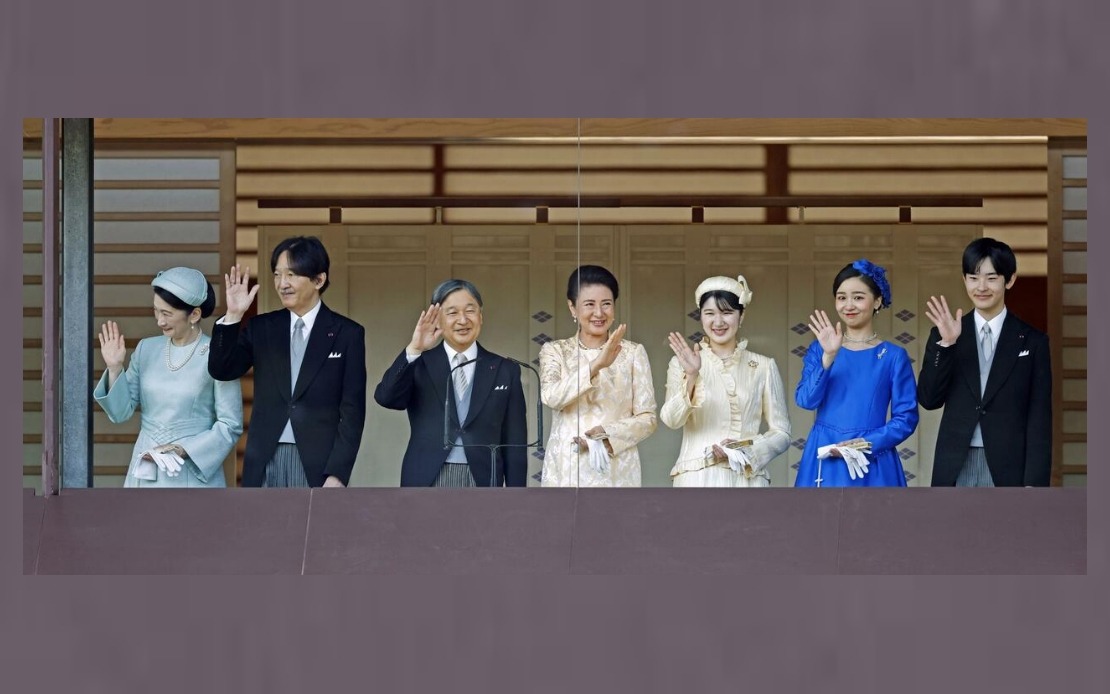
Japan's parliament has taken a measured step toward modernising its ancient imperial succession system, approving revised provisions to the Imperial House Law on Friday that introduce limited flexibility while maintaining the centuries-old tradition of male-line succession. The decision by Prime Minister Sanae Takaichi's government addresses growing concerns about the sustainability of the world's oldest hereditary monarchy at a time when the reigning Emperor Naruhito has only three male heirs to secure the throne's future.
The amendments represent the first substantive overhaul of the 1947 law since its introduction during Japan's post-war reconstruction under American occupation. Two principal modifications emerged from the legislative process: the law now permits the adoption of unmarried males aged 15 and older who descend from former imperial branch families through unbroken male lineage, and it grants female members of the imperial household the right to maintain their royal status and privileges even after choosing to marry ordinary citizens—a provision that reverses a longstanding convention requiring royal women to renounce their titles upon such unions.
The practical implications of these changes are significant for Japan's imperial management. The 1947 law had previously stripped 51 members from 11 collateral branches of the imperial family, with those removed individuals and their descendants spending decades outside the formal imperial system. The revised framework now opens a pathway for unmarried male descendants of these families to formally rejoin the imperial household, potentially expanding the pool of potential heirs and reducing the acute succession crisis that has loomed over imperial planning circles for the past two decades. Current projections suggest that without intervention, the imperial family could shrink to just two members within a century.
Despite the legislative achievement, Takaichi's administration has faced sustained criticism from opposition parties regarding both the substance and process of reform. Lawmakers from across the political spectrum have objected to what they characterise as insufficient parliamentary deliberation on matters touching the foundation of Japan's constitutional monarchy. The opposition has particularly targeted the Liberal Democratic Party and its coalition partner, the Japan Innovation Party, for what critics describe as a determined effort to preserve patriarchal succession principles rather than embrace broader modernisation.
The government's resistance to establishing any pathway for female succession remains conspicuous, particularly given the extraordinary divergence between official policy and public sentiment. A Kyodo News survey conducted in May revealed that 83.0 per cent of Japanese respondents favoured legalising female emperors, with only 13.1 per cent expressing opposition. This substantial majority reflects changing generational attitudes toward gender equality and institutional adaptation, yet lawmakers have deliberately avoided including any language addressing maternal-line or female succession in the revised statute.
The decision to exclude female succession provisions reflects deeply entrenched conservative views within Japan's ruling circles regarding imperial legitimacy and national tradition. Officials have emphasised that the male-line requirement, enshrined in the original 1947 formulation, continues to enjoy sufficient historical and cultural support to justify maintenance. Under the current arrangement, adopted male descendants of the former branch families would themselves become eligible to ascend the Chrysanthemum Throne, a mechanism the government argues provides necessary continuity while respecting established precedent.
The legislative path toward this compromise involved months of cross-party negotiations culminating in a parliamentary "consensus" document reflecting the combined views of 13 parties and political groups. Notably, this consensus process deliberately sidestepped the succession question entirely, focusing instead on the adoption and female status provisions as discrete, more politically palatable reforms. This approach allowed the government to claim achievement on imperial modernisation while avoiding the fractious debate that female succession would inevitably provoke among traditionalist constituencies.
For regional observers in Southeast Asia, Japan's cautious approach to imperial reform offers instructive lessons about institutional conservation in established democracies. While Malaysia's own constitutional monarchy operates within different legal and cultural frameworks, the Japanese experience demonstrates how elected governments navigate tension between public opinion and institutional tradition. Japan's solution—expanding the playing field through adoptions rather than fundamentally reimagining succession eligibility—represents a distinctly gradualist response to succession pressures.
The historical context amplifies the significance of even these modest changes. The original 1947 Imperial House Law explicitly stipulated that succession "shall be succeeded to by a male offspring in the male line belonging to the Imperial Lineage," language that survived the post-war constitutional reforms and the subsequent decades of social transformation. That this formulation persists virtually unchanged in 2024, despite dramatic shifts in gender relations and women's societal participation, underscores the exceptional resistance to alteration that surrounds imperial institutions in Japan.
Takaichi's premiership as Japan's first female prime minister creates additional irony surrounding the male-succession preservation. While her elevation to the nation's highest political office signals acceptance of female executive leadership, her government has declined to extend equivalent logic to imperial succession—a distinction that critics argue exposes the selective nature of institutional modernisation efforts. The contrast between Japan's willingness to accept female political leadership and its unwillingness to contemplate female imperial succession suggests that the imperial institution occupies a distinct constitutional category, viewed as requiring different modernisation standards than elected government.
Looking forward, the adoption mechanism may provide temporary demographic relief but likely postpones rather than resolves underlying succession questions. The pool of eligible adopted males from former branch families, while enlarged, remains finite. If Japan's birth rate continues declining and fewer qualified male descendants become available for adoption, the succession crisis may resurface within a generation, potentially forcing more fundamental reconsideration of female or maternal-line eligibility. The current law may therefore represent less a permanent settlement than an interim arrangement designed to navigate immediate pressures while preserving options for future legislatures.

