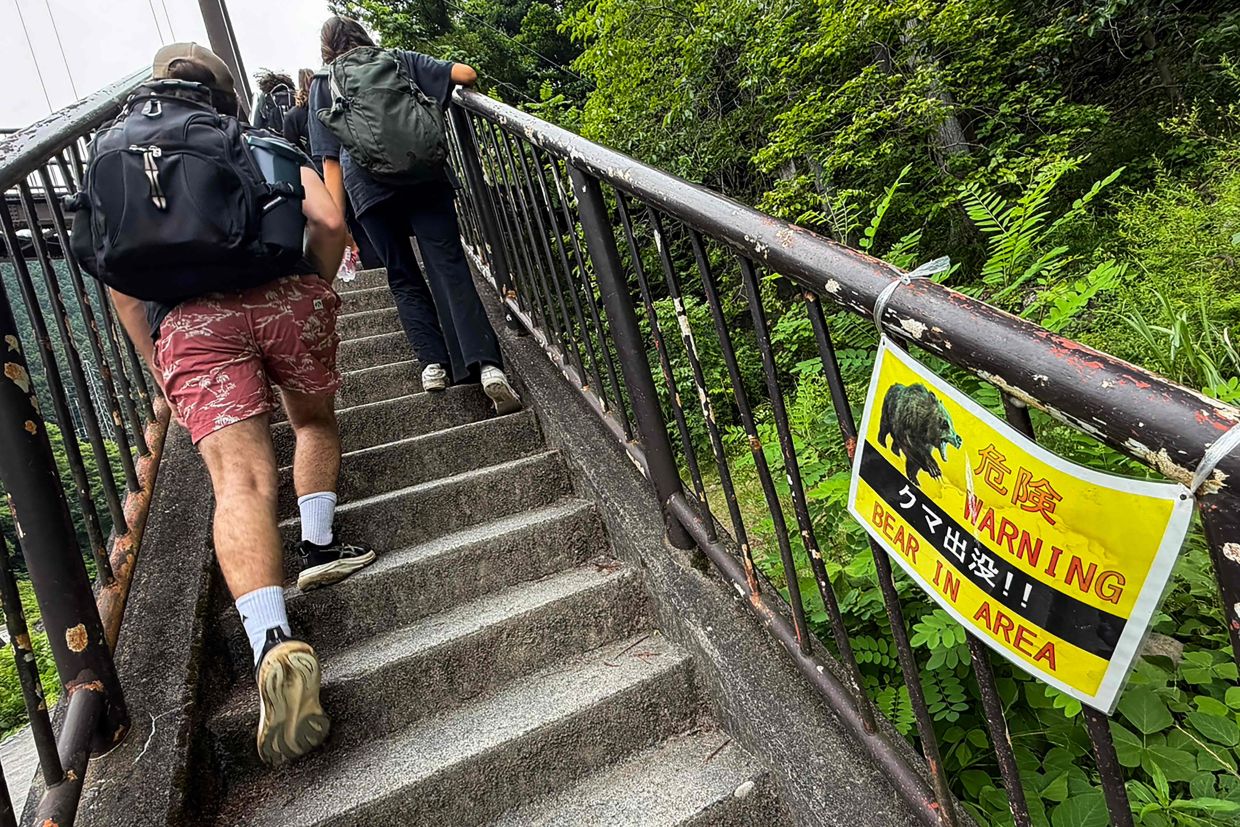
Japan has launched an ambitious wildlife monitoring programme, rolling out more than 800 cameras across its mountainous regions in response to an alarming increase in bear-related fatalities. The initiative, confirmed by environment ministry official Yu Takahashi, represents a significant escalation in the government's efforts to understand and manage the country's growing bear population after at least five deaths recorded since April 1, predominantly concentrated in the northern Tohoku region.
The statistical backdrop to this deployment is sobering. Japan recorded 13 fatal bear attacks during the last fiscal year, marking a troubling peak that has prompted authorities to move beyond reactive measures toward systematic population assessment. The Tohoku region, historically home to substantial bear populations, has become the epicentre of human-wildlife conflict, with fatalities and maulings climbing steadily. This week, investigators are examining what could be a sixth death after discovering a body bearing bite marks in a mountainous Tohoku area, underscoring the urgency of the situation.
Understanding the root causes reveals deeper demographic and environmental shifts affecting Japan. The proliferation of bears in recent years stems partly from the sustained decline of rural populations, a phenomenon that has allowed animal habitats to expand into previously settled regions. As younger Japanese migrate toward urban centres seeking employment and modern amenities, formerly inhabited mountainous communities have become increasingly depopulated, creating corridors for wildlife expansion. This demographic hollowing has inadvertently redrawn the boundaries between human settlement and animal territory across much of the archipelago.
The camera deployment strategy itself reflects a methodological shift in how Japanese authorities approach wildlife management. Previously, local governments conducted bear population surveys independently, using inconsistent techniques and scheduling that prevented coherent national understanding of population dynamics. The new approach consolidates these fragmented efforts into a coordinated system, initially focusing on six major bear populations in Tohoku before expanding throughout Japan over a four-year period. This standardised methodology promises more reliable data for crafting evidence-based policies.
The technical approach is ingeniously designed to capture identifying features without harming animals. Researchers have positioned containers of honey mixed with wine at approximately head height along bear movement corridors. As bears naturally rear onto their hind legs to investigate the aromatic bait, overhead cameras record each animal's distinctive white chest markings, effectively creating a photographic census of individual bears. This non-invasive technique allows researchers to build a comprehensive portrait of population size, distribution patterns, and movement behaviour.
The human cost of escalating bear encounters has transformed public consciousness in affected regions. Tohoku residents now exist in a state of persistent vigilance, with national media outlets providing near-daily coverage of bear sightings at shopping centres, public parks, and school grounds. This constant media attention, while sometimes sensationalised, reflects genuine community anxiety about personal safety and the unpredictability of wildlife incursions into everyday spaces. Schools have implemented emergency protocols, merchants have installed deterrent systems, and recreational activities face restrictions.
The proliferation of bears into urban environments marks a qualitative shift in the crisis. In June alone, Utsunomiya, located north of Tokyo, experienced a notable incident when authorities required four days to capture a bear that had infiltrated the city, forcing closure of numerous schools during the operation. Even more remarkable was an earlier case in Fukushima prefecture where a bear described as displaying unusual intelligence—reportedly capable of opening windows and manipulating water taps—attacked workers at two factory locations and eluded capture for an extended period. These incidents suggest that some bears are developing adaptation strategies that enable survival in increasingly urban environments.
Public safety infrastructure has similarly evolved in response to the threat. Japanese authorities now recommend mountain visitors carry bear spray canisters containing capsaicin, the pungent compound found in chilli peppers that produces burning sensations upon contact with mucous membranes and eyes. Outdoor activity shops stock these aerosols as standard equipment, and safety campaigns emphasise avoiding solitary mountain travel while wearing audible warning bells. However, the Thursday incident in Nagoya demonstrated the hazards of bear deterrent technology in crowded urban settings, when a 22-year-old Vietnamese national accidentally discharged a canister inside a postal facility, hospitalising five people with respiratory irritation.
The broader context of this crisis extends beyond Japan's borders, resonating with Southeast Asian observers facing similar human-wildlife tensions. Malaysia, Indonesia, and other regional nations grapple with comparable challenges as urbanisation and agricultural expansion fragment animal habitats. The Japanese model of coordinated scientific monitoring offers potential lessons for regional wildlife management approaches. Japan's recognition that decentralised, inconsistent management protocols cannot adequately address population-level phenomena has implications for how Southeast Asian governments approach their own wildlife crises.
For Malaysia specifically, the Japanese experience illuminates the long-term consequences of habitat fragmentation and rural depopulation. As Malaysian cities expand and rural communities consolidate, wildlife corridors become increasingly contested zones. The Japanese deployment of systematic monitoring technology suggests that understanding animal movement patterns and population dynamics through standardised methods provides essential data for coexistence strategies. Rather than reactive culling or exclusionary measures, data-driven approaches enable more nuanced interventions.
The mountainous geography of both Japan and Malaysia compounds the management challenge. Mountains constitute approximately 80 percent of Japan's terrain, creating vast territories where human oversight remains difficult and animal movement patterns poorly understood. Similarly, Malaysia's extensive forest reserves and mountainous regions present comparable monitoring and enforcement challenges. The Japanese camera network model, though resource-intensive, represents a potential template for regional wildlife management initiatives.
Government response so far has avoided large-scale culling programmes, instead pursuing understanding through scientific means. This reflects evolving attitudes toward wildlife management that prioritise conservation alongside human safety. However, sustained public pressure and further fatalities could shift this balance toward more aggressive population control. The four-year camera deployment timeline suggests authorities believe this monitoring period will generate sufficient data to inform sustainable long-term policies.
As Japan implements this comprehensive wildlife census, Southeast Asian policymakers watch with keen interest. The coming years will reveal whether systematic population monitoring, combined with public education and habitat management, can achieve an equilibrium between wildlife conservation and urban safety in densely populated regions where mountains no longer belong exclusively to bears.

