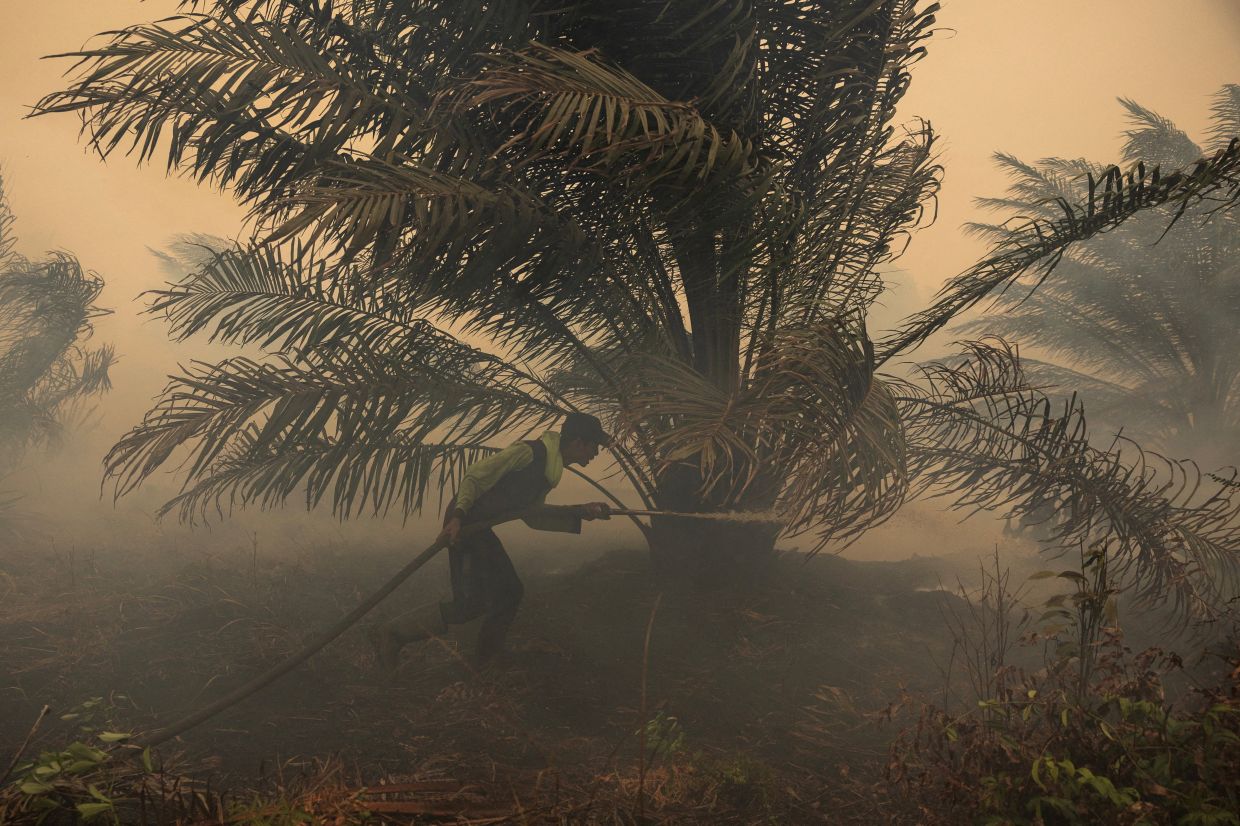
Japan has stepped in with helicopter support for Indonesia's intensifying battle against forest and land fires ravaging Kalimantan, as air quality measurements across the region have climbed into dangerous territory. The National Disaster Mitigation Agency, through its Data, Information and Disaster Communication Centre, confirmed that Tokyo will contribute three helicopters to water-bombing missions beginning September 10, with intensive preparations already underway including site assessments and operational planning for the firefighting campaign.
The air crisis gripping the region has reached alarming proportions, with readings now classified as hazardous across multiple locations. Jekan Raya in Palangka Raya, Central Kalimantan, recorded an Air Pollutant Standard Index of 1,108 as of late Saturday afternoon, while South-East Pontianak in West Kalimantan hit 1,075—both far exceeding safe thresholds for human health. These extreme measurements represent not merely poor air quality but a genuine public health emergency affecting millions of residents and threatening regional air corridors.
The scale of the fire crisis itself underscores why international assistance has become necessary. Across West, Central and South Kalimantan, authorities identified 9,242 active hotspots, with each province showing concerning upward trends. West Kalimantan experienced the sharpest acceleration, where hotspots increased by 1,629 to reach 3,371 total active fire sources. Ground-level fire spots across the three provinces stood at 171, indicating that fires are actively spreading rather than being contained.
Indonesia's National Disaster Mitigation Agency has mobilised substantial domestic resources, currently deploying 52 aircraft across affected regions, including 38 dedicated water-bombing sorties and 14 equipped for aerial reconnaissance and weather modification attempts. These assets have discharged approximately 3.5 million litres of water across six priority provinces, yet the scale of the blazes continues to overwhelm existing capacity. The Japanese intervention represents a critical gap-filler as Indonesia's own fleet struggles against the magnitude of the conflagration.
Weather modification operations have achieved limited success in combating the crisis. Rain-inducing missions successfully delivered precipitation to several areas in Sumatra, including portions of Riau, South Sumatra, Jambi and Lampung provinces, providing temporary relief and potentially slowing fire advancement in those zones. However, Central and South Kalimantan proved inaccessible to such operations due to atmospheric conditions—the absence of suitable cloud formations meant weather modification technology could not be deployed where the crisis runs deepest, necessitating traditional water-bombing as the primary response mechanism.
For Malaysia and Singapore, the Kalimantan fires represent more than a humanitarian concern in a neighbouring country. Transboundary haze has historically plagued the region during Indonesia's fire seasons, reducing air quality across Malaysia's northern and eastern states and occasionally reaching the island city-state. The escalating ISPU readings in Kalimantan signal that conditions may deteriorate further, potentially triggering air quality alerts in Peninsular Malaysia and Sabah within days should wind patterns shift northeastward. The Strait of Malacca and surrounding shipping lanes could also experience reduced visibility, affecting maritime operations.
Japanese involvement in the firefighting response reflects broader regional security and environmental cooperation frameworks. Tokyo has maintained active disaster management partnerships across Southeast Asia, deploying resources during various crises to demonstrate solidarity and strengthen bilateral relationships. The commitment of a Chinook helicopter—a heavy-lift asset capable of carrying substantial water loads—indicates a serious commitment to the operation rather than token assistance, though the three-helicopter deployment remains modest relative to the scale of fires across three Kalimantan provinces.
Indonesian authorities face mounting pressure to demonstrate effective crisis management as the situation deteriorates. The involvement of international partners like Japan provides political cover and practical capability, yet raises questions about domestic preparedness and prevention mechanisms. Analysts note that seasonal fires in Indonesia have grown more severe and widespread in recent years, with agricultural expansion and palm oil industry practices creating tinderbox conditions during dry seasons. The reliance on foreign helicopters suggests that structural issues—including land use policies and enforcement mechanisms—require attention beyond emergency response.
The timing of Japan's deployment, scheduled to commence September 10, arrives as the fire season typically peaks in the region. The window for effective firefighting operations may narrow as moisture levels continue declining through the dry season. Coordinating three additional international aircraft with Indonesia's existing fleet while managing logistics in remote forest regions presents complex operational challenges, particularly given the need for refuelling, maintenance and crew rotation in areas with limited infrastructure. The operation's success will depend significantly on ground-level coordination and accurate intelligence about fire locations.

