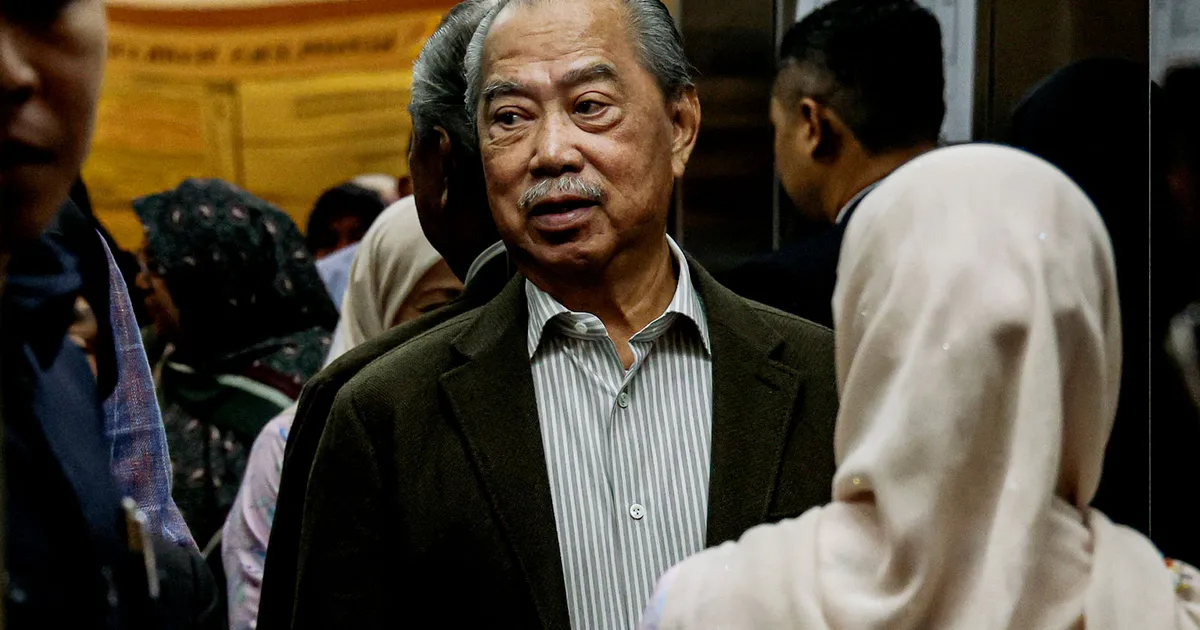
Fresh allegations emerged during court proceedings that contractors involved with Jana Wibawa projects faced implicit pressure to channel financial support toward Bersatu, Malaysia's ruling coalition partner. Businessman Azman Yusoff provided testimony suggesting a transactional undertone to the party's relationship with industry players, raising questions about the intersection of government procurement and political fundraising during a high-profile corruption trial.
Azman's courtroom account focused on a sense of obligation he harboured toward Muhyiddin Yassin, the former Prime Minister and Bersatu party chairman. According to his testimony, this indebtedness stemmed from Muhyiddin's policies that prioritised Bumiputera contractors during the severe economic disruptions of the Covid-19 pandemic. The Jana Wibawa programme, a strategic infrastructure initiative launched during Muhyiddin's tenure as Prime Minister, became a focal point for government spending aimed at economic recovery and employment generation across Malaysia.
The intersection of business opportunity and political gratitude forms a critical dimension of Malaysian governance that observers have long scrutinised. When government contracts flow disproportionately toward a particular demographic or ideological constituency, the beneficiaries often develop what researchers term "political indebtedness"—a psychological and practical obligation to reciprocate through various means, including financial contributions to political parties. The Jana Wibawa programme's design, ostensibly aimed at inclusive growth and Bumiputera advancement, apparently created conditions where such reciprocal expectations could flourish.
Azman's characterisation of his sentiments as flowing from pandemic assistance provides important context for understanding how government intervention during economic crises can generate political capital. When businesses face existential threats, government support—whether through preferential contracting, relaxed regulations, or targeted subsidies—becomes transformative. The recipients of such assistance frequently perceive themselves as beneficiaries of a particular leader's benevolence, creating psychological bonds that politicians naturally seek to convert into sustained political support.
The testimony raises uncomfortable questions about the boundaries between legitimate political fundraising and improper coercion. Malaysian law permits political parties to solicit donations from individuals and businesses, yet the allegation that contractors bidding for state projects were expected to contribute to Bersatu ventures into legally hazardous territory. If donations were presented as prerequisite conditions for contract awards, or if non-compliance resulted in commercial disadvantage, such conduct could constitute bribery, extortion, or abuse of official power—allegations that Malaysian authorities take with considerable gravity.
The Jana Wibawa scheme itself represents a substantial government commitment, comprising infrastructure developments and employment initiatives designed to inject economic stimulus across multiple sectors. As with major government programmes, the distribution of contracts carries both economic and political consequences. When contractors perceiving themselves as beneficiaries of preferential treatment subsequently contribute to the political party responsible for their good fortune, a reinforcing cycle of political-business entanglement emerges. This dynamic, while common across many democracies, operates within Malaysia's specific regulatory and cultural framework.
For Southeast Asian economies observing Malaysia's governance trajectory, such allegations serve as instructive case studies in how economic policy intersects with political machinery. Thailand, Indonesia, and the Philippines have all grappled with similar dynamics, where government procurement decisions become entangled with party financing mechanisms. The region's development trajectory increasingly hinges on whether nations can maintain institutional firewalls between business opportunity and political obligation.
The timing of Azman's testimony—occurring within judicial proceedings examining alleged misconduct—underscores that Malaysian institutions retain capacity to scrutinise even high-level political figures and their business networks. Courts examining contracts, donation flows, and communications between government officials and industry players represent functional accountability mechanisms, albeit operating within broader political realities that can complicate enforcement.
Bersatu's reliance on business community support reflects the party's organisational structure and financing model. As a relatively newer entrant to Malaysia's political landscape, the party invested heavily in cultivating relationships with corporate actors and Bumiputera-linked businesses. The pandemic presented an opportunity to strengthen these bonds through preferential government spending. Whether such cultivation crosses into improper territory depends on specific evidence regarding how explicitly donations were solicited and whether they correlated with contract awards.
For Malaysian contractors operating in the contemporary environment, the allegations present uncomfortable implications. Businesses benefiting from government contracts inherently develop relationships with political actors, yet explicit expectations of political donations create vulnerability to allegations of complicity in corrupt arrangements. The ambiguity between voluntary expression of gratitude and coerced contribution remains a persistent grey zone in Malaysian commerce and politics.
Looking forward, the judicial examination of Jana Wibawa-related contracts and alleged donation pressure may establish clearer precedents regarding acceptable boundaries between government procurement and party fundraising. Such clarification would benefit both corporate actors seeking legitimate business opportunities and regulators attempting to maintain institutional integrity. For Malaysia's standing as a developing economy increasingly subject to international scrutiny regarding governance standards, the resolution of these allegations carries implications extending beyond the immediate parties involved.

