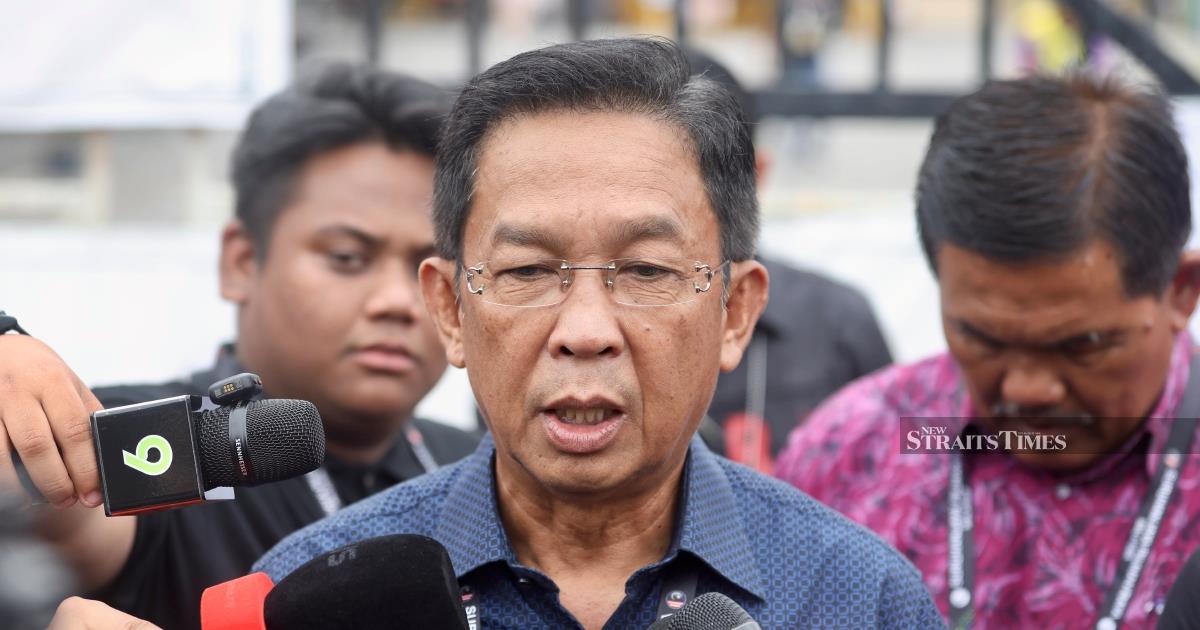
Datuk Seri Jalaluddin Alias, the chairman of the Negri Sembilan Umno Liaison Committee, has offered an explanation for his notable absence from yesterday's menteri besar swearing-in ceremony at Istana Besar Seri Menanti. The senior party figure stated that he was unable to attend the event due to receiving insufficient notice of the proceedings, a situation that prevented him from arranging his schedule accordingly.
The swearing-in ceremony represents a significant constitutional moment for Negri Sembilan's political leadership, and the presence or absence of high-ranking party officials typically draws scrutiny within political circles. Jalaluddin's explanation addresses questions that may have arisen regarding why a prominent Umno figure in the state would miss such a formal and ceremonially important event marking the transition or confirmation of the menteri besar role.
In Malaysia's political system, menteri besar swearing-in ceremonies are formal occasions usually attended by senior government and party officials, state dignitaries, and members of the royal household. The event at Istana Besar Seri Menanti, the official residence of the Sultan of Negri Sembilan, carries particular weight as it represents the constitutional endorsement of executive leadership at the state level. Any notable absence by key figures within the ruling party machinery therefore warrants explanation, particularly when it concerns a state-level liaison committee chairman.
Jalaluddin's role as Umno Liaison Committee chairman places him in a position of considerable influence within the party's Negri Sembilan operations. Such positions typically carry expectations of participating in major state political events, making his absence noteworthy enough to prompt a public clarification. The nature of his statement—that the short notice was responsible—suggests that had he received timely information about the ceremony, his attendance would have been more feasible.
The incident reflects a broader dynamic within Malaysian politics where event coordination and advance notification systems play crucial roles in determining political participation and visibility. In an environment where a politician's presence at key events carries symbolic weight regarding party unity and commitment to leadership transitions, the mechanics of event planning and communication become matters of political significance.
For Negri Sembilan's political landscape, such occurrences feed into the wider narrative about party cohesion and coordination within Umno structures at the state level. The relationship between party leadership, the liaison committee apparatus, and menteri besar office involves complex institutional dynamics that shape how state governance proceeds. A breakdown in communication channels or scheduling coordination, even if inadvertent, can raise questions about the efficiency of state party operations.
The swearing-in ceremony itself underscores the state's constitutional framework and the formality with which transitions of executive power are managed in Malaysia. Negri Sembilan, like other states, maintains strict protocols for such occasions that involve the state palace, senior officials, and ceremonial procedures that reflect the constitutional monarchy system. The event's importance to the state's political calendar makes attendance by senior party figures a matter of expectation and routine.
Jalaluddin's explanation also highlights practical challenges that can arise even within well-established political structures. In an era of complex schedules and multiple competing demands on senior officials' time, the failure to communicate event details with sufficient advance notice represents a logistics challenge that party organisations must manage carefully. His clarification essentially defends his reputation by pinpointing a system failure rather than any lack of commitment to party functions or state leadership.
The broader context involves understanding how Umno's state-level liaison committees coordinate with menteri besar offices and royal institutions. These committees serve as important bridges between party headquarters and state government operations, and their participation in major state ceremonies reflects this structural role. When communication breaks down, it can create operational friction that affects how smoothly the party's state machinery functions during significant political moments.
Moving forward, Jalaluddin's clarification suggests that measures may be needed to improve advance notification protocols for major state political events. Ensuring that all relevant senior party officials receive timely information about ceremonies and official functions remains essential for maintaining the appearance of party unity and organisational efficiency. In Negri Sembilan's case, this incident serves as a reminder of the importance of internal coordination within Umno's state structures and the need for reliable communication channels between the party liaison committee, the menteri besar's office, and the state palace.
The explanation provided by Jalaluddin addresses an apparent lapse in event communication while reinforcing the expectation that senior party figures should participate in crucial state political occasions. For observers of Negri Sembilan politics, the incident underscores how even procedural matters—like ensuring key officials receive advance notice—can carry political implications in a system where formal ceremonial participation carries meaning beyond mere presence.

