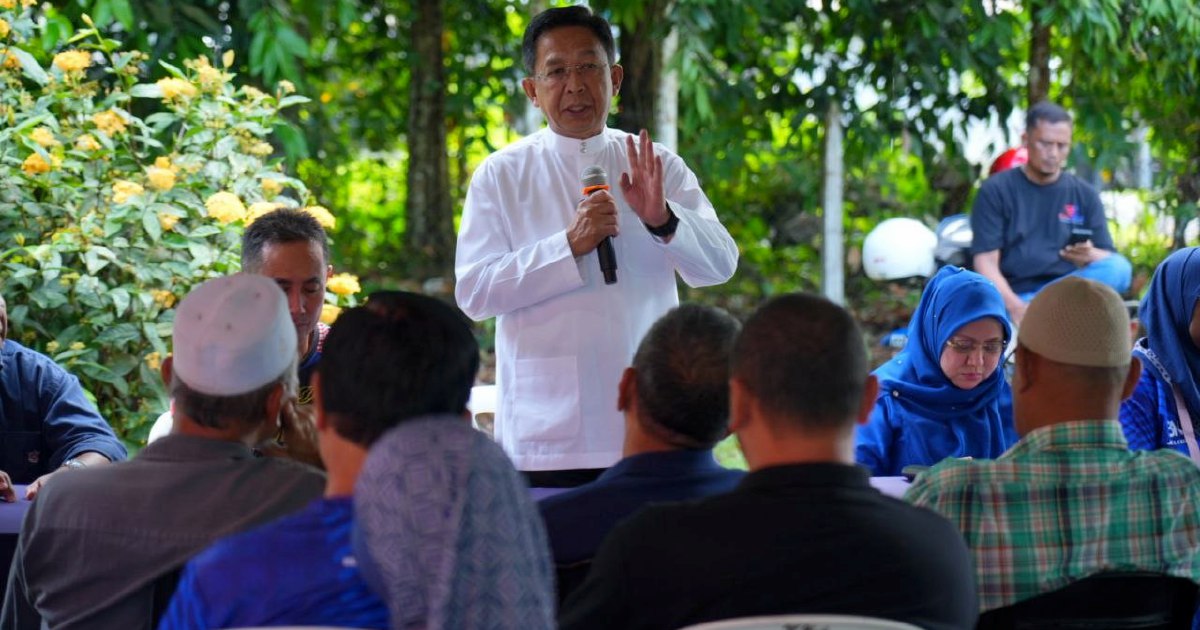
Perikatan Nasional has signalled that Negri Sembilan's Umno chairman Datuk Seri Jalaluddin Alias represents a potential frontrunner for the menteri besar position should a political understanding between PN and Barisan Nasional yield electoral success in the upcoming August 1 state poll.
The identification of Jalaluddin as a candidate reflects PN's strategic positioning ahead of the Negri Sembilan election, which carries significance beyond the state's borders. A successful PN-BN collaboration in Negri Sembilan would signal the viability of such coalitional arrangements elsewhere in Malaysia, potentially reshaping state-level political configurations that have remained largely static since the 2022 general election. The choice of a sitting Umno chairman underscores traditional power dynamics within the combined opposition and ruling alliance framework.
For Malaysian political observers, the timing and specificity of Jalaluddin's elevation as a viable menteri besar candidate warrant careful attention. Negri Sembilan, traditionally a component state within larger peninsular political calculations, has gradually assumed greater prominence as various coalitions compete for influence. The state's relatively compact geography and population make it an ideal testing ground for inter-party alliances before grander realignments occur nationally.
The PN-BN understanding itself represents a noteworthy development in Malaysian politics. Rather than facing off directly, these two major political blocs have agreed to cooperate in Negri Sembilan, effectively narrowing the competitive field. This arrangement allows both coalitions to present a united front against other political entities contesting the election. Such tactical cooperation, while not unprecedented, remains strategically valuable in a fragmented political landscape where vote-splitting can determine outcomes.
Jalaluddin's background as Umno chairman in Negri Sembilan provides him with grassroots organisational credentials and party machinery support that would prove instrumental in executing a menteri besar's administrative and political functions. His party affiliation aligns him with one of the coalition's anchoring components, ensuring he carries weight in intra-alliance negotiations over appointments, policy direction, and resource allocation. However, the fact that PN has named him as merely one among several potential candidates suggests ongoing deliberations within the coalition about final personnel decisions.
The August 1 election date itself carries implications for broader Malaysian political rhythms. Negri Sembilan's polling will occur amid a national climate shaped by economic pressures, inflation concerns, and evolving public sentiment about governance and accountability. Results from this state poll will be closely monitored by political operatives from all major coalitions as indicators of electoral momentum and voter preferences heading into possible future national or other state elections.
For Negri Sembilan residents, the emergence of potential leadership figures ahead of the election offers at least nominal clarity regarding possible alternative administrations. Voters will have some visibility into who might occupy the chief minister's office should their electoral choices lean toward the PN-BN combination. This representational transparency, regardless of its ultimate accuracy in predicting outcomes, serves the democratic function of allowing citizens to evaluate prospective leaders before casting their ballots.
The menteri besar position in Negri Sembilan carries administrative responsibility for a state with diverse economic interests spanning agriculture, light manufacturing, and increasingly, knowledge-based industries. Whoever occupies the office must navigate competing priorities while managing relationships with federal authorities and other state governments. Jalaluddin's potential selection suggests PN and BN believe him capable of handling these multifaceted responsibilities while maintaining coalition unity and managing internal party dynamics.
Regionally, developments in Negri Sembilan electoral politics ripple through Southeast Asia's broader political economy. Malaysia's stability and governance quality affect investor confidence, trade relationships, and migration patterns affecting neighbouring countries. A successful or faltering PN-BN collaboration in Negri Sembilan thus holds implications extending well beyond state borders, influencing perceptions of Malaysia's political maturity and institutional resilience among regional and international stakeholders.
The announcement of potential menteri besar candidates before elections remains commonplace in Malaysian political discourse, though outcomes frequently surprise. Party strategies evolve between candidate nomination and post-election coalition negotiations. Jalaluddin's identification as a serious contender positions him prominently in Negri Sembilan's pre-election discourse, but final determination of the menteri besar's identity will ultimately depend on election results and subsequent inter-party bargaining among PN and BN components. Such contingency has characterised Malaysian state politics for decades, particularly when coalitions rather than single parties achieve narrow or moderate majorities.

