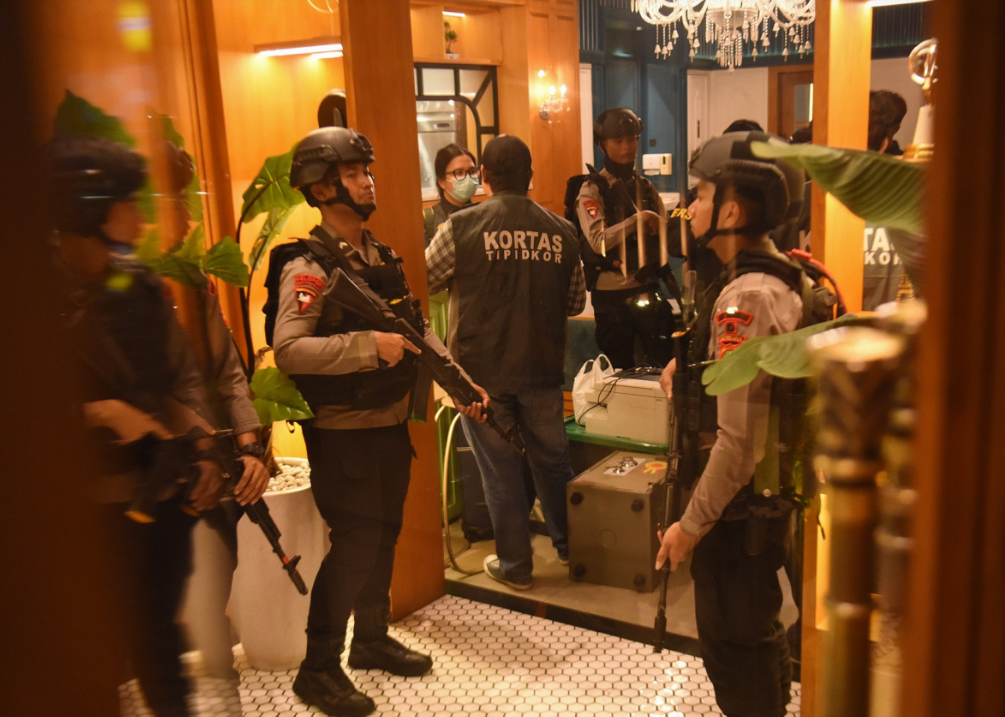
Diners at de'Clan Signature, a fashionable restaurant nestled in Cipete's quiet South Jakarta neighbourhood, witnessed an extraordinary disruption on the afternoon of July 8 when fully armed police officers suddenly surrounded the establishment. The operation involved personnel from Jakarta's municipal police command alongside specialist anti-corruption units from the National Police, all moving under the protective cover of Mobile Brigade commandos armed with assault rifles and tactical equipment. Their target was specific: a massive safe, roughly two metres in height, that had been carefully concealed behind a cabinet within the upscale dining venue.
When authorities opened the hidden vault, they encountered a substantial cache of documentation alongside substantial quantities of currency denominated in multiple foreign currencies, with a combined worth extending into the millions of dollars. The intervention did not end there. Officers immediately proceeded to an adjacent location, Koin Money Changer, where they breached another secure compartment containing hundreds of thousands of dollars more in Indonesian rupiah notes. These two seizures represented merely the beginning of a coordinated enforcement action that would eventually span the greater Jakarta metropolitan region.
The operation continued with unrelenting intensity throughout Wednesday evening and deep into Thursday morning, with police teams simultaneously conducting searches across numerous additional premises. The personnel confiscated mobile devices, photographic materials, and extensive paper records from each location. Yet none of these initial discoveries compared to what awaited authorities at a residence located in Sentul, an affluent hillside suburb positioned approximately one hour's drive south of the capital. Within this high-security property, officers uncovered seven suitcases containing exactly 74 kilograms of gold bullion together with substantial quantities of cash in various international currencies. The total valuation of the accumulated assets reached approximately US$26.3 million, making it one of the most significant single seizures in recent Indonesian law enforcement history.
The Sentul residence registered as the property of Febrie Adriansyah, who until his abrupt resignation that weekend had held the position of deputy attorney general overseeing special crimes investigations. Following the extensive searches, investigating authorities formally named Febrie as a suspect in corruption and money-laundering enquiries, though he remained technically at liberty rather than in custody. The official termed his ownership of the Sentul property but maintained that the confiscated valuables belonged to him personally, suggesting that their true origins would surface during subsequent legal proceedings. The dramatic images of neatly stacked gold bars and bundles of currency displayed by authorities would subsequently dominate Indonesian media coverage, representing one of the most visually striking corruption scandals to strike the nation's law enforcement apparatus in several years.
The geographic scope of the investigation expanded substantially beyond the initial Cipete and Sentul locations. Police teams extended their search operations to encompass at least ten additional sites throughout metropolitan Jakarta, including an apartment unit within the Pacific Place residential towers situated near the capital's financial district. Company administrative offices scattered across the city also fell within the investigative net. Authorities additionally searched multiple residential properties, including a dwelling in the Gandaria neighbourhood of South Jakarta that appeared connected to Don Ritto, a prominent attorney who subsequently received designation as a suspect in the same investigation. According to local reporting, Ritto faced detention during the enquiry, distinguishing his situation from Febrie's status. Corporate records indicated that Ritto maintained business connections to companies with documented ties to both the searched restaurant and the money-changing establishment.
By Monday afternoon, speculation had permeated informed Jakarta circles regarding the investigation's subsequent trajectory and broader implications for Indonesia's anti-corruption framework. Observers questioned whether the discovery of such concentrated wealth signalled that institutional safeguards were functioning according to design, or whether the succession of high-profile scandals reflected deepening systemic vulnerabilities within the enforcement infrastructure. These questions took on particular significance given Febrie's prominent position within Indonesia's justice system, where his role managing sensitive prosecutions afforded exceptional access to intelligence and operational leverage.
Mahfud MD, a respected constitutional law specialist with previous experience as chief justice of Indonesia's Constitutional Court and as coordinating minister for legal and security matters, publicly voiced grave reservations regarding the investigation's procedural trajectory. Using his YouTube platform, Mahfud questioned the constitutional foundation for transferring the Febrie investigation from police custody to the Attorney General's Office, asserting that such procedural reassignment lacked proper grounding within Indonesia's established criminal procedure framework. He expressed concern that this jurisdictional shift could render the prosecution vulnerable to pretrial dismissal motions filed by defence attorneys. Speaking from his studio while dressed in traditional batik formal wear, Mahfud specifically advocated for assigning investigative oversight to the Corruption Eradication Commission, the autonomous state institution mandated with combating graft, as the appropriate vehicle for conducting the enquiry with institutional independence.
Mahfud's intervention underscored deeper institutional anxieties extending beyond the immediate seizures and individual prosecutions. The involvement of a former court chief justice in public critique of investigation management procedures reflected broader concerns within Indonesia's political and legal establishment regarding prosecutorial independence and investigative impartiality. The apparent shift of oversight from one government body to another raised questions about whether institutional interests might influence case management, a concern that resonates particularly acutely when the suspect occupies a prominent prosecutorial position. These procedural complications compound existing challenges facing Indonesia's anti-corruption architecture, which has long struggled with questions regarding resource adequacy, investigative coordination, and protection against political interference.
The timing of Febrie's resignation, occurring strategically before the raids became public, suggested possible foreknowledge of the impending enforcement action or heightened awareness that his position had become untenable. His decision to step down rather than maintain his post during the investigation represented a tacit acknowledgement that his continued service would prove impossible amid such serious allegations. However, his immediate assertion that the seized assets belonged to him rather than forming part of his personal holdings raised additional questions about the nature of the concealment arrangements and the legitimate sources for such substantial wealth accumulation. The distinction between denial of ownership and deferral of explanation until trial proceedings suggested sophisticated legal positioning by the defendant.
For Malaysian observers monitoring Indonesian governance, the Febrie scandal carries instructive lessons regarding anti-corruption enforcement challenges that transcend national boundaries. Like Malaysia, Indonesia has invested considerable resources in establishing specialized anti-corruption institutions and securing high-profile convictions against prominent officials. Yet both nations continue confronting endemic challenges involving institutional coordination, investigative independence, and sustained political commitment to systemic accountability. The Sentul discovery revealed not merely individual malfeasance but potential structural vulnerabilities that permitted such extensive wealth accumulation within the justice system itself, suggesting that institutional reform may require approaches extending beyond individual prosecutions to encompass deeper governance restructuring.

