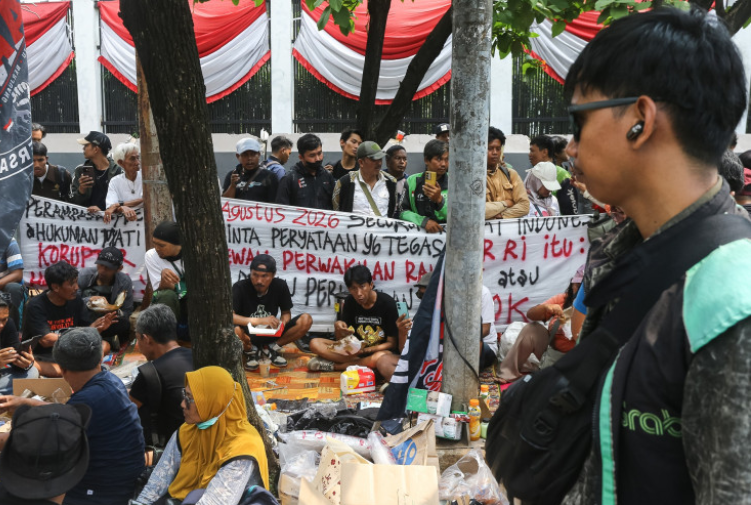
Thousands of demonstrators descended on Jakarta's Senayan Legislative Complex on Thursday morning in a coordinated campaign to pressure Indonesia's House of Representatives into passing contentious anti-corruption legislation. The gathering represented a rare display of grassroots mobilisation around a specific legislative agenda, with activist groups travelling from as far as Pati in Central Java to make their voices heard in the capital. Beyond the asset forfeiture bill itself, protesters voiced broader frustrations with economic hardship, calling for lower prices on essential goods alongside demands for capital punishment for those convicted of large-scale graft.
The United Pati People's Alliance orchestrated much of the demonstrator movement, having spent weeks preparing supporters to travel to the capital for the Thursday action. The group's coordinator, Supriyono, disclosed that the campaign had proven resilient in the face of government interference. Police stopped multiple buses carrying protesters en route to Jakarta, while Bank Mandiri temporarily froze an account associated with Supriyono—a move that backfired spectacularly when news of the financial freezing sparked public anger and triggered online calls for boycotts of the state-owned bank. Despite these obstacles, Supriyono announced that five additional coaches had been arranged through public donations, demonstrating how attempts to suppress the demonstration may have inadvertently amplified its political visibility.
Authorities responded to the anticipated crowds with comprehensive security preparations throughout the capital. Traffic diversions were implemented across multiple routes, with police closing both directions of Jalan Gatot Subroto between Senayan Park and the legislative complex entrance. Dozens of uniformed and plainclothes officers positioned themselves throughout the demonstration zone. Jakarta Police spokesperson Senior Commissioner Budi Hermanto projected that at least 500 protesters would participate, though he acknowledged the figure could climb significantly as organisations beyond Pati coordinated their attendance. Police statements framed the security operation as protective rather than restrictive, with officials emphasising their commitment to maintaining public order while safeguarding the right to peaceful assembly and ensuring that schools and businesses could operate normally.
The focal point of the demonstration—the asset forfeiture bill—has become a rallying point for anti-corruption advocates across Indonesia. First introduced in parliament in 2008, the legislation has languished in committee for over a decade despite repeated promises to advance it. The bill's fundamental mechanism would grant state authorities power to seize and confiscate assets believed to constitute proceeds of criminal activity, circumventing the requirement for criminal conviction that normally precedes asset seizure. Proponents argue this addresses a persistent weakness in Indonesia's anti-corruption enforcement, where wealthy individuals suspected of graft often shield wealth through complex financial structures that remain technically legal until proven guilty in lengthy trials. However, legal specialists and international observers have flagged serious safeguards concerns, warning that such broad asset seizure authority could easily transform into an instrument for eliminating political rivals or facilitating extortion when wielded by corrupt officials themselves.
House leadership moved swiftly to acknowledge demonstrator demands, receiving Pati residents at the legislative complex on Monday and providing explicit assurances regarding the bill's timeline. Gerindra Party lawmaker Habiburokhman, who chairs House Commission III responsible for legal affairs, declared that deliberations required approximately eight additional weeks and projected passage by December at the latest. This public commitment represents a significant political gamble, as failure to meet the December deadline would expose House leadership to renewed accusations of obstruction. The pressure from organised demonstrators appears to have accelerated legislative timelines considerably, suggesting that sustained grassroots mobilisation can penetrate Indonesia's historically sluggish parliamentary processes.
President Prabowo Subianto's administration has positioned itself as an enthusiastic supporter of asset forfeiture legislation, with Government Communications Agency head Muhammad Qodari announcing that the executive branch backed rapid passage. Qodari's characterisation that "the ball is now in the House's court" represented a diplomatic deflection of responsibility, implying that the presidency had fulfilled its obligations and that responsibility for delays rested entirely with legislators. This rhetorical positioning allows the administration to claim anti-corruption credentials with voters while avoiding direct involvement in parliamentary negotiations and compromise-making. For Malaysia and other Southeast Asian democracies observing Indonesia's legislative developments, the interplay between executive ambitions and legislative autonomy offers instructive lessons regarding institutional dynamics and accountability.
The demonstration itself crystallised broader public dissatisfaction extending beyond anti-corruption concerns into economic grievances. Protesters elevated demands for reduced prices on essential commodities alongside calls for harsher penalties against officials convicted of large-scale embezzlement and graft. This combination reflected accumulated frustrations with simultaneous economic pressures and perceived official complicity in wealth extraction, a combination that fuels populist movements across the region. The presence of ordinary citizens willing to invest time and resources in capital-city activism suggested that anti-corruption sentiment transcends elite political circles in contemporary Indonesia, even as questions persist about whether legislative outcomes will satisfy grassroots expectations.
The temporary freezing of Supriyono's bank account illuminated the complex relationship between security apparatus responses and democratic mobilisation. Bank Mandiri's decision to suspend the account, whether undertaken independently or pursuant to government pressure, appeared designed to disrupt the protest's operational logistics. Instead, the action generated negative publicity for the bank and potentially strengthened demonstrator cohesion by portraying the campaign as persecuted by establishment forces. This dynamic reflects a recurring pattern in Indonesian politics whereby heavy-handed suppression attempts amplify rather than extinguish activist movements, particularly when demonstrators can frame interference as confirmation of their central allegations regarding governance dysfunction.
Looking forward, several intersecting uncertainties will shape outcomes from Thursday's demonstration. Most critically, whether the House can maintain its December deadline remains uncertain, given Indonesia's historical pattern of legislative delays and the complexity of drafting asset forfeiture safeguards that satisfy both anti-corruption advocates and civil liberties protectors. Should the deadline slip, demonstrators have already demonstrated capacity for coordinated mobilisation and may organise renewed pressure campaigns. Secondly, the bill's ultimate design will determine whether implementation actually advances anti-corruption objectives or becomes corrupted itself—a distinction that separates aspirational legislation from functional law. Finally, the demonstration's success in forcing parliamentary responsiveness may inspire similar grassroots campaigns around other stalled initiatives, potentially reshaping the House's legislative agenda through sustained popular pressure rather than traditional political negotiation.
For regional observers, the Jakarta demonstrations underscore how anti-corruption concerns maintain genuine purchase in public consciousness despite widespread cynicism regarding government effectiveness. Unlike manufactured controversies often engineered by political entrepreneurs, the asset forfeiture campaign emerged from accumulated public frustration and organisational capacity genuinely independent from established party structures. Whether Indonesia's institutions can convert such demonstrator energy into durable institutional reforms remains the essential question—and the answer will substantially influence whether asset forfeiture legislation becomes a genuine anti-corruption tool or merely symbolic politics that leaves underlying governance pathologies unaddressed.

