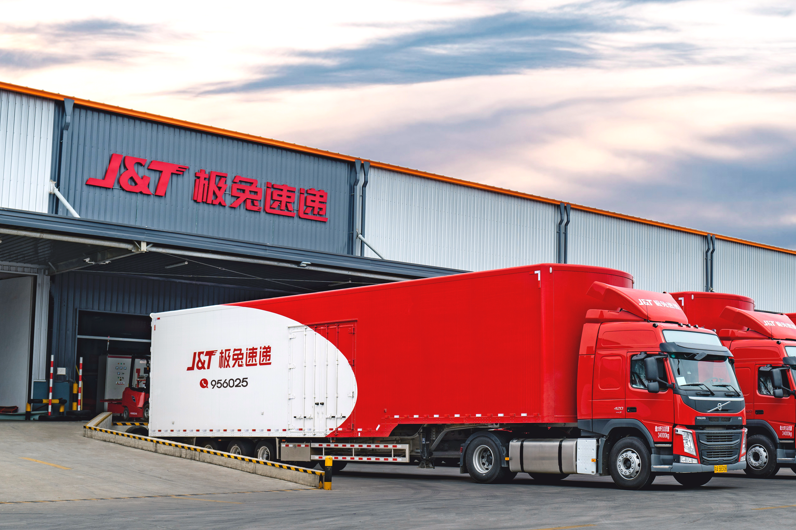
J&T Global Express Ltd has entered a new era of scale, becoming the first logistics firm to process more than 100 million parcels in a single day. The Hong Kong-listed provider's achievement in the second quarter represents a watershed moment for an industry historically dominated by domestic Chinese operators, and reflects the dramatic reshaping of global supply chains as Southeast Asia consolidates its position as a powerhouse for e-commerce and cross-border retail.
The company handled 9.18 billion parcels from April through June, representing growth of 24.2 percent compared with the same quarter last year. More significantly, parcels originating from beyond China's borders surged 66.9 percent year-on-year to reach 2.97 billion units, a figure that now represents nearly one-third of J&T's total global throughput. This shift underscores a fundamental transition: J&T is no longer merely a domestic Chinese logistics operator with international aspirations, but increasingly a truly global player where non-domestic business represents a substantial and accelerating component of revenue.
Southeast Asia emerged as the engine driving J&T's expansion momentum during the quarter. The region processed 2.76 billion parcels, climbing 63.2 percent on a year-on-year basis, with average daily volume reaching 30.3 million units. For the first half of 2025, Southeast Asian parcel volume totalled 5.52 billion, up 71.2 percent compared with the prior year. These growth rates substantially exceed J&T's overall company performance, indicating that regional e-commerce and cross-border trade are expanding faster than either China's domestic market or other international territories. For Malaysian readers, this surge carries direct implications: faster regional logistics infrastructure development may translate into improved delivery times and reduced shipping costs for both consumers and merchants participating in e-commerce across Southeast Asia.
Infrastructure expansion has kept pace with volume growth. As of June 30, J&T Express operated 127 sorting centres across Southeast Asia, up six facilities from the end of 2025. Critically, the company deployed 75 automated sorting lines throughout the region, an increase of eleven units during the same period. These investments signal serious long-term commitment to regional market penetration, moving beyond opportunistic profit-taking toward building enduring competitive advantages through technological sophistication. The proliferation of automated facilities suggests parcels can be processed with greater speed and accuracy, potentially reshaping customer expectations around delivery reliability in markets where logistics performance has historically lagged developed nations.
Within China itself, J&T navigated a more measured growth environment through deliberate strategic adjustments. Second-quarter parcels handled domestically reached 6.21 billion units, up 10.6 percent year-on-year, with average daily volume hitting 68.2 million. The stark contrast between China's 10.6 percent growth and Southeast Asia's 63.2 percent expansion reflects market saturation in the world's most developed e-commerce ecosystem, where competition has intensified and margins have compressed. To address this, J&T optimised its network architecture, reconfigured its customer portfolio, and enhanced operational efficiency across its Chinese operations. The company augmented its domestic automated sorting capacity by eight units to reach 346 lines in the first half of the year, demonstrating continued faith in technological solutions to maintain competitive position despite slower volume expansion.
Emerging markets beyond Southeast Asia are beginning to contribute meaningfully to J&T's growth profile. Parcel volume in other regions, encompassing Latin America and the Middle East, surged 136.5 percent year-on-year to 211 million units during the second quarter. Although this volume remains small in absolute terms compared with China and Southeast Asia, the explosive growth rate demonstrates that J&T's international expansion playbook is replicable across diverse geographic and regulatory contexts. The company has simultaneously expanded its cross-border logistics capabilities and deepened partnerships with major e-commerce platforms operating in these regions, suggesting a sophisticated approach to market entry that combines infrastructure investment with strategic commercial alliances.
Wall Street has taken notice of J&T's transformation. Morgan Stanley recently elevated its rating on the company to overweight, signalling confidence in the sustainability of its international growth trajectory. The investment bank specifically highlighted superior growth prospects relative to competitors, citing J&T's exposure to high-potential markets in Southeast Asia and South America. This assessment reflects an institutional recognition that J&T has successfully moved beyond being a commodity logistics provider competing primarily on cost, instead positioning itself as a growth story benefiting from emerging market e-commerce expansion.
For Southeast Asian economies and businesses, J&T's expansion carries meaningful consequences. Enhanced logistics infrastructure reduces barriers to cross-border commerce, allowing regional merchants to access larger consumer bases and international suppliers to penetrate regional markets more efficiently. The company's infrastructure investments and technological deployment contribute to broader regional supply chain modernisation, potentially lifting productivity across multiple sectors. Malaysia's position as a regional manufacturing and trading hub positions it well to benefit from improved logistics connectivity, though domestic logistics providers will face intensifying competition from increasingly capable international operators.
The milestone of exceeding 100 million daily parcels also signals broader industry consolidation and maturation. A decade ago, such volume would have seemed unimaginable; today it represents merely a staging ground for further expansion. J&T's achievement reflects not only the company's strategic execution but also the phenomenal growth of e-commerce throughout Asia and emerging markets globally. As consumer expectations around delivery speed and reliability continue rising, providers like J&T that invest persistently in automation and geographic reach are likely to capture disproportionate market share relative to competitors relying on legacy infrastructure and models.

