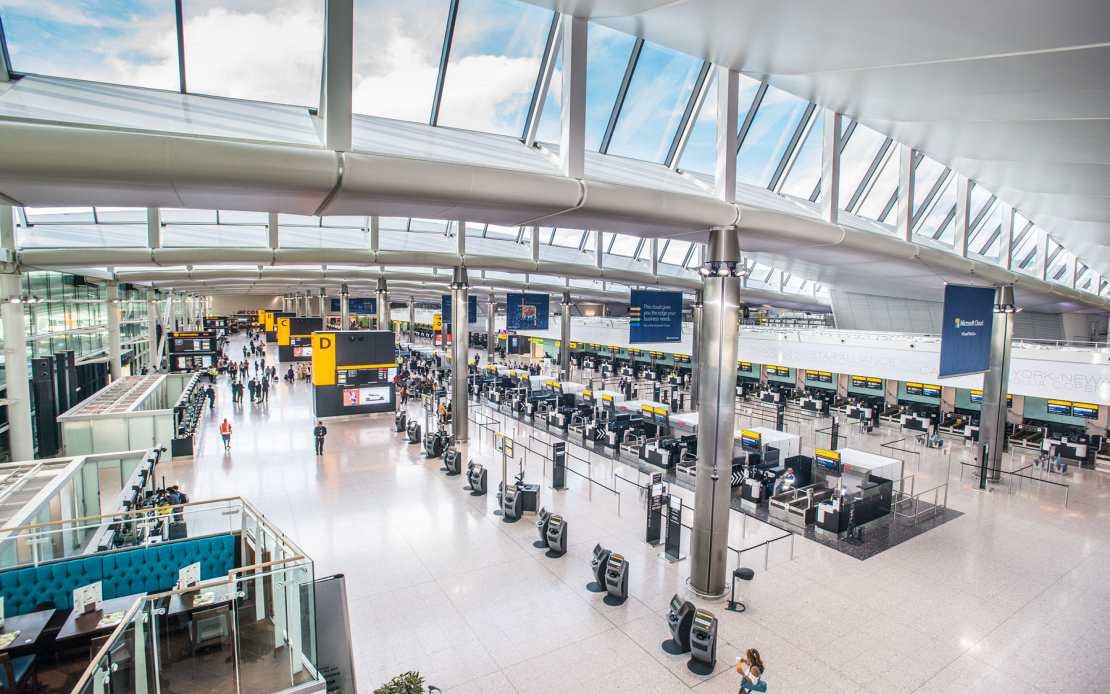
Istanbul Airport has reclaimed the title of Europe's busiest aviation hub from London's Heathrow, a development that has reignited political pressure on the UK government to approve a long-contested expansion project. During July, the Turkish facility processed 8.15 million passengers across its terminals, edging out Heathrow's 7.86 million travellers, marking a significant shift in Europe's aviation landscape and raising fresh questions about Britain's competitive positioning in global air transport markets.
Heathrow's loss of status represents a notable reversal after the airport had successfully reclaimed the European title in 2023, following a brief loss during pandemic-induced travel restrictions in 2020. Historical data compiled by the Airports Council International demonstrates that Heathrow held the continent's top position consistently from 1996 through 2019, a two-decade dominance now interrupted by changing travel patterns and geopolitical factors. The airport's management has seized upon this development as evidence supporting their long-standing case for infrastructure modernisation and expansion capacity.
The performance divergence between the two facilities reflects contrasting growth trajectories, with Istanbul experiencing a robust 2.3 percent year-on-year increase in passenger numbers during July, while Heathrow recorded a 1.5 percent decline compared to the previous year's equivalent period. This relative weakening at Heathrow stems partly from geopolitical complications, particularly the escalating United States-Iran tensions that have disrupted air connectivity across Western Asia. Passenger traffic on routes serving the West Asia region deteriorated significantly, dropping 20.2 percent year-on-year, representing a substantial headwind for an airport that derives considerable traffic from transcontinental transit operations.
Despite operating both existing runways at near-maximum capacity, Heathrow continues functioning without the infrastructure upgrades its operators argue are essential for sustained competitiveness. The airport's ownership team has submitted comprehensive expansion proposals that would facilitate handling approximately 150 million annual passengers, substantially above current operational thresholds. Transport Secretary Heidi Alexander initiated a formal public consultation in June regarding the revised expansion national policy statement, establishing the procedural pathway through which the government might eventually authorise the project.
Former Chancellor Rachel Reeves had expressed commitment to accelerating third runway development, stating an intention to commence construction during the current parliamentary cycle with completion targeted for 2035. However, her recent removal from office has created uncertainty regarding the government's trajectory on this contentious issue. Prime Minister Andy Burnham, who previously dismissed Reeves, has articulated reservations concerning Heathrow expansion, characterising such infrastructure investment as diverting essential resources away from regional development in northern England, thereby concentrating economic benefits within London.
Heathrow's operational pressures manifested clearly during peak summer travel, when the facility recorded 267,000 passengers on July 19 alone, demonstrating the acute strain placed on existing infrastructure during peak periods. The airport's management highlighted this capacity limitation as illustrative of broader systemic constraints, arguing that expansion represents the logical response to demonstrated demand rather than speculative planning. New airline partnerships announced during July, including services from ITA Airways of Italy, Alaska Airlines from the United States, and Riyadh Air from Saudi Arabia, underscore continuing commercial interest in establishing Heathrow connectivity despite current capacity limitations.
For Southeast Asian readers and aviation stakeholders, Heathrow's competitive position carries significant implications for regional connectivity. The airport serves as a major international gateway for Asian travellers accessing both North American and European destinations, and any expansion would potentially enhance routing options and frequency for passengers throughout the region. Conversely, Istanbul's ascendancy reflects the strategic advantages of its geographical position bridging Europe and Asia, a factor that has enabled it to capture substantial transcontinental traffic regardless of capacity constraints affecting western European rivals.
The political challenge facing the UK government involves balancing metropolitan infrastructure modernisation against legitimate regional development concerns. Burnham's resistance to Heathrow expansion, rooted in concerns about geographical inequality in infrastructure investment, reflects broader political tensions within Britain regarding wealth concentration in London. This tension has become increasingly pronounced within current governance structures, creating a dilemma whereby approving Heathrow's third runway might trigger additional political friction regarding perceived neglect of provincial economic development.
Heathrow's chief executive Thomas Woldbye has articulated the competitive stakes explicitly, arguing that expansion represents essential infrastructure for maintaining Britain's position as a leading global aviation hub. He contends that enhanced connectivity would generate substantial economic benefits through increased international trade, investment flows, and tourism revenue. The airport leadership suggests that without capacity expansion, European market share could progressively migrate toward competing hubs in continental Europe and Turkey, ultimately diminishing Britain's attractiveness for international commercial operations and headquarters locations.
The timing of Heathrow's loss of top ranking positions the debate within a framework emphasising urgency rather than indefinite consultation. Annual passenger figures typically demonstrate more stable trends than monthly data, yet the July shift carries symbolic weight suggesting Istanbul's trajectory may be consolidating rather than representing temporary fluctuation. This dynamic creates political pressure on UK decision-makers to demonstrate responsiveness to commercial realities while simultaneously addressing legitimate concerns regarding equitable distribution of infrastructure investment across the nation.
For Malaysian aviation interests and regional carriers considering European expansion, Heathrow's capacity constraints present both challenges and opportunities. Airlines might pursue alternative hubs offering greater slot availability, potentially redirecting traffic through Istanbul or other continental European facilities. Alternatively, successful expansion at Heathrow would strengthen its competitive position and maintain its traditional role as a premium gateway for Asian carriers seeking to establish or expand European operations, particularly for premium cabin services targeting affluent business travellers and international tourists.
The forthcoming government decision on Heathrow expansion will reflect broader choices about Britain's strategic positioning in global aviation markets. Whether policymakers prioritise London's metropolitan competitiveness or pursue geographically distributed infrastructure investment will influence aviation patterns across Europe and the wider world for decades. Istanbul's achievement of Europe's busiest airport status has transformed what was previously an incremental business matter into a high-stakes national competitiveness question, with ramifications extending far beyond British borders into the calculus of airlines and travellers throughout Asia and beyond.

