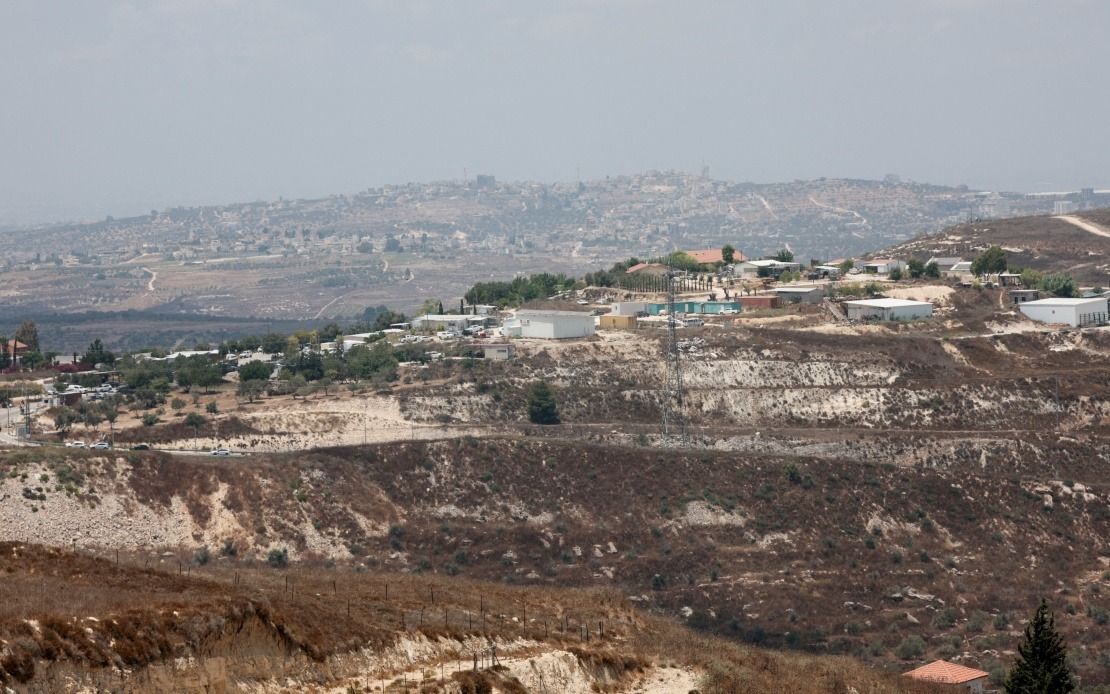
Israeli military forces have apprehended more than 40 young Palestinian men following a raid conducted on Saturday in Tell, a town situated near Nablus in the northern section of the occupied West Bank. The operation, which saw troops systematically searching homes throughout the municipality, represents an intensification of security measures across Palestinian territories. According to accounts provided by the Voice of Palestine radio station, soldiers established a temporary interrogation facility by commandeering a residential structure within the town, effectively transforming private property into an official detention centre. The comprehensive nature of the sweep became evident as forces cordoned off the entire town perimeter while conducting house-to-house operations, preventing residents from moving freely and creating a climate of heightened tension.
The Saturday operation followed explicit orders issued by Israeli Prime Minister Benjamin Netanyahu and Defence Minister Yoav Katz on Friday for a sweeping military campaign across Palestinian settlements in the West Bank. This directive emerged in response to an armed incident near the Havat Gilad settlement, which resulted in two Israeli soldiers being killed and three others sustaining injuries. The explicit framing of the response as a "wide-scale military operation" by top Israeli leadership underscores the strategic significance assigned to the incident and signals an intent to deploy substantial military resources across multiple Palestinian communities in the region.
The consequences of this expanded military campaign have proven severe for Palestinian civilians. Reports from eyewitnesses and local sources document that Israeli forces attacked several Palestinian communities throughout the Nablus governorate, with documented instances of troops setting fires to Palestinian residences and other structures. The destruction of private property on this scale raises concerns about the proportionality of security responses and adherence to international humanitarian law standards. According to data compiled by the Palestinian Health Ministry, the operation resulted in the deaths of four Palestinians in Tell specifically on Friday, indicating that the military response has resulted in significant loss of civilian life beyond the initial security incident that prompted the crackdown.
For Malaysian observers and regional analysts, this escalation carries particular relevance given the broader geopolitical dynamics in the Middle East and the international community's varying responses to Israeli security operations. The detention of large numbers of Palestinians without clear disclosure of charges or legal procedures remains a contentious issue within human rights frameworks that Malaysia, as a nation with historical advocacy on humanitarian matters, typically scrutinises closely. The conversion of civilian residences into interrogation centres highlights the blurred lines between military operations and occupation practices that have characterised Israeli control over Palestinian territories for decades, creating conditions that perpetuate cycles of unrest and communal grievance.
The Nablus region has historically served as a focal point for Palestinian resistance activities and Israeli security concerns, making it a recurring site of military operations. The density of Palestinian communities in the northern West Bank has made this area particularly vulnerable to large-scale security sweeps, with Tell itself emerging as a flashpoint during periods of heightened tensions. The town's proximity to Israeli settlements and strategic roadways has positioned it within zones of frequent military activity, though the scale of Saturday's operation and the sheer number of detentions suggest a deliberate strategy to suppress potential militant networks or gather intelligence through mass apprehension.
The detention of over 40 individuals in a single operation raises questions about investigative procedures and individual assessment protocols. When such large numbers are brought into custody simultaneously, the capacity to conduct individualized reviews of evidence and allegations becomes strained, potentially leading to situations where individuals are held without substantiation of involvement in prohibited activities. This practice, often referred to as administrative detention in the context of Israeli security operations, remains controversial under international law, which generally requires that detained persons be informed of charges and granted access to legal representation within specified timeframes.
The timing of these operations, occurring during a period when regional tensions are already elevated, suggests that Israeli security authorities are operating under heightened threat assessments. The incident at Havat Gilad that precipitated the crackdown demonstrated the capacity of armed Palestinian groups to conduct attacks that penetrate Israeli security perimeters, thereby justifying in the minds of Israeli policymakers the necessity for more aggressive preventive measures. However, the collective punishment approach—whereby entire towns face military operations and residents face restrictions of movement—raises questions about whether such measures effectively reduce security threats or instead generate grievances that fuel future confrontations.
For regional stability, the escalation documented in these recent operations carries troubling implications. The northern West Bank, which encompasses cities like Nablus and towns like Tell, has emerged as one of the most volatile zones in Palestinian territories, with periodic cycles of Israeli military operations followed by Palestinian armed responses. This cyclical pattern, unless interrupted by meaningful political dialogue or negotiated agreements, suggests a deteriorating security environment that extends beyond the immediate Israeli-Palestinian context to affect neighbouring countries and regional partners who host Palestinian refugees or maintain significant Palestinian diaspora populations.
The international response to such operations remains uneven, with different nations emphasising different aspects of the situation. Western nations often frame Israeli security operations within the context of self-defence, while nations including Malaysia and many others in the Global South stress the humanitarian dimensions and concerns regarding occupation practices. This divergence in perspective continues to shape United Nations discussions, international court proceedings, and bilateral diplomatic engagements, with no consensus emerging on the appropriate balance between Israeli security needs and Palestinian rights protections.
Looking forward, the detention of this large cohort of Palestinian individuals will require monitoring to assess whether they face formal charges, whether legal representation is provided, and what specific allegations justify their continued detention. The establishment of field interrogation centres and the mass nature of apprehension operations suggest an approach focused on intelligence gathering and potential incapacitation of suspected militants, rather than individual criminal prosecution. Such practices, while potentially effective in short-term security terms, carry long-term costs in terms of community relations, legal legitimacy, and the perpetuation of grievances that fuel recruitment into militant organisations.

