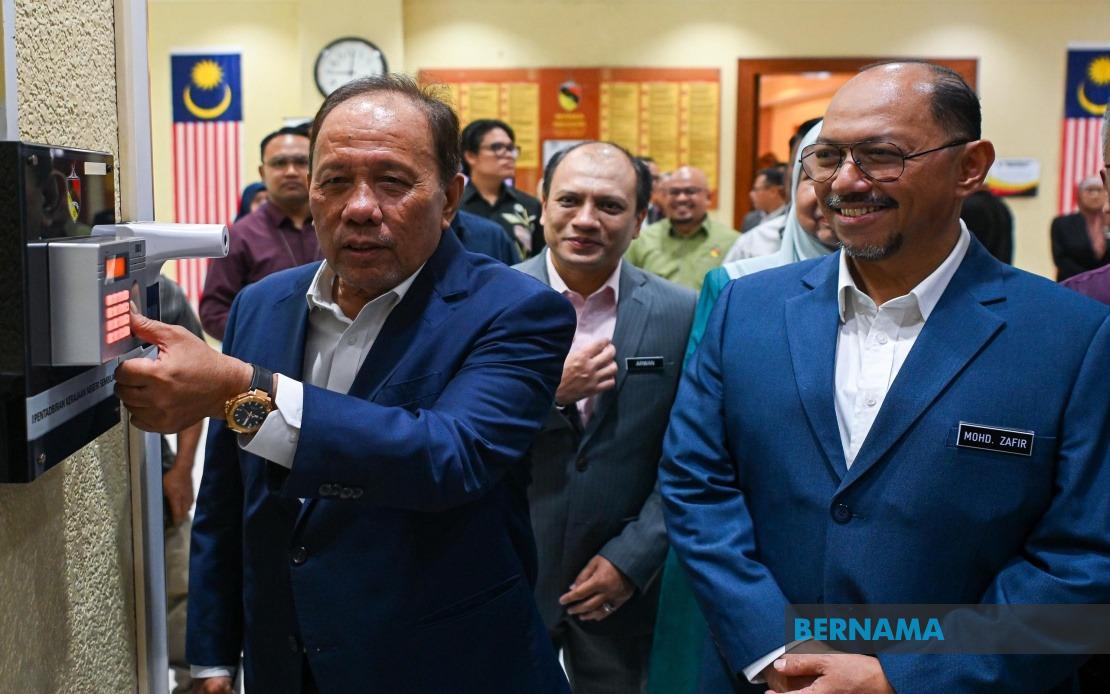
Newly appointed Negeri Sembilan Menteri Besar Datuk Ismail Lasim has publicly defended the legitimacy of his appointment process, insisting that all relevant constitutional and procedural requirements were satisfied. Speaking at Wisma Negeri in Seremban on August 4, Ismail expressed confidence that his elevation to the top state position adhered strictly to established protocols governing such appointments in the state.
The reassurance came as Ismail commenced his official duties following his formal swearing-in ceremony before Yang Dipertuan Besar of Negeri Sembilan Tuanku Muhriz Tuanku Munawir at Istana Besar Seri Menanti the previous Sunday. His comments represented a direct response to concerns raised by Tan Sri Rais Yatim, chairman of the Wawasan political movement, who had questioned both the methodology and propriety of the appointment process.
Rais Yatim's critique extended to allegations of external interference in matters that fall squarely within Negeri Sembilan's constitutional and customary jurisdiction. Such claims, if substantiated, would represent a significant breach of state autonomy and the federal-state power-sharing arrangements enshrined in the Malaysian Constitution. The nature of these allegations suggests tension between different political actors regarding the scope and manner of influence permissible in state-level governance.
Ismail's political mandate appears robust, having secured the Juasseh state seat during the most recent Negeri Sembilan state election. His party, working within the Barisan Nasional coalition, demonstrated strong electoral performance, capturing 18 of the 36 available state assembly seats. This commanding position provided clear justification for BN's claim to form the state government under Malaysia's parliamentary democracy framework.
The electoral landscape in Negeri Sembilan reflects a broader pattern of Barisan Nasional strength across several peninsular states in recent contests. The coalition's 18-seat haul represented a decisive mandate, far exceeding the 19-seat threshold required for a simple majority in the 36-member assembly. This comfortable majority insulated the new administration from immediate concerns about political instability or precarious government formation.
Perikatan Nasional, the alternative coalition comprising PAS and former UMNO dissidents, secured seven seats in the state election, leaving the opposition unable to mount any serious challenge to BN's legislative dominance. The consolidated support of both Barisan Nasional and Perikatan Nasional—which jointly command two-thirds of the assembly—demonstrates substantial regional consensus around the current political settlement, though questions about the appointment process suggest underlying factional concerns.
The emergence of scrutiny from Wawasan reflects evolving dynamics within Malaysian political circles. Rais Yatim's movement, which positions itself as ideologically independent and reform-oriented, has increasingly served as a voice raising questions about governance standards and procedural integrity. The organisation's intervention in this Negeri Sembilan matter indicates that even within broadly aligned political formations, there exists meaningful space for critical examination of how power transitions occur.
The specific allegations regarding external interference carry particular weight in Malaysia's constitutional context, where state sultans retain significant ceremonial and occasional substantive authority over appointments. The Yang Dipertuan Besar's constitutional role in approving the Menteri Besar, combined with the need to respect state custom and prerogative, creates both procedural clarity and potential vulnerability to claims that undue pressure influenced formal decision-making.
Ismail's public defence signals an attempt to establish narrative dominance around his appointment at the earliest opportunity. By framing his elevation as routine and procedurally correct, he seeks to preempt further critical scrutiny and to establish legitimacy not merely through electoral victory but through proper constitutional process. In Malaysian politics, where constitutional propriety carries substantial weight among informed observers and institutional guardians, this distinction matters considerably.
For Malaysian readers, this episode illustrates how state-level appointments continue to generate scrutiny even when electoral mandates appear unambiguous. The intervention by a figure of Rais Yatim's stature—a former Cabinet minister and respected intellectual—suggests that governance questions transcend simple partisan tribalism. The incident also highlights the continuing relevance of constitutional procedures and state prerogatives in an increasingly complex political environment.
The broader implications extend to Southeast Asia's wider governance landscape, where questions about procedural propriety in executive appointments increasingly intersect with concerns about institutional independence. As Malaysia navigates post-election transitions across multiple state governments, maintaining rigorous adherence to constitutional process becomes essential for democratic health, regardless of which coalition holds power.
Ismail's defence may ultimately satisfy political allies and procedural purists, yet the very emergence of such questioning suggests that future state government formations should anticipate heightened scrutiny. The episode underscores an evolving expectation among Malaysia's civil society and informed public that executive appointments, while constitutionally legitimate, must also demonstrate transparency and adherence to established norms to sustain institutional credibility.

