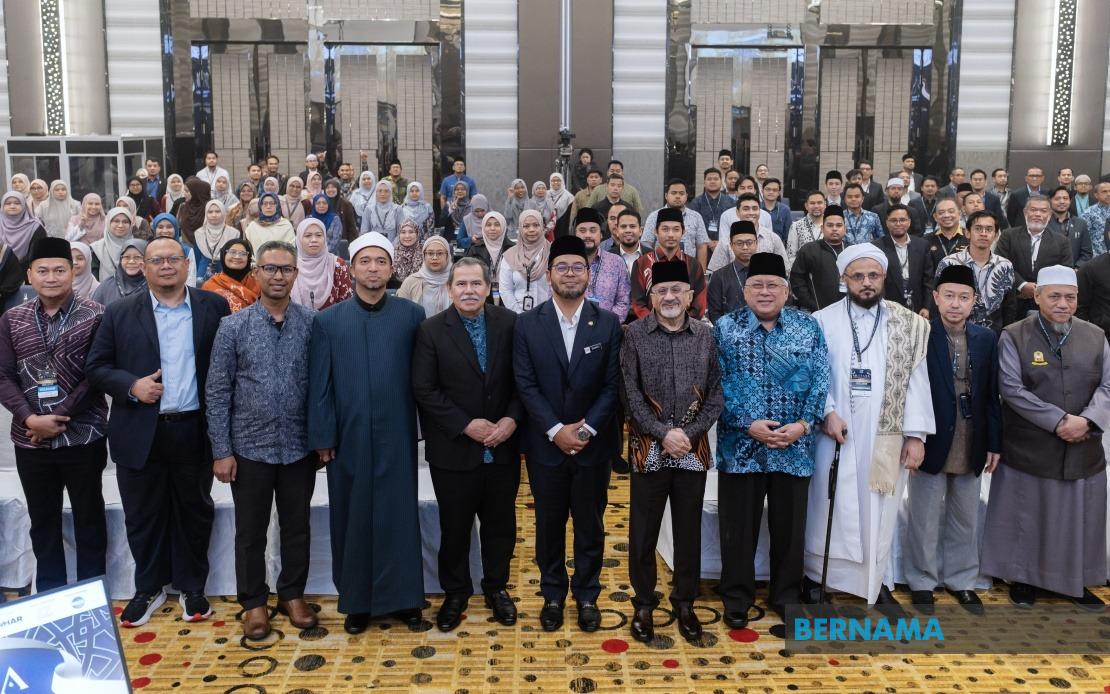
Islamic social finance stands ready to serve as a powerful weapon in Malaysia's fight against poverty, with the potential to become a mainstream pillar of the country's broader economic strategy. At the MULTAQA 2026 Islamic Social Finance Conference in Kuala Lumpur, Minister in the Prime Minister's Department (Religious Affairs) Dr Zulkifli Hasan articulated this vision, arguing that properly structured Islamic financial instruments could complement conventional development efforts. His comments underscore growing recognition within government circles that faith-based financial mechanisms deserve greater prominence in policy frameworks aimed at inclusive growth.
The government's commitment to elevating the sector extends beyond rhetoric. Zulkifli outlined plans to forge partnerships across multiple stakeholders, specifically engaging government agencies, universities and higher education institutions, and private-sector actors in a coordinated push to strengthen Islamic social finance capabilities. This multi-institutional approach reflects an understanding that sustainable progress requires expertise and resources drawn from diverse sectors. By creating spaces for collaboration between academic researchers, practitioners, and policymakers, the strategy aims to build the technical foundations necessary for scaling Islamic social finance initiatives across the country.
Central to this strengthening agenda is the Department of Waqf, Zakat and Haj (JAWHAR), which has been designated as the lead coordinating body responsible for enhancing governance standards and professional practices within Islamic organisations, particularly non-governmental organisations operating in the social sector. This assignment signals a deliberate move toward professionalising institutions that often operate with limited resources and varying levels of administrative sophistication. By concentrating regulatory and developmental authority in JAWHAR, the government seeks to establish consistent benchmarks and best practices that can be replicated across the fragmented landscape of Islamic social enterprises.
The role of universities and higher education institutions emerges as particularly critical in Zulkifli's vision. Collaboration between academic bodies and the voluntary sector is presented not as optional but as essential to modernising governance structures and management practices within Islamic NGOs. Malaysian universities, particularly those with Islamic finance expertise such as INCEIF, possess both the intellectual capital and independence necessary to develop rigorous frameworks that build public confidence. This institutional partnership model could serve as a template for other developing economies grappling with similar challenges of institutional capacity-building within faith-based sectors.
Marked by the official launch of Malaysia's Islamic Social Finance Report 2026, the conference emphasised that the sector now possesses detailed analytical foundations for future development. The report documents current conditions, identifies obstacles, and maps growth opportunities across the Islamic social finance ecosystem, offering both local institutions and regional observers a comprehensive reference point. By making such research publicly available, Malaysia positions itself as a thought leader in Islamic finance within Southeast Asia, contributing to a growing body of evidence about how religious financial principles can address development challenges.
A significant conceptual shift underlies Zulkifli's remarks: framing Islamic social finance as 'The Third Force' alongside conventional and social finance sectors. This positioning moves beyond viewing Islamic institutions merely as providers of immediate relief to the needy. Instead, the framework emphasises productive empowerment—enabling communities to build sustainable livelihoods rather than remaining dependent on periodic charity. This distinction carries profound implications for how resources flow through Islamic social channels and how success is measured within the sector.
Yet Zulkifli's acknowledgement of governance vulnerabilities tempers optimism about the sector's prospects. Drawing on parliamentary discussions regarding the Royal Commission of Inquiry report on Tabung Haji, he cautioned that governance failures and integrity lapses within Islamic institutions reverberate far beyond individual organisations. When Islamic financial entities experience scandals or mismanagement, the damage extends to institutional credibility across the entire faith-based financial ecosystem and, potentially, to perceptions of Islamic institutions generally. This perspective reflects awareness that trust—a cornerstone of social finance—remains fragile and easily eroded by high-profile failures.
The minister's remarks about integrity underscore an uncomfortable reality: Islamic social finance's expansion into mainstream financial architecture depends critically on demonstrating administrative competence and ethical conduct. For Malaysian observers, this requirement gains particular urgency given documented controversies surrounding sovereign wealth management and investment practices within existing Islamic institutions. Building new institutions and expanding existing ones without simultaneously addressing historical governance concerns risks repeating past mistakes at larger scale. The sector must therefore simultaneously innovate its financial instruments and rebuild confidence in its stewardship.
Regarding specific calls for a new Royal Commission investigating Tabung Haji investment losses, Zulkifli's refusal to comment suggests political sensitivities remain active around institutional accountability mechanisms. Whether the existing inquiry adequately addresses systemic weaknesses or whether additional investigations prove necessary remains contested terrain. From a Malaysian public policy perspective, however, the underlying question persists: how can government support Islamic social finance expansion while simultaneously ensuring robust oversight mechanisms prevent recurrence of institutional failures that have harmed public confidence?
The conference participants—including INCEIF University leadership, Federal Territories Islamic Religious Council officials, and other stakeholders—represent a coalition committed to professionalising the sector. Their collective presence signals institutional recognition that Islamic social finance requires the same rigorous governance, transparent reporting, and impact measurement standards applied to conventional financial institutions. This standardisation process, while potentially constraining some grassroots Islamic organisations accustomed to looser operational structures, offers pathways toward mainstream acceptance and integration into national development planning.
For Malaysia specifically, elevating Islamic social finance could address persistent challenges within poverty alleviation programs. Islamic mechanisms like waqf (endowments), zakat (obligatory charity), and profit-sharing arrangements offer culturally resonant approaches to wealth redistribution that complement government welfare programs. When properly structured and transparently managed, these instruments mobilise resources that might otherwise remain idle or misdirected. The sector's growth thus represents both a practical development tool and an affirmation of Islamic values within the nation's economic framework.
As Southeast Asian economies increasingly recognise Islamic finance's potential beyond banking and investment services, Malaysia's institutional initiatives carry regional significance. Other ASEAN nations grappling with poverty reduction face similar challenges around institutional capacity and public trust. Malaysia's experiments with professionalising Islamic social finance through academic partnerships, regulatory coordination, and transparent reporting could offer instructive models—both in approaches that prove effective and in cautionary tales about pitfalls to avoid. The coming years will reveal whether this multi-stakeholder strategy succeeds in mainstreaming Islamic social finance or whether governance vulnerabilities continue constraining the sector's development.

