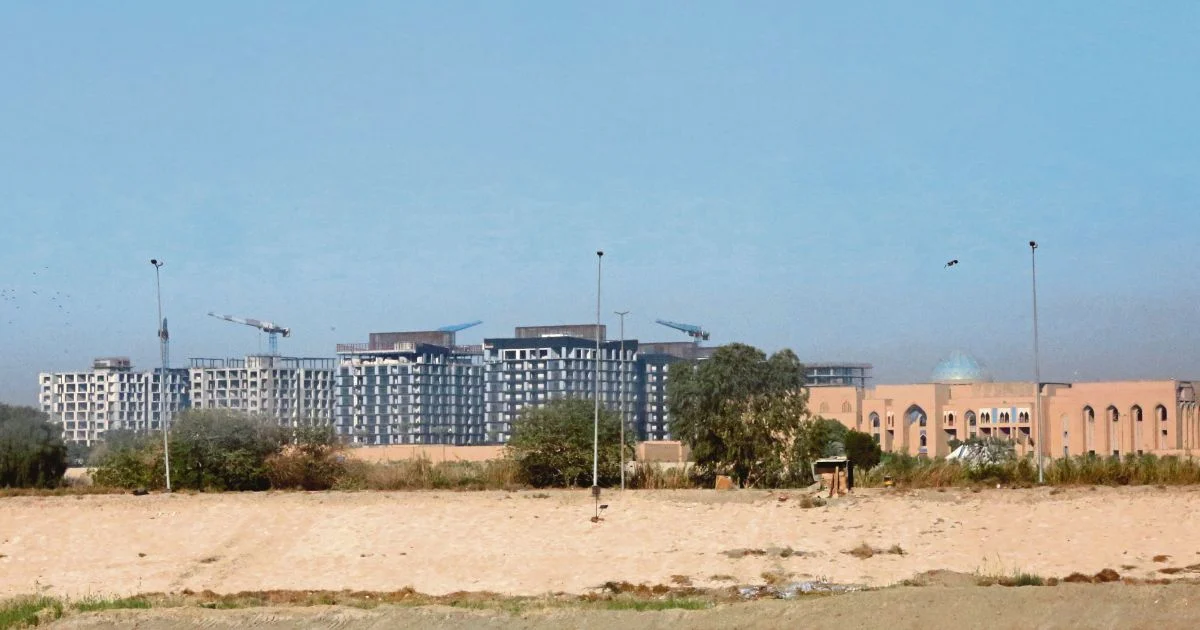
Iraq's security apparatus executed an extensive anti-corruption sweep through Baghdad's fortified Green Zone in the early hours of Sunday, arresting numerous officials and elected representatives implicated in various schemes involving misappropriation of public funds. The operation, characterised by a heavy security presence throughout the enclave, represents the latest manifestation of Baghdad's periodic crackdowns on institutional graft that continues to plague government structures across the country.
The Green Zone, formally known as the International Zone, constitutes the heart of Iraq's political establishment, housing parliament, government ministries, and diplomatic compounds behind concrete barriers and checkpoints. Its physical isolation from the rest of Baghdad has historically created a perception among ordinary citizens that those operating within its boundaries operate above normal accountability mechanisms. Sunday's raids challenged that notion, suggesting that senior leadership had determined that high-level arrests were necessary to maintain or restore public confidence in governance institutions.
While specific identities of detainees remained under wraps during the initial operation, the fact that members of parliament fell among those arrested underscores the breadth of the investigation. Parliamentarians occupy positions of considerable influence within Iraq's fragmented political landscape, where sectarian and ethnic divisions have traditionally offered protection to officials with sufficient patronage networks. The willingness to move against sitting legislators indicates either that political calculations had shifted or that evidence of wrongdoing had become sufficiently damaging to override typical protective mechanisms.
Corruption has constituted one of Iraq's most intractable governance challenges since the 2003 invasion and subsequent political restructuring. The World Bank and international anti-corruption organisations have consistently ranked Iraq among nations with the poorest governance standards, with endemic graft estimated to drain billions annually from public coffers that could otherwise fund schools, hospitals, and infrastructure. This bleeding of state resources has contributed directly to citizen frustration and, in some cases, fuelled resentment that militant organisations have exploited for recruitment purposes.
Previous anti-corruption initiatives have achieved mixed results, typically faltering when powerful actors felt their interests threatened or when political alliances shifted unexpectedly. The lack of independent judicial structures capable of protecting investigators from political interference has meant that many high-profile cases have stalled or produced outcomes widely perceived as lenient. Sunday's operation suggested that this time authorities possessed sufficient political will or institutional safeguards to proceed despite potential blowback from affected constituencies within parliament and the executive.
The timing of the Green Zone operation carries regional significance for Southeast Asian observers monitoring Iraq's stability trajectory. A nation that successfully addresses corruption and builds functioning institutions becomes more attractive to international investors and less susceptible to extremist recruitment narratives. Conversely, failed or performative anti-corruption campaigns reinforce citizen cynicism and undermine state legitimacy. Malaysia and other ASEAN nations have invested considerable diplomatic capital in stabilising Iraq and facilitating its reintegration into international commerce, making institutional health in Baghdad directly relevant to regional strategic calculations.
The security deployment accompanying the raids suggested that authorities had anticipated possible resistance or sought to prevent interference with detention procedures. Such precautions typically indicate that detainees possessed sufficient status or connections that normal police procedures might have proven insufficient. The visible security presence also served a communicative function, demonstrating to the public that authorities were executing governance operations without fear or favour toward the powerful.
Parliamentary reactions to the arrests would significantly determine whether the operation constituted a genuine watershed moment or merely another episode in a recurring cycle of selective prosecutions. If the legislature responded by supporting investigations and submitting to institutional oversight, it would suggest a genuine shifting of political incentives. If instead parliamentarians closed ranks and attempted to obstruct proceedings, it would confirm that structural impediments to accountability remain insurmountable despite individual displays of force.
The implications for Iraq's broader development trajectory should not be understated. Nations that successfully establish rule of law and reduce corruption typically experience measurable improvements in economic performance, public health outcomes, and citizen participation in democratic processes. Conversely, unaddressed graft perpetuates cycles of institutional distrust that undermine every governance initiative undertaken by central authorities. Sunday's Green Zone operation represented a test of whether Iraq's leadership possessed the political bandwidth and institutional capacity to break these destructive patterns or whether entrenched interests would prove once again to be beyond the reach of reform efforts.

