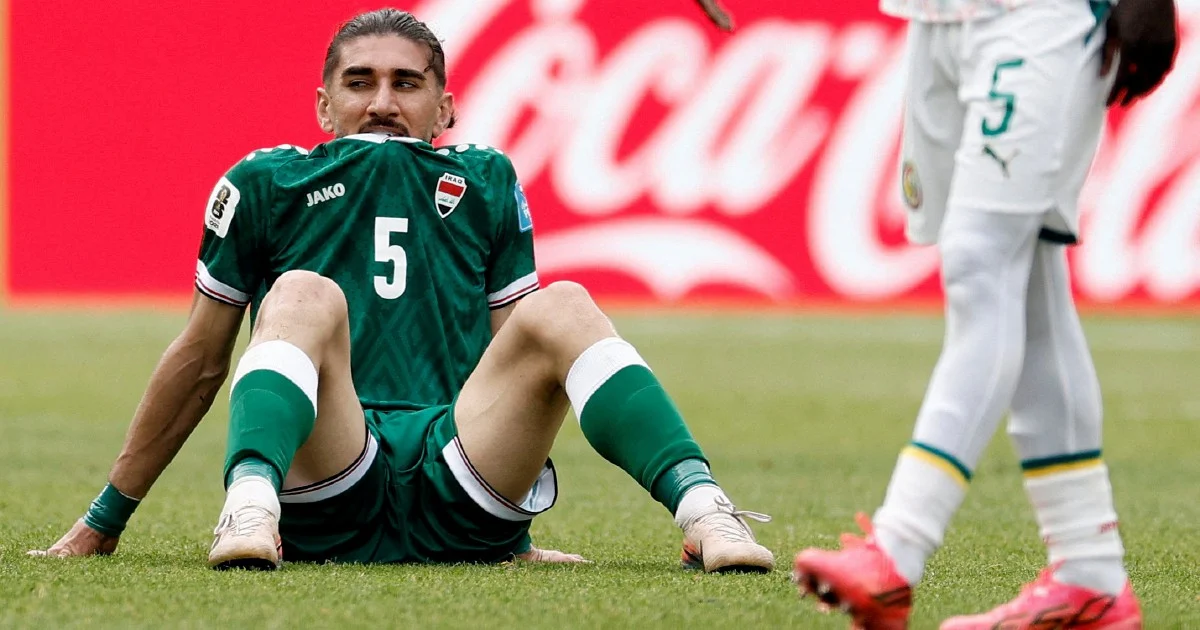
Iraq's Olympic Committee has announced plans for a comprehensive investigation into the national football team's disappointing showing at the recent World Cup, marking a pivotal moment for the country's football administration as it confronts systemic issues within the sport.
The decision to launch a formal probe represents a significant step towards accountability in Iraqi football, a nation where the sport carries deep cultural resonance but has struggled with inconsistent international performance. By examining what went wrong during the tournament, officials hope to identify both immediate tactical failures and deeper structural problems that may have contributed to the team's underperformance.
The investigation will likely scrutinise several interconnected areas critical to international football success: player selection criteria, coaching decisions, team preparation protocols, and the quality of domestic league competition that feeds into the national side. For a football-obsessed nation like Iraq, where the sport serves as a unifying force amid ongoing social challenges, the stakes of this review extend beyond mere sporting pride into questions of national identity and institutional competence.
Iraq's football system has endured considerable disruption over the past two decades due to broader geopolitical instability, which has affected infrastructure development, player recruitment, and the continuity of coaching programmes. Many talented Iraqi footballers have emigrated to pursue careers in stronger leagues, creating a persistent brain drain that weakens the domestic talent pool available to national team coaches.
The Olympic Committee's commitment to mapping out preventative measures signals recognition that ad-hoc responses to poor performances are insufficient. A structured reform programme will likely address player development pathways from youth level upwards, improved coaching education and certification standards, and enhanced medical and sports science support for the national team.
Regional context matters significantly here. Iraq competes in the Asian Football Confederation alongside established powerhouses like Japan, South Korea, and Iran, as well as emerging football nations that have invested heavily in youth academies and professional infrastructure. Without systematic improvements, Iraq risks falling further behind in a region where football development has become increasingly competitive and capital-intensive.
The investigation team will probably examine how peer nations have successfully reversed similar periods of underperformance. Australia's transformation into a credible World Cup participant, or how Vietnam has dramatically improved its continental standing in recent years, may offer instructive models for Iraqi planners seeking to modernise their approach.
Financial resources represent another critical factor. Investment in facilities, coaching staff salaries, and player support systems requires sustained funding commitments that extend beyond electoral cycles and political upheaval. The Olympic Committee will need to secure backing from both government sources and potentially private sponsors willing to support long-term football development initiatives.
The timeline for implementing reforms remains crucial. Quick fixes will not suffice; genuine programme transformation typically requires three to five years before meaningful results appear at the international level. The committee must balance immediate pressure for visible change against the reality that sustainable improvement demands patience and consistent execution of strategic plans.
For Malaysian football observers, Iraq's situation offers instructive parallels. Both nations struggle with maintaining competitive standards despite football's cultural importance. Malaysia's own periodic reviews of national football performance echo similar institutional challenges: the balance between domestic league quality and international ambition, the challenge of retaining talented players, and the need for professional infrastructure matching global standards.
The broader Southeast Asian football landscape has shifted considerably as countries like Thailand and Vietnam invest aggressively in youth development and coaching modernisation. Iraq's willingness to conduct honest self-examination positions it to learn from these regional experiences and potentially adopt proven methodologies adapted to local conditions.
Successfully implementing the findings from this investigation will require cooperation across multiple stakeholders: the Iraqi Football Association, club owners, coaching staffs, player representatives, and government bodies. Siloed decision-making or bureaucratic delays could undermine even well-conceived reforms, so administrative coordination will be essential.
Ultimately, Iraq's World Cup investigation signals something beyond mere sporting introspection. It demonstrates institutional capacity to acknowledge failure, conduct rigorous analysis, and commit to systematic change—capabilities that extend beyond football into broader questions of national governance and development. How effectively the Olympic Committee translates investigation findings into sustained action will reveal much about Iraq's capacity for institutional reform in other domains.

