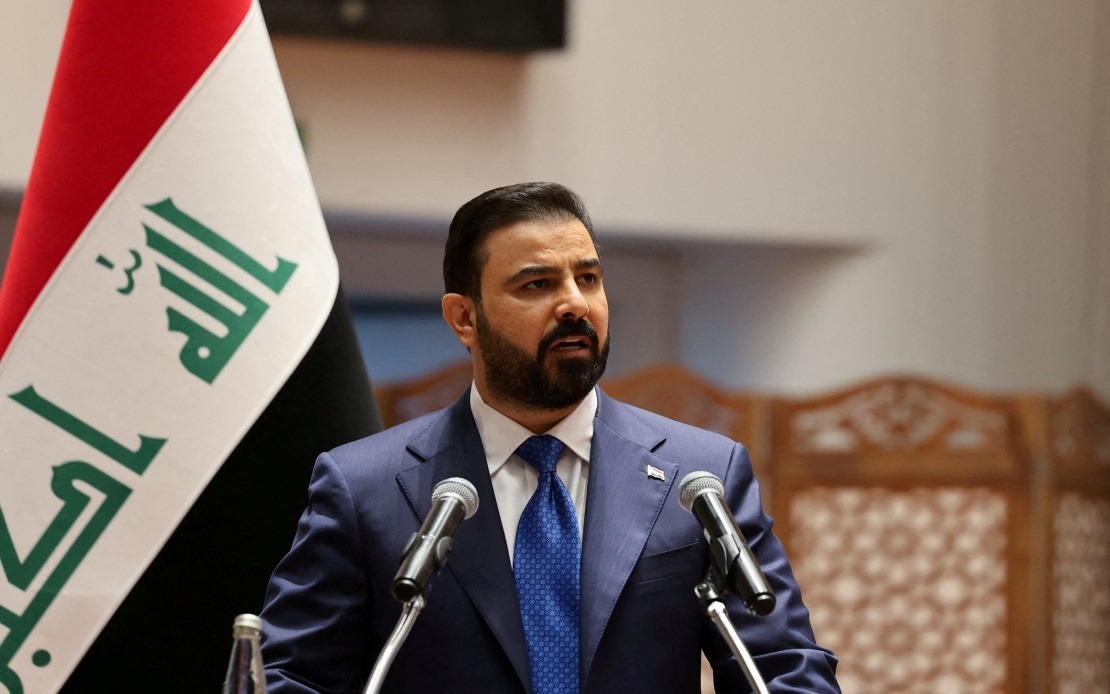
Iraq has moved to quash growing speculation about its membership in OPEC, with Prime Minister Ali Al-Zaidi making a forthright declaration that Baghdad intends to remain part of the international oil cartel. Speaking to the Al-Hadath broadcaster on Thursday, Al-Zaidi stated unequivocally that Iraq will not abandon its role within OPEC, framing the country's continued participation as essential to its economic strategy and regional standing.
Yet Iraq's commitment to OPEC comes with a significant caveat: the government expects the organisation to allocate production quotas that genuinely reflect the nation's capabilities and contribution to global oil markets. Al-Zaidi's remarks suggest that while Baghdad values its position within the cartel, it is growing increasingly vocal about what it views as an inequitable distribution of production allowances. This dual messaging reflects a delicate balancing act for Iraqi leadership, which must maintain diplomatic relationships within OPEC while advocating for national economic interests.
The timing of Al-Zaidi's statement is noteworthy, coming weeks after OPEC announced adjustments to several members' production quotas in early June. Under those revisions, Iraq received permission to increase its oil output by 26,000 barrels per day, bringing its total allocation to 4.405 million bpd. While this represented an increase for Baghdad, the boost was smaller than some analysts anticipated given Iraq's substantial proven reserves and historical production capacity. Comparable allowances were granted to Kuwait, which gained 16,000 bpd to reach 2.66 million bpd, and Oman, which secured 5,000 bpd to reach 836,000 bpd.
For Malaysia and other Southeast Asian energy importers, Iraq's stance within OPEC carries direct implications. As a major oil producer and OPEC member, Iraq's production decisions influence regional and global energy prices, which in turn affect import costs for petroleum-dependent economies across the region. Any shift in Iraq's OPEC involvement or production strategy could ripple through Asian energy markets and influence fuel prices at the pump. Additionally, OPEC production decisions shape long-term energy security calculations for nations like Malaysia that rely on imported crude oil to meet domestic demand.
Behind the scenes, OPEC and OPEC+ have been conducting a comprehensive reassessment of Iraq's oil production capacities, according to statements by the Iraqi Oil Ministry. In June, ministry spokesman Salim Al-Ruqabi disclosed that the cartel's technical teams had initiated a detailed evaluation of Iraq's operational facilities, infrastructure capabilities, and potential output levels. This assessment process is critical to determining whether Iraq's current quota accurately reflects what the nation can realistically produce, and whether adjustments are warranted based on technical capacity rather than historical precedent or political compromise.
The broader context of Iraq's quota negotiations reveals tensions within OPEC regarding production fairness and allocation methodology. Some members argue that quotas should be indexed more closely to proven reserves, operational capacity, and infrastructure investment, while others favour maintaining existing arrangements that have been negotiated over decades. Iraq, sitting on the world's fifth-largest proven oil reserves, finds itself at the centre of this methodological debate. The nation's substantial reserves and historical output levels suggest that under a capacity-based allocation system, Iraq might legitimately claim a larger share of global production permissions.
Iraq's economic dependence on oil revenues amplifies the significance of OPEC quota decisions for Baghdad. As the country continues post-conflict reconstruction and faces considerable fiscal pressures, maximising oil export revenues remains a cornerstone of government planning. Higher production quotas translate directly into greater earning potential, which Baghdad can channel into development projects, security forces, and rebuilding efforts. From this perspective, Al-Zaidi's public insistence on fair quotas reflects not merely economic policy but a national priority intertwined with political stability.
The geopolitical dimension of Iraq's OPEC stance should not be overlooked. Iraq's participation in OPEC represents a form of economic integration and influence within a predominantly Arab and Muslim-majority organisation, reinforcing Baghdad's position as a major regional player. Withdrawal would signal economic isolation at a critical moment when Iraq is working to rebuild relationships and reassert its regional standing. Al-Zaidi's reaffirmation of commitment to OPEC thus carries symbolic weight beyond the narrow economics of oil production and pricing.
Looking ahead, the trajectory of Iraq's negotiations with OPEC will merit close monitoring by energy markets and policymakers across Southeast Asia. Should Baghdad achieve significantly higher production quotas through continued engagement with the cartel, global oil supply could increase modestly, potentially exerting downward pressure on prices. Conversely, if Iraq becomes frustrated with allocation decisions and begins shifting focus toward maximising output independently or exploring non-OPEC partnerships, the cartel's internal cohesion could be tested. Either scenario carries implications for regional energy security and economic planning in Malaysia and neighbouring countries that depend on stable, affordable energy supplies to fuel economic growth.

